End of 2022

Thanks for your support and encouragement

Greetings. It has been a busy fall here at Trinity Christian College. Many new faculty members and new administrators began this semester, and the college has rolled out three new initiatives:

  • Wellbeing Wednesdays – Almost all classes are scheduled either on Mondays-Thursdays or Tuesdays-Fridays. That allows students and faculty to use Wednesdays for field trips, research, internships, and catching up on schoolwork.
  • Tuition Transparency and Access – Tuition has been lowered from $33,800 to $19,800, beginning in fall of 2023.
  • Earn, Network, and Learn – The college is partnering with local businesses to provide internships and cooperatives that provide real-life work experience and additional resources towards tuition at Trinity.

If you or someone you know is interested in a rigorous education from a Christian perspective at an affordable price near Chicago, Illinois, please see Trinity’s website: https://www.trnty.edu/.

I am learning my new position as Dean of Faculty, and I have enjoyed teaching the Senior Seminar for History Majors. The seven students presented their research projects on Monday and handed in their final assignments last night. I have to finish grading and enter grades by the end of next Monday.

In early November, I received two readers’ reports from Eerdmans Publishers about my book. One was encouraging, the other was more critical. As a result, the Series Editors for the Library of Religious Biography have requested significant revisions. It is my hope to finish the revisions by the middle of January.

I also presented my research about Laura Ingalls Wilder’s faith two times at Trinity this semester.  On November 5, I gave a “TrinTalk” for Trinity’s Fall Fest celebration.  Fall Fest at Trinity is like Parents’ Weekend and Homecoming put together—there are basketball games, a craft show, a miniature golf course in the library, and other activities. TrinTalks are like Ted Talks given by Trinity faculty members – 20 minute presentations with questions afterwards. They are attended by current students, their parents, alumni, and other members of the Trinity community. Several of my former students who are now alumni came to hear me speak, which was incredibly cool.  Then on November 28, I gave a Faculty Coffee for members of Trinity faculty and staff. Faculty Coffees provide faculty members an opportunity to share their research with colleagues.

Thanks for your support and engagement. All best for your Christmas and start to 2023.

Links:

Trinity Christian College Fall Fest

TrinTalks

Eerdmans Publishers

Library of Religious Biography

LauraPalooza Paper

important but not central…

Greetings. The fall semester has started here at Trinity Christian College, and I have started a new position: Dean of Faculty. That has meant that I have been busier than usual with meetings and emails. I am also teaching a course this semester – the Senior Seminar for History Majors, which has been going well. The seven students have begun working on their major research projects and are narrowing down their topics, asking questions about them, and thinking about their significance.

I was very glad to send in the manuscript of my book to my editor at Eerdmans Publishers on August 12, the last day of my sabbatical. The editors of the series The Library of Religious Biography are reading it and will be getting me their comments by the end of this month.

For those of you who were not able to attend LauraPalooza, I thought that I would share the paper that I presented. It gives some of my conclusions and some of my evidence.

“‘On the Pilgrim Way:’ The Faith of Laura Ingalls Wilder”

John J. Fry

LauraPalooza 2022: The Wilder Side

Burlington, Vermont, 14 July 2022

I’d like to start by thanking the LIWLRA Board for accepting this paper, and Kimberly Endicott for chairing this session. I should also say thanks the school where I teach history, Trinity Christian College in Palos Heights, Illinois, for supporting my research. Finally, thanks to all of you for coming and making LauraPalooza 2022 possible.

For the last five years, I have been working on a book about Laura Ingalls Wilder that pays particular attention to her Christian faith. The nature of Laura’s Christianity has not always received extended attention. I think that some biographers have ignored or downplayed her religious beliefs, others have taken them for granted, and still others have addressed them but not fully considered their complexity or significance. For instance, the 2020 PBS American Masters documentary, Laura Ingalls Wilder: Prairie to Page, does not mention Christianity beyond the use of the word “churches” two times by Marta McDowell and several images of churches in towns where Laura lived. My book will provide a comprehensive look at Wilder’s faith. I examine what she believed, how Christianity shaped her identity, and how it influenced her behavior.

The Challenge. Some here know the challenge that faces a researcher hoping to describe the nature of Laura’s faith: she didn’t talk or write about it very often. In fact, Pioneer Girl gives one reason why in this description of a young man in Walnut Grove:

Howard Ensign had joined the Congregational church after their revival and would testify at prayer meeting every Wednesday night. It someway offended my sense of privacy. It seemed to me that the things between one and God should be between him and God like loving ones [sic] mother. One didn’t go around saying ‘I love my mother, she has been so good to me.’ One just loved her and did things that she liked one to do. (Pioneer Girl, 136)

But accepting that Wilder was generally private about expressing her religious beliefs does not mean that one cannot piece together a description of her faith. I am very glad to be sharing some of my conclusions with you today. They fall under three headings: “Laura’s Faith,” “Laura and her daughter Rose,” and “So What?”.

Laura’s Faith

Committed Christian. It seems clear that Laura Ingalls Wilder was a committed Christian, for several reasons. First, this conclusion is supported by her life-long Christian practices and her patterns of church belonging. Her family began attending Sunday School and Sunday morning worship services in Walnut Grove, Minnesota, and she attended for the rest of her life. While she lived in the upper Midwest, she attended Congregational Churches with her family. When she and Almanzo moved to the Ozarks, she attended Sunday School and Sunday morning worship at the Mansfield Methodist Church. She also read the Bible, probably daily. She had memorized large numbers of scripture verses when she was a child, and she knew the Bible very well as an adult.  Thousands of visitors to one of the historic sites have taken home a reproduction of the handwritten guide to Bible verses for specific occasions that she kept in her personal Bible. Finally, there is evidence from across her life—from childhood to old age—that she prayed every day before she went to bed.

In addition, Laura included Christianity, the church, and faith in her writing. Her columns in the Missouri Ruralist did not mention Christianity explicitly very often, but when they did, Laura presented traditional Protestant views of God, God’s laws, and God’s goodness. Prayer, Bible reading and memorization, and Sunday School and Sunday worship appear in Pioneer Girl and later in the Little House books. And she did describe a personal experience with God’s presence in Pioneer Girl.  It was in the context of difficult times for the Ingalls family while they were living in Walnut Grove. Her father was doing odd jobs to support the family. At one point, Laura was paid to stay with a woman whose husband was frequently traveling. This meant that Laura, as a pre-teen, often spent the night away from her own home. On one occasion, she was particularly troubled:

The rest of the days were lonely and I was homesick. I knew things were not going well at home, because Pa could not get much work and we needed more money to live on.

One night while saying my prayers, as I always did before going to bed, this feeling of homesickness and worry was worse than usual, but gradually I had a feeling of a hovering, encompassing Presence of a Power, comforting and sustaining and thought in surprise ‘That is what men call God!’ (Pioneer Girl, 137)

As many Christians in times of distress and need have found, in this moment she felt peace and strength that seemed supernatural. It was real enough that she remembered it over fifty years later when she sat down to write the first draft of Pioneer Girl, despite what she thought about those who talked publicly about their relationship with God. This experience is transformed in By the Shores of Silver Lake in a chapter titled “On the Pilgrim Way,” which is where I got the title for my book and my talk today.

Important but not Central. Having said this much about the importance of Wilder’s faith to her worldview and to her life choices, I also believe that the distinction can be made that Christianity was important but not central to her life. There were limits to the commitment she showed to the church and Christian beliefs and practices. Here is some evidence:

First, it seems clear that she attended Sunday School and morning worship services in Mansfield, but not the evening worship service. It also appears that this was her family’s pattern in Walnut Grove and in De Smet. For several stretches while her daughter Rose was living at Rocky Ridge, Rose kept a detailed diary about what she did. It provides evidence that Laura and Almanzo went to Sunday School and morning worship, but that they did not go to the evening service.

Second, there is also no mention, in any of Laura’s writings about her cross-country travels, that she ever attended worship services on Sunday while away from home. This is the case in the diary she wrote on the trip from De Smet to Mansfield in 1894. She records that they rested on Sunday, but they did not go to church. Here is an example: “August 26, Sunday, Monotonous, writing, reading, & sleeping. Saw a girl with fire red hair & a fire red dress.” (Diary, 26 August 1894) In the letters she wrote to Almanzo from San Francisco in 1915, and in diaries she kept on trips to De Smet in 1931 and 1938, there is ample evidence that travel, sight-seeing, and other activities were pursued on Sunday rather than worship.

Third, there is the fact that she and Almanzo never officially became members of the Methodist Church in Mansfield. Various answers may be given for why they never joined, and it is unclear what to make of this fact, but it is true. At the same time, we do know that Laura became a member of the Order of the Eastern Star in Mansfield, and she was very active in the leadership of that organization for over twenty-five years.

Neta Seal. If I am correct that Laura’s faith was important but not central to her life, her younger friend Neta Seal serves as an illustrative contrast. The Baptist Church, both locally and in its broader regional and national contexts, was central to Neta’s life. While Laura attended meetings of the Methodist Ladies Aid Society occasionally, Neta attended meetings of the Baptist Ladies Aid Society and the Baptist Women’s Missionary Union every month. She frequently hosted meetings of one of the two groups. For many years, Neta taught a children’s Sunday School class at the Baptist church and held parties for them at her home. She also attended ordination services at Baptist churches in other areas of Wright County. In 1953, she accompanied the pastor of Mansfield’s Baptist Church and his wife to the Southern Baptist Convention in Houston, Texas. In August of 1956, she both took young people to a local Baptist camp and hosted the Business Circle of the First Baptist Church in her home. Neta Seal’s Baptist Christianity were absolutely central to her life. This was not the case for Laura Ingalls Wilder.

Laura and Rose

These are some of my conclusions about Laura’s faith in the book. But one of the reasons that I first wanted to research Laura’s faith is that when you read the Little House books, at times the description of the church is not positive. Because the books were the product of a collaboration between Laura and Rose, I wondered if there might be differences between what Laura wrote in her handwritten drafts and what appeared in the published books.

Collaboration. I was able to look at all the original manuscripts and compare them to what ultimately was published. A couple initial notes:

I think that the best way of describing the creation of the books is as a collaboration between Laura and Rose. Rose was not just an editor. She reorganized material, changed descriptions into dialogue, and sometimes added entire scenes. Both Laura and Rose contributed to make the series as excellent as it is.

When Rose made changes to the books, she ran those changes past Laura. As the first three books were written, the two women were living on the same property and this process was conducted in person. For the next three books, Rose was living in another city (or another state), so the process took place in letters, and we can follow it. For the last two books, we do not have correspondence. We can’t really draw a sharp line between what Laura wanted in the books and what Rose wanted, since Laura in some way always accepted the changes that Rose made.

But I think that we can identify in many cases where ideas about faith, Christianity, and the church originated—Laura or Rose—and what their content and tone was.

With those caveats, I think that we can see that in fact the collaboration between the two women points in multiple directions when it comes to God, Christianity, and faith.

Negative edge. First, at times, straightforward and positive descriptions of Christianity in an original manuscript are more negative when they appear in the published book. In general, that would mean that Laura was positive, and Rose was less so. Because Rose was a deist who was had some cultural attractions to Islam, I was expecting this. The last time that I spoke at LauraPalooza in 2017, I gave several longer examples of this from Farmer Boy and On the Banks of Plum Creek. This time I thought I would just give two quick examples from These Happy Golden Years. Both involve the pastor of the Congregational Church in De Smet, Rev. Brown. The first time that Sunday School and worship are mentioned in the manuscript, we are told that “Laura knew the sermon would be long but after she made sure she would remember the text when Pa asked her to repeat it, she let her thoughts wander to other things.” (These Happy Golden Years manuscript, Tablet 1, 39) This becomes in the published book: “Reverend Brown preached one of his long, stupid sermons… Laura made sure that she remembered the text, to repeat at home when Pa asked her; then she need not listen any more.” (These Happy Golden Years, 575) In a later account, the manuscript reads “Reverend Brown was preaching earnestly and everyone was quiet and attentive when Laura saw a stray kitten walking up the aisle.” (These Happy Golden Years manuscript, Tablet 5, 279) The published book has: “Reverend Brown was preaching earnestly and Laura was wishing that with so much sincerity he could say something interesting, when she saw a small plump kitten straying up the aisle.” (These Happy Golden Years, 712-713) These changes can be seen as Rose making feelings more intense. Rose’s editing often did this. In this case what was made more intense was a negative view of Brown. There are other examples of changes making the resulting text less positive, and I can share some of them if you are interested.

Deeper Engagement. The surprise I encountered was that there are places where references to prayer, to Bible passages, and to other Christian concepts do not appear in the original manuscript, but they do in the published book. That would mean that Rose was adding material that addressed faith, the church, and Christianity, in effect providing a deeper engagement with faith than Laura originally had. This is particularly the case in The Long Winter.

The Long Winter is the Little House book that engages with faith the most, I believe because the extreme difficulties encountered by the Ingalls Family cause them to turn to God for help, encouragement, and comfort. In the first chapter, Pa explains to Laura that God is the one who tells muskrats when to build houses with thicker walls. This explanation is not in Laura’s handwritten        manuscript. Later in the book, Laura thinks “Oh, that I had the wings of a bird” to flee the coming winter. This is a reference to Psalm 55:6. This does not appear in the manuscript either. On Laura and Carrie’s first day of school in town, the teacher opens by reading Psalm 23. This is not mentioned in the manuscript. After a harrowing walk home from school through a blizzard, Laura thinks [quote] “It was so wonderful to be there, safe at home, sheltered from the winds and the cold… this must be a little bit like Heaven, where the weary are at rest. She could not imagine that Heaven was better than being where she was, slowly growing warm and comfortable.” (The Long Winter, 227) This observation is not in the manuscript. Mr. Foster is jokingly called “A mighty hunter before the Lord,” a reference to Genesis 10:9. Ma comments on a man’s actions by saying “Pride goes before a fall,” a slight misquoting of Proverbs 16:18. Late in the book, Carrie wonders whether they could possibly eat grass, and Pa says, “No, Nebuchadnezzar,” a reference to the Babylonian king eating grass in Daniel 4:32-33. None of these Biblical notes appears in the original manuscript. (The Long Winter, 288, 298, 354) Finally, the published book mentions Laura and Mary saying their prayers four times, but the original manuscript only mentions prayer once. There are engagements with faith in the manuscript that are left pretty much unchanged in the book. But it seems that Rose knew many scripture passages, and she worked intentionally to use them to contribute to the overall effect of the book. The original manuscript had envisioned Christianity as an important part of the fictional Ingalls family’s navigation of the hard winter, and Rose added additional material to confirm, enhance, and deepen that vision. There are other examples of this deepened engagement, and I can share some of them if you are interested.

So What?

So what? Clearly, my research suggests that Laura was a committed Christian. And I think it is clear that for Laura, Christianity was important but not central to her life. This can help us understand her life and her writings.

Laura’s Life. As far as her life goes, I think that this understanding helps to locate her on the spectrum of Christian commitment, identity, and practice. Some people are more devout than others. If I want to love my neighbor the way I love myself, including my neighbor who lived in the past, I should recognize that people in the past were the people that they were, not who we might want them to be.

The Little House Books. The idea that Christianity was important but not central to Laura also provides a way of understanding the treatment of faith in the Little House books. It appears that Christianity was important but not central to the fictional Ingalls family. In only The Long Winter can faith be seen as close to the center of the narrative and the characters’ lives. Christianity is mainly addressed in one chapter each of Little House in the Big Woods and Farmer Boy, and it is almost completely absent from Little House on the Prairie. The church appears more in On the Banks of Plum Creek, but not until its twenty-fourth chapter. By the Shores of Silver Lake again confines consideration of Christian ideas to one chapter. In the last two books, the church is one of the two institutions (the other is the school) which organizes the Ingalls family’s life. But the depiction of the church in those books is soured by the depiction of Rev. Brown, which is distinctly unfavorable.

Enduring popularity. Finally, the idea that faith is important in the Little House books, but it is not central, may also have contributed to the books’ enduring popularity. Christians who read the books encounter families who are committed to God, faith, and the church. For those who are not Christians, faith is not central enough to interfere with the enjoyment of the books for other reasons.  (Including the wonderfully direct prose, the deeply moving descriptions of family togetherness, and Laura’s passion for nature and wilderness.)

Laura Ingalls Wilder was a Christian. Her faith was important to her life, and she nurtured that faith by reading the Bible, praying, and attending worship. Unlike others in Mansfield like Neta Seal, while Christianity was important to her, it was not central to her life.

Thanks for listening. I’d be glad to take questions.

Works Cited:

All works are by Laura Ingalls Wilder.

Diary, in Wilder, Laura Ingalls Papers, Microfilm Collection available at The State Historical Society of Missouri, folder 33, (unpaginated).

The Long Winter, in The Little House Books. Volume Two. Edited by Caroline Fraser. New York: Library of America, 2012.

Pioneer Girl: The Annotated Autobiography. Edited by Pamela Smith Hill. Pierre: South Dakota State Historical Society, 2014.

These Happy Golden Years manuscript, Burton Historical Collection, Detroit Public Library, Detroit, Michigan.

These Happy Golden Years, in The Little House Books. Volume Two. Edited by Caroline Fraser. New York: Library of America, 2012.

Thanks for reading!

Links:

Trinity Christian College

Eerdmans Publishing

Library of Religious Biography

LauraPalooza 2022

The Laura Ingalls Wilder Legacy and Research Association (LIWLRA)

American Masters Biography

Update 2022

There is much to report

It has again been a long time since I have posted. There is much to report.

My sabbatical from teaching and administrative responsibilities at Trinity Christian College began in January and continues to the middle of August. I have taught at Trinity for eighteen and a half years, but this was the first time I have ever taken a sabbatical. I never thought that I would want to be away from teaching for eight months. My wife will tell you that I get antsy at the end of the summer when I haven’t been teaching for just a couple of months. But it was absolutely necessary for me to have the time to finish the book. When I got the book contract from Eerdmans in 2017, they gave me five years; my deadline is the end of August, 2022.

The sabbatical has been an incredible blessing. Between January and May, I was able to work almost exclusively on the book. In January and February, I worked through the available manuscripts of all eight Little House Books, microfilm copies of the Mansfield Mirror from 1923 to 1957, and all of Rose Wilder Lane’s diaries and journals. I also wrote drafts of the final three chapters of the book. In the middle of March, I did my last research trip to Missouri. I visited Ellis Library at the University of Missouri in Columbia, the Missouri United Methodist Archives (MUMA) at Central Methodist University in Fayette, and the State Historical Society of Missouri in Columbia (SHSMO). By the end of March, I had finished a draft of the entire book. I then attended the Conference on Faith and History Biennial Meeting at Baylor University in Waco, Texas. It was supposed to be held in fall 2020, but it was postponed twice because of covid. I did not present, but I connected with many old friends, and I made some new ones.

In April and early May, I revised the book. My initial draft was around 107,000 words, and my contract says the book should be around 80,000. So I worked through the manuscript several times, scrapped almost all of one chapter, examined every single quotation, and read the entire book out loud. The word count is now much closer to the target number. I never would have been able to complete the book without the sabbatical. Bill Anderson has graciously agreed to read it and give me his comments.

In the middle of June, I will travel to Burlington, Vermont, to present at LauraPalooza 2022: The Wilder Side. LauraPalooza is held only once every three years, and it is my hope that the book will be out next year, so I thought it would be good to give a preview to those who are most likely to be interested in it. Many thanks to the Laura Ingalls Wilder Legacy and Research Association (LIWLRA) for their work on the conference, particularly Lauri Goforth and her attention to the many, many details. Lauri offered to let me sell copies of my second book, Almost Pioneers, and hand out materials about “On the Pilgrim Way”: The Faith of Laura Ingalls Wilder. To provide a better experience for those interested in my research, I have completely overhauled the website.

My year has also been full of family milestones. My son Stephen graduated from Geneva College in Western Pennsylvania in May, started a new job in Pittsburgh last week, and moved to a new apartment two days ago. His wife Amanda is due in July. My youngest son Daniel graduated from Chicago Christian High School in June. And my only daughter Deborah is getting married in August. My wife Paula and I have traveled to Pennsylvania twice already, and we will be going back after the baby comes. (Paula will be going back again to take Daniel and my son Benjamin to Geneva at the end of August.) In September, it will just be Paula and me in the house.

At any rate, the book is coming. Thanks to everyone who continues to follow my work and give me encouragement.

Links:

Trinity Christian College

Eerdmans Publishers

Missouri United Methodist Archives

State Historical Society of Missouri

LauraPalooza 2022

Almost Pioneers: One Couple’s Homesteading Adventure in the West

Geneva College

The Big Woods and COVID-19

“She was glad that the cozy house, and Pa and Ma and the firelight and the music, were now. They could not be forgotten, she thought, because now is now. It can never be a long time ago.” (95)

It was just over a month ago when the administration of Trinity Christian College, where I work, announced that due to COVID-19, courses for the rest of the spring semester would be conducted online, all of the resident students had to move home, and all spring events on campus (athletic, theater, music, art, etc.) were canceled. It was Thursday, March 12. The announcement came at noon, and the Chaplain’s office quickly organized a final worship service that afternoon as a way for students, faculty members, and staff members to communally grieve the losses that confronted us and express our trust in God and our Lord Jesus Christ. I found my daughter, who is a senior at Trinity, and she put her head on my shoulder and we cried together. That event now seems like a long time ago.

The next week, the Governor of Illinois issued a stay-at-home order. I moved enough out of my office to teach and do my work as an Academic Dean from home. My oldest son was sent home from his college in Pennsylvania to finish the semester online, and plans were underway for my two sons who are in high school to begin online classes. So my four children and I are now all doing online education. So far the bandwidth has held out. My wife is also at home because her work as a nanny and a volunteer at a thrift store both were suspended. Everyday life at my home during the last month has been transformed completely. Now is now.

I would not want to put my losses up against others who have lost a lot more. I am able to work from home and receive a paycheck. Although they have lost paying jobs at their schools, several of my children work at a local greenhouse which is still open, so they can still make some money for college. And there have been compensations. There are six people at the table every day for dinner. My wife has been baking large loaves of delicious homemade bread that we’ve been toasting and covering with the apple butter she made and canned last fall. There is more time for board games in the evening. We have popped corn and watched movies together. There are livestream services on Sunday morning and evening, and Sunday School, Youth Group, and mid-week Bible studies online.

Several weeks into the online, stay-at-home version of life and work, Bill Anderson (William Anderson, author and probably the greatest living authority on Laura Ingalls Wilder) emailed me a link for a New Yorker article that mentions Little House in the Big Woods in relation to the author and her family’s entry into quarantine in London. Margaret Mead, a long-time author for the New Yorker, she speaks of how her husband, her son, and her three stepsons, had all loved the book when they were children. Mead read the book out loud to her son again, and they decided to grow some vegetables in their window boxes. She ends by describing her stepson who lives in rural upstate New York with his partner and their son.

Last week, I got an email from a librarian at the Christian college I attended in Pennsylvania (and where two of our sons will be attending this fall). It included a link to a blog entry from a young Christian woman reflecting on the importance of stories when confronting new realities, like COVID-19. She specifically mentions the Little House books and the Lord of the Rings trilogy by J. R. R. Tolkien.

In between these emails, I was contacted by Jared Burkholder, a historian at a Christian college in Indiana. He is teaching an online course on the History of the American West and wondered if we could record an interview about Laura Ingalls Wilder and the Little House books that he could have his students watch. I said I’d be glad to do so. We recorded the interview this past Monday, using Zoom. It was a lot of fun.

One of the questions he asked me about concerned reasons for the persistent popularity of the Little House books. I thought about the New Yorker author and the Christian blogger and said that I thought that the books combine two features that are often seen as appealing to either the cultural right or the cultural left: an incredibly attractive vision of family life and loving depictions of wilderness and the natural world. Cultural conservatives are often drawn to the Little House books’ depictions of the nuclear family. Pa represents the male head of household and the provider; Ma is the civilizer of the home. Together they support their children, and the books describe how real girls and young women feel when confronted with real challenges in growing up. Cultural liberals and environmentalists are drawn to the books’ detailed and evocative descriptions of wilderness, wild animals, and the landscape of the American west. And in fact, both of these things transcend cultural (and political) categories. Mead, who I would think leans to the left, appreciates Big Woods’s description of a happy home. I lean to the right and love the Little House books’ description of the physical environment, animals, and nature. The result is that the books continue to speak to tens of thousands of people.

So I decided to read Little House in the Big Woods yesterday and think about what it might say to the world in which I live today, the world shaped by COVID-19. It was especially appropriate for me to do it yesterday morning, because an April storm had caused several inches of snow to fall in Chicagoland. I immediately identified with the events in Chapter 7, “The Sugar Snow,” except we don’t have any real maple syrup in the house. I was again amazed at the book’s detailed descriptions of how food was prepared and preserved, its depictions of how young children feel and act, and its vision of how a family could feel they had everything they need, even as they have so much less than we do today. This is the accomplishment of the collaboration between Laura Ingalls Wilder and her daughter Rose Wilder Lane: many people today, 150 years after the events depicted and almost 100 years after the words were written, can identify with the stories. When I’ve been surprised by the usefulness of an online tool during the last several weeks, I’ve found myself thinking—like Pa did of the mechanical thresher in Chapter 12, “That machine’s a great invention!” (91) The very next chapter (the last of the book) depicts Pa’s love for natural beauty and wildlife as being so great that he is unable to shoot the deer or bear that walked into the clearing where he was hunting to bring home meat for his family. When he tells Ma and the girls, Laura says “I’m glad you didn’t shoot them!” and Mary adds “We can eat bread and butter.” (94) I agreed.

As a historian, I know that the world that is created in Little House in the Big Woods was not exactly how it was for Laura Ingalls Wilder during the years that she and her family lived in the log cabin outside of Pepin, Wisconsin. They had relatives and neighbors much nearer than the book suggests.  But ultimately, Little House in the Big Woods is a book of stories, and stories can teach even when they are not historically accurate.

I may try to read The Long Winter next week as a different way into the COVID-19 quarantine experience.

I realize that this entry has been mostly about me. Thanks for reading anyway.

(Quotes and page numbers are from Laura Ingalls Wilder, The Little House Books, edited by Caroline Fraser, Volume I (New York: Library of America, 2012).

Links:

Trinity Christian College, where I work.

Geneva College, where two of my sons will attend next fall, Lord-willing

Margaret Mead, “Returning Once More to a Little House in the Big Woods,” New Yorker, March 4, 2020.

Venia “On Stories and Facing a Quarantine,” Sola Gratia, April 3,

Midwestern Dreams or Nightmares?

Greetings and Happy New Year! The new semester is underway at Trinity Christian College. I hope that everyone reading this had a blessed Christmas and a good start to 2020.

It was just over four years ago, on January 4, 2016, that I posted my first entry on this blog. Since then, I have posted over sixty more. Thanks to everyone who has commented or sent me observations about my research.

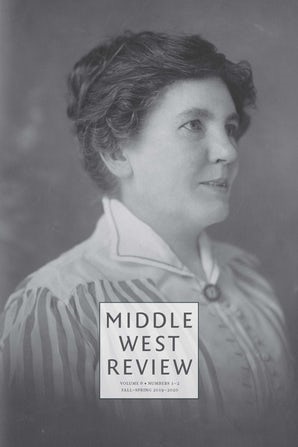
You may have heard that John Miller has published an extended review of Caroline Fraser’s Prairie Fires: The American Dreams of Laura Ingalls Wilder (2017). The title is “Midwestern Dreams or Nightmares?: An Appreciation and Critique of Caroline Fraser’s Prairie Fires: The American Dreams of Laura Ingalls Wilder.” It’s the first article in the Fall 2019-Spring 2020 issue of Middle West Review, an academic journal published by the University of Nebraska Press. Miller has written three books about Wilder: Laura Ingalls Wilder’s Little Town (1994), about De Smet during the late 1800s, Becoming Laura Ingalls Wilder: The Woman Behind the Legend (1998), a full biography that concentrates on Wilder’s adult life, and Laura Ingalls Wilder and Rose Wilder Lane: Authorship, Place, Time, and Culture (2008), a collection of essays. He is eminently qualified to provide what he calls “a more balanced account of Prairie Fires than has generally been accorded it.” (2) (Full disclosure: Miller discussed this article with me while he was writing it, and he shared an early draft with me for my comments.)

Miller praises many aspects of Fraser’s book. He notes that it is well-written and that it provides an incredible number of details about Wilder’s life and her historical context. Its over 500 pages of text and 85 pages of notes make it by far the largest biography of Wilder yet published. He is in agreement with the amount of space Fraser devotes to understanding the life and work of Laura’s daughter Rose Wilder Lane, and he is in general agreement with Fraser’s interpretation of Lane’s life and character. He argues that the historical contexts Fraser provides in the book are often insightful, and the speculations that Fraser makes when facts are not available are often good, helpful, or plausible.

However, Miller disagrees with what he sees as two of the most important assertions made in the book:

  1. Fraser describes Wilder’s early life as unremittingly difficult and argues that Wilder deliberately shaped the Little House books to recast her childhood in a positive light.
  2. Fraser argues that agriculture in eastern South Dakota was “economically unsound” and “ecologically disastrous.” (24)

In his description of these lines of argument, Miller uses examples from several speeches that Fraser delivered in Sioux Falls and Brookings, South Dakota, as well as a number of quotes and accounts from the book. In both cases, he finds these assertions unsupported, concluding that “Fraser has, in her major lines of argument, stepped beyond the bounds of reliable history.” (29)

In the first case, Miller argues that it is impossible to determine exactly how the Ingalls family experienced their years moving from Wisconsin, to Kansas, to Wisconsin, to Minnesota, to Iowa, to Minnesota, and to South Dakota. When he died, Laura’s father Charles Ingalls did not have much real estate or money in the bank. However, Miller notes that he had occupied many positions of public trust in De Smet, and that his wife Caroline and his daughter Mary enjoyed a comfortable home, the friendship of neighbors, and the respect of fellow church members, lodge members, and other townspeople. Furthermore, Laura’s recollections of her childhood in the Missouri Ruralist were not negative but happy. He argues that two key documents used by Fraser to substantiate the idea that Wilder remembered her childhood negatively are selectively quoted and misunderstood. He ends by asserting that the best way to understand rural women´s lives during the late 1800s is to recognize that they experienced both hardships and joys, and that while some resented their isolation, others embraced its beauty and relative opportunity. Miller clearly sees Wilder as belonging to the second group.

Miller also takes issue with Fraser´s characterization of agriculture in southeastern Dakota Territory. The article first disputes the reasons Prairie Fires gives for why the Great Dakota Boom began in 1878. However, Miller is more concerned about Fraser’s assertion that the region around De Smet was part of the Great Plains that should never have been settled the way it was during the late nineteenth century. He notes that Prairie Fires uses the terms “prairie” and “plains” interchangeably, and while it leans on John Wesley Powell’s 1877 warning about agriculture west of 100 degrees of longitude, De Smet is actually 120 miles east of that line. He asserts that the region was farmed successfully by some during the late 1800s, that it recovered after the dry years of the early 1900s, and that it remains productive for some farmers today.

Miller’s experience with Wilder’s Missouri Ruralist columns and his knowledge of South Dakota agriculture stands him in good stead in both of these critiques. Both appear persuasive to me today.

I’ve gone back to my blog entry on Fraser’s book, and it is much more positive than Miller’s review. I also wrote a review of the book for the Annals of Iowa in 2018, and it is similarly positive. In both pieces, I praised the painstaking research that went into writing the book and the details about Wilder and Lane’s lives that it provides. My main critique in the Annals piece is of Fraser’s tone when describing people who lived in small towns and rural areas in the past, especially those who opposed government support for those in financial need. At the time, I didn’t identify Fraser’s characterization of Wilder’s childhood as completely negative. I may have been focusing on the many details that I was eagerly noting for my own research on Wilder. I also didn’t have the background in South Dakota agriculture to argue against her characterization of the South Dakota boom as an agricultural disaster.

I also wonder if part of the reason that I didn’t see all that Miller saw in the book is that he had the benefit of Fraser’s speeches in shaping how he engaged the book. About five pages of the review are devoted to descriptions and quotations from those talks. Book talks are often more forceful in making an argument than a book itself. A book is much longer, can be more nuanced, and an argument can be obscured by the details. I’m thinking that hearing Fraser speak multiple times may have crystalized things for him.

One thing that Miller and I agree on is that Prairie Fires could have engaged Wilder’s Christianity more. My blog entry included the following: “there is not a lot of attention to Laura and Rose’s faith in the body of the book… Laura and Rose’s religious outlook is not really primary to Fraser’s understanding of the two women.” Miller’s article puts it this way: “a greater emphasis upon the central importance of her religious beliefs and attitudes would help better to explain the woman’s generally sunny disposition and proclivity for interpreting setbacks and negative happenings in a positive light.” (10)

Miller does value much of what Fraser has done in Prairie Fires. I appreciate the good things about the book as well. But Miller worries that Fraser’s incorrect assertions will be what readers remember, especially those who don’t know much about Wilder. I’d recommend his article as a counterpoint to Fraser’s interpretation of Wilder’s life and times.

Thanks much for reading.

Page number citations are from: John E. Miller, “Midwestern Dreams or Nightmares: An Appreciation and Critique of Caroline Fraser’s Prairie Fires: The American Dreams of Laura Ingalls WilderMiddle West Review 6(1-2)(Fall 2019-Spring 2020), 1-36.

How might you be able to read Miller’s article? Several possibilities:

  • If you are a college student or live near a college or university, see if the library has access to it, either in hardcopy or online – you can check the catalog or go to/call the reference desk.
  • A public library may be able to get a copy of the article through interlibrary loan channels.
  • Buy a copy of the issue of the issue of the journal for $46 at this site.

Links:

Publisher’s site and picture credit: Middle West Review.

Trinity Christian College

Publisher’s Site for Prairie Fires

Publisher’s page for Laura Ingalls Wilder’s Little Town

My blog entry on Becoming Laura Ingalls Wilder

Publisher’s page for Laura Ingalls Wilder and Rose Wilder Lane: Authorship, Place, Time, and Culture

My blog entry on Prairie Fires

My review of Prairie Fires in The Annals of Iowa


Conference on Faith and History 2018

It is Reading Day break here at Trinity Christian College. That means that yesterday and today, most faculty and many students are off campus. It’s very quiet in my building this morning. I’m getting caught up on projects and grading.

Last weekend I attended the Conference on Faith and History (CFH) Biennial Meeting. It was held at Calvin College in Grand Rapids, Michigan. One of my students presented at the undergraduate conference. I participated in a roundtable discussion of “Biography and the Search for Meaning.” It was a fascinating session; I learned how Christian historians are approaching the writing of biographies of Americans as diverse as John Jay, Elizabeth Ann Seaton, and Sojourner Truth. The conference also made it possible for me to have a brief conversation with Margaret Bendroth, who wrote a book on Congregationalism that I read for this project and who directs the Congregational Library and Archives in Boston. You’ll remember that Laura Ingalls Wilder grew up in Congregational churches during the 1870s and 1880s. The Congregational Library has some materials that I hope to look at, either by traveling there next summer or by getting them to scan them for me. It was also very good to see a number of old friends, including Jared Burkholder, Jay Case, John Fea, Jay Green, Brad Gundlach, Jim Hommes, Eric Miller, Steven Keillor, David Zwart.

This fall I have been very busy with my work as an Academic Dean. I’ve been struggling to keep working at least some each week on Wilder’s faith. I’ve started writing chapter 4. I’ve also spoken to several members of our Psychology department about resources on childhood spiritual formation, since I’m writing the sections of the book on Laura’s childhood. Finally, I’m considering whether to propose a presentation for LauraPalooza 2019, which will be held in Wisconsin.

Thanks, as always, for reading.

Links:

Trinity Christian College

2018 Conference on Faith and History and the Program

My blog post on The Last Puritans by Margaret Bendroth

The Congregational Library and Archives

LauraPalooza 2019 Call for Papers


End of Summer 2018

This week, students began to return to the campus of Trinity Christian College, where I work as a History professor and Academic Dean. Athletes, student leaders, and others came last Sunday, new first time freshmen report on Friday, and returning students begin to arrive next Sunday. So summer is pretty much officially over.

I’ve had a great summer. I did not teach a summer course for the first time in twelve years because I have a new colleague in the History Department, and he taught summer Western Civ instead of me. That meant that I had a lot of time to write. During May and June, I wrote the first chapter of the book. Then in June I did my research trip. In July, I was able to write two more chapters. So I met my goal of having three draft chapters by the end of this summer. God is good.

In the middle of the summer, of course, Laura Ingalls Wilder hit the national media because a committee of the American Library Association decided to rename the Laura Ingalls Wilder Award the Children’s Literature Legacy Award. The decision did not surprise me. Wilder grew up in the 1870s and 1880s, and she wrote in the 1930s and 1940s, so she didn’t think the way we do today about a lot of things. But this the case with everyone we encounter in history. Showing love to our neighbor who lived one hundred years ago means putting their words in context and attempting to understand why they said what they did. It doesn’t mean excusing them for not loving others. Coming to understand people in the past who don’t think like us gives us practice in coming to understand people today who don’t think like us. This is a critical skill, and it’s sorely needed in American society and culture today. I also think that Laura’s attitude towards Native Americans was more complex than it was depicted in some of the pieces written about the renaming of the award. I’ve put links to the ALA statement and two good online articles about the issue below.

This fall I hope to put in at least one morning a week on the book project. I will also be returning to the Conference on Faith and History Biennial Meeting, which will be held at Calvin College at the beginning of October, to be part of a roundtable discussion of “Biography and the Search for Meaning.” Others on the panel will be talking about their work on biographies of John Jay, Alexis de Toqueville, Sojourner Truth, and Elizabeth Ann Seaton. It should be a fascinating session.

Many thanks to the Provost’s office and the Faculty Development Committee at Trinity Christian College for their generous support of my summer writing project and research trip to Iowa, Wisconsin, Minnesota, and South Dakota.

Thanks for reading.

Links:

Trinity Christian College

Announcement from the American Library Association about the Laura Ingalls Wilder Award

Two good articles about the Renaming of the Laura Ingalls Wilder Award:

Sarah Uthoff at Trundle Bed Tales – Includes some good background on the award

Pamela Smith Hill

Conference on Faith and History

31st Biennial Meeting of the Conference on Faith & History

American Protestantism

Classes here at Trinity Christian College are in full swing. But I did get to read a short book this week: American Protestantism by Winthrop Hudson. The book is one of three topical books in the series “The Chicago History of American Civilization,” edited by Daniel Boorstin and published by the University of Chicago Press during the 1950s and 1960s. The other two topical books are American Catholicism and American Judaism. American Protestantism was published in 1961.

Hudson’s book is divided into three parts. The first is devoted to Protestantism in the British American Colonies and during the American Revolution. The second covers “Protestant America” from 1787 to 1914. The last is on “Post-Protestant America,” from 1914 to when the book was published. Hudson’s argument is similar to Mark Noll’s—that society and culture in the United States were dominated by Protestantism during the early nineteenth century, but Protestantism fell from that place of dominance during the late 1800s and early 1900s. The twentieth century has seen greater diversity and pluralism among Christian groups and religious groups overall.

I believe that I learned two important ideas from American Protestantism. The first is a detailed definition of “denominationalism” given in the first chapter. Hudson argues that the many divisions in Protestantism did not develop into sects where each does not believe that any of the others have the truth. Instead, they became denominations, where most believe that while there may be significant differences between different bodies, there are true Christians in other churches. He outlines the principles of denominationalism as follows: 1) people have differences in opinion; 2) they are not matters of indifference; 3) they can lead to fruitful discussions; 4) multiple churches can exist; 5) separation does not necessarily mean schism. (40-43) Hudson traces these impulses especially to the Westminster Assembly of the mid-1600s, which produced the documents that serve as the secondary standards of the Orthodox Presbyterian Church, which I am a part of. Throughout his treatment of the idea, Hudson refers to Jeremiah Burroughs, a Puritan and Congregationalist who was a member of the Assembly. Hudson concludes:

When it is remembered that, although Christians may be divided at many points, they are nonetheless united in Christ, it then becomes possible, Burroughes [sic] insisted, for them to work together for the common ends of “godliness.” What is required of the Christian is to “join with all our might in all we know, and with peaceable, quiet, humble spirits seek to know more, and in the meantime carry ourselves humbly and peaceably toward those we differ from, and Christ will not charge us at the Great Day for retarding his cause.” (44)

This is a great argument for humility or modesty in the presence of difference, a virtue that I believe would greatly improve public discourse in the United States today. It also connects in helpful ways to the concept of “confident pluralism” developed by John Inazu, a Law Professor at Washington University in St. Louis, who will be speaking here at Trinity today. I do believe that there is a tension in some Protestants’ conception of denominationalism. I have known some Protestants who do believe that they have the only truth. While some would disavow that belief, their actions tend in that direction. But I think this is a human tendency, not just a problem for Protestants or Christians.

The other idea that I got from Hudson is the argument that because Protestantism dominated American culture and society for a while, it became influenced by American culture and society. This helps me understand why some Protestant churches have embraced American values and abandoned traditional Christian doctrines. Some call this cultural Christianity.

How useful might these ideas be for understanding the faith of Laura Ingalls Wilder? They are both pretty large ideas, probably too large for a family or a person to exemplify. One way to understand Laura is as fairly wedded to a particular denomination, since she never joined the Methodist church in Mansfield even though attended services there for over sixty years. On the other hand, I’m not completely and totally sure if we have evidence that she actually ever joined the Congregational churches she attended in Minnesota or South Dakota either. One might also argue that the Christianity portrayed in the Little House books might show the influence of American culture and values. On the other hand, at times it is difficult to separate the religious ideas of Laura and those of her daughter Rose Wilder Lane in the book’s depictions of the church. My plan is to keep mulling over questions like these. Lord-willing I’ll be able to make progress on them once I get back to research on the Ingalls and Wilder families.

Thanks for reading.

(Page number references are from Winthrop S. Hudson, American Protestantism [Chicago: University of Chicago Press, 1961].)

Links:

Trinity Christian College

American Protestantism

My blog post on Mark Noll’s A History of Christianity in the United States and Canada

The Orthodox Presbyterian Church and the Westminster Standards

Jeremiah Burroughs

David Brooks on Modesty

John Inazu and Confident Pluralism

Trinity Christian College’s Worldview Series


Book Contract

It’s August.  The summer has gone by quickly.  Last week I was completely off the grid camping with my family in Western New York.  It was a great time.  Now I’m back and the countdown to the start of classes here at Trinity Christian College—three weeks from yesterday—has started.

I am happy to announce that last month I signed a book contract with Eerdmans Publishers.  The book is tentatively titled “On the Pilgrim Way:” The Faith of Laura Ingalls Wilder.  The book will be a biography of Wilder that pays particular attention to her faith.  It will appear in Eerdmans’s series The Library of Religious Biography.  I am very thankful to David Bratt and Heath Carter for their efforts and encouragement.

I’ve projected ten chapters, and my current plan is to write two of them each summer between now and 2022.  I can get some work done during the school year, but I imagine that most of my writing will be done during the summer.  Eerdmans has graciously given me that much time to complete the manuscript.

Thanks to everyone who has given me encouragement throughout the project so far.  Now the real work begins…

Links from this post:

Trinity Christian College

Eerdmans Publishers

The Library of Religious Biography

Heath Carter’s Twitter Page: #ReligiousBio

Honors Seminar Review

I’ve mentioned in a previous post that I’ve been teaching an Honors Seminar this semester on the Little House books. In fact, that course is one of the reasons that I have not had as much time as I would have liked to write for this blog. Teaching a class that I had never taught before required an extra amount of my time to prepare for the class, which met every Tuesday and Thursday. On the other hand, it was a real pleasure to read the books with an extremely sharp group of students.

The title of the course was “The Little House Books in the Twenty-First Century.” Trinity’s Honors program requires that honors students take at least one of these seminars during their college career. The courses are intentionally interdisciplinary; mine was especially investigating the books as both history and as literature. This semester, eight students took the course. Majors represented included Accounting, Art, Biology, Education, History, Nursing, and Math. Students came from Illinois, Iowa, Michigan, Washington, and Wisconsin. It was a true cross section of Trinity’s Honors program, except for the fact that all of them were young women. This fact is probably not surprising to anyone.

After a brief introduction to the study of history and literature, the class read one of the Little House books every week. During class time, we discussed what we had read. When we were done with all eight books and The First Four Years, we read Pamela Smith Hill’s Laura Ingalls Wilder: A Writer’s Life. At the start of the semester, students chose a theme that they were interested in tracing through the books. They journaled about those themes, and reported to the class regularly on what they had observed. At the end of the semester, they wrote research papers that made arguments about how the Little House books and Wilder’s other writings engage those themes.

Last week, the students handed in their final papers and presented their research. The director of Trinity’s Honors Program came to hear the presentations. I couldn’t have been prouder of how the students carried themselves and the conclusions they came to. Here are the topics of the research papers:

– Cultural difference – Argued that the description of non-white cultures (Native Americans, African Americans, immigrants) in the Little House books exhibited characteristics of late-nineteenth century understandings of cultures different than the majority.

– Economics – Argued that while Wilder and her daughter Rose Wilder Lane opposed government intervention in the economy, the Little House books themselves described situations that many have used to call for increased government involvement in business.

– Education – Argued that the depiction of education in the Little House books connects hard work and success.

– Family and Survival – Argued that the family was vital to survival on the frontier of the American West, using the analytical categories from an article by sociologist Mary Douglas.

– Family Roles – Argued that the Little House books presented the ideal family as one where all members fulfilled their traditional roles.

– Individualism and Community – Argued that Wilder’s experiences with the communities depicted in the Little House books prepared her for community involvement later in life.

– Love – Argued that all four types of love described in The Four Loves by author C. S. Lewis are represented in the Little House books: family love, friendship, romantic love, and love for God.

– Nature and the Environment – Argued that the environment in the Little House books is depicted either as a setting, focusing on the natural beauty of the Midwest and West, or as an actor, focusing on the unpredictability and destructive force of the natural world.

I have been trying to find out whether it would be possible to publish these essays in some way in order to attract more young people to read the Little House books. Stay tuned.

Finally, at the end of the semester, while the students were working on writing and revising their research papers, we used class time to watch some episodes from the Little House on the Prairie television show. We watched “A Harvest of Friends,” “Country Girls,” and “Town Party-Country Party.” All were from the first season and aired in 1974. I had never watched the TV show before, and I found it somewhat difficult going at times. The pacing is much slower than television today, and the spirit of the show is very different from the Little House books, even when it is portraying events related in the books. It is clearly the vision of Michael Landon and the show’s other directors and producers, not the vision of Laura Ingalls Wilder. I did discover that if I used my computer’s playback software to run the DVD at 1.1x speed, it made the show more watchable for twenty-first century viewers.

During the semester, I also shared what I’ve discovered about Wilder’s faith with the class – that was the theme I was tracing through the works we read. Students were receptive to my observations and kind in their criticisms. They also read and gave me comments on my book proposal (more about this in my next post).

All in all, I greatly appreciated the work that all of the students put into the course. I will miss it very much.

Thanks for reading.