Book Tour – Summer 2024

Michigan!

The spring semester at Trinity Christian College wrapped up at the beginning of May. My summer involves work for my role as Dean of Faculty at Trinity and preparations for the 2024-2025 academic year. This fall, I am returning to teaching half-time and will be teaching first-year students for the first time since spring 2021. I have been talking with colleagues and making plans.

In addition, last week I was able to travel to Michigan for several speaking opportunities:

On Wednesday, May 29, I drove to Ann Arbor and spoke that afternoon at the Malletts Creek branch of the Ann Arbor District Library. There were seven in the audience in person and six on the livestream of the event. Many thanks to Sam Root for organizing things, to Lucy for hosting, and to James for taking care of all of the technology. (After the event, I was able to see my beloved Pittsburgh Pirates play the second game of a doubleheader with the Detroit Tigers at Comerica Park.)

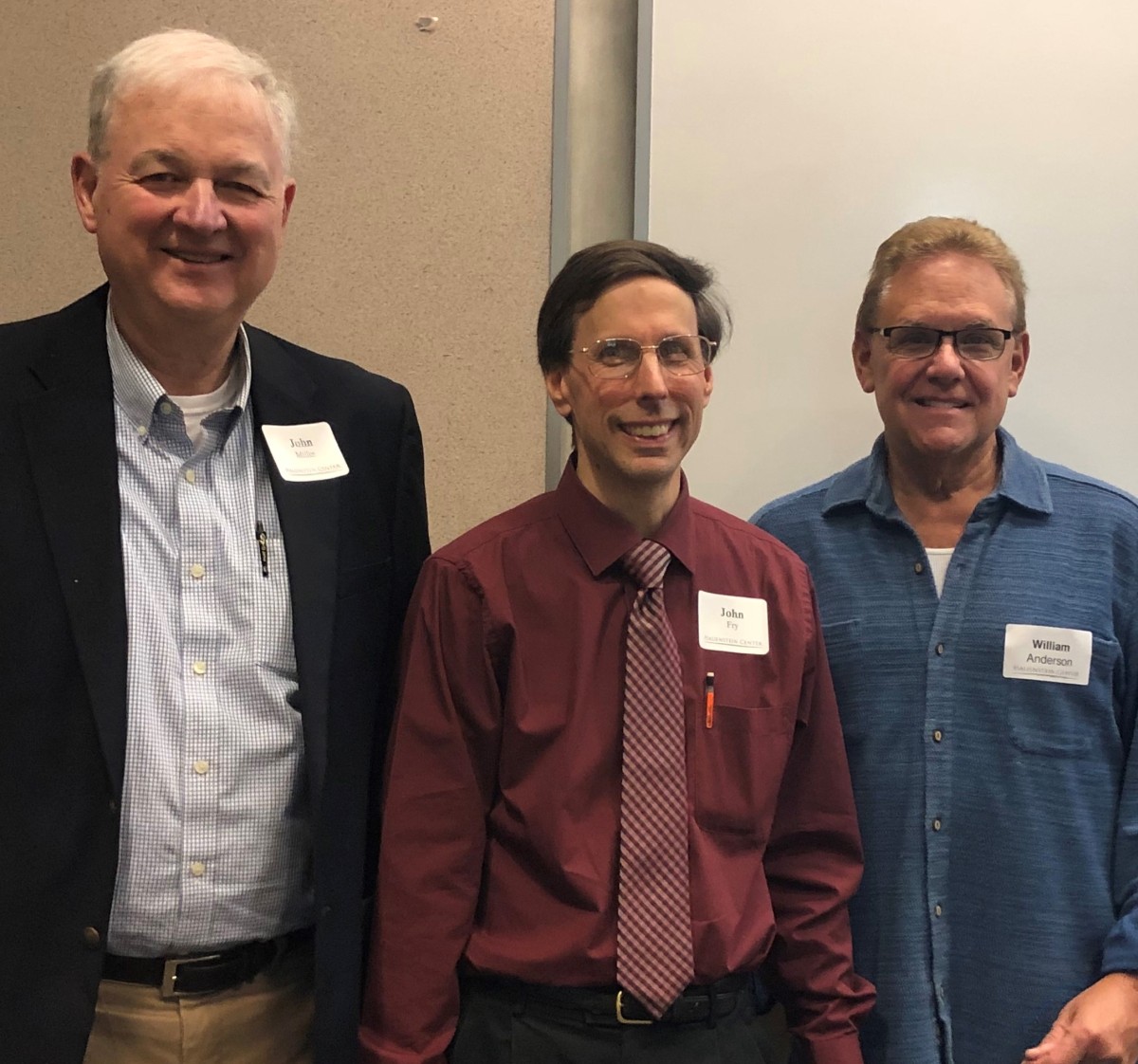
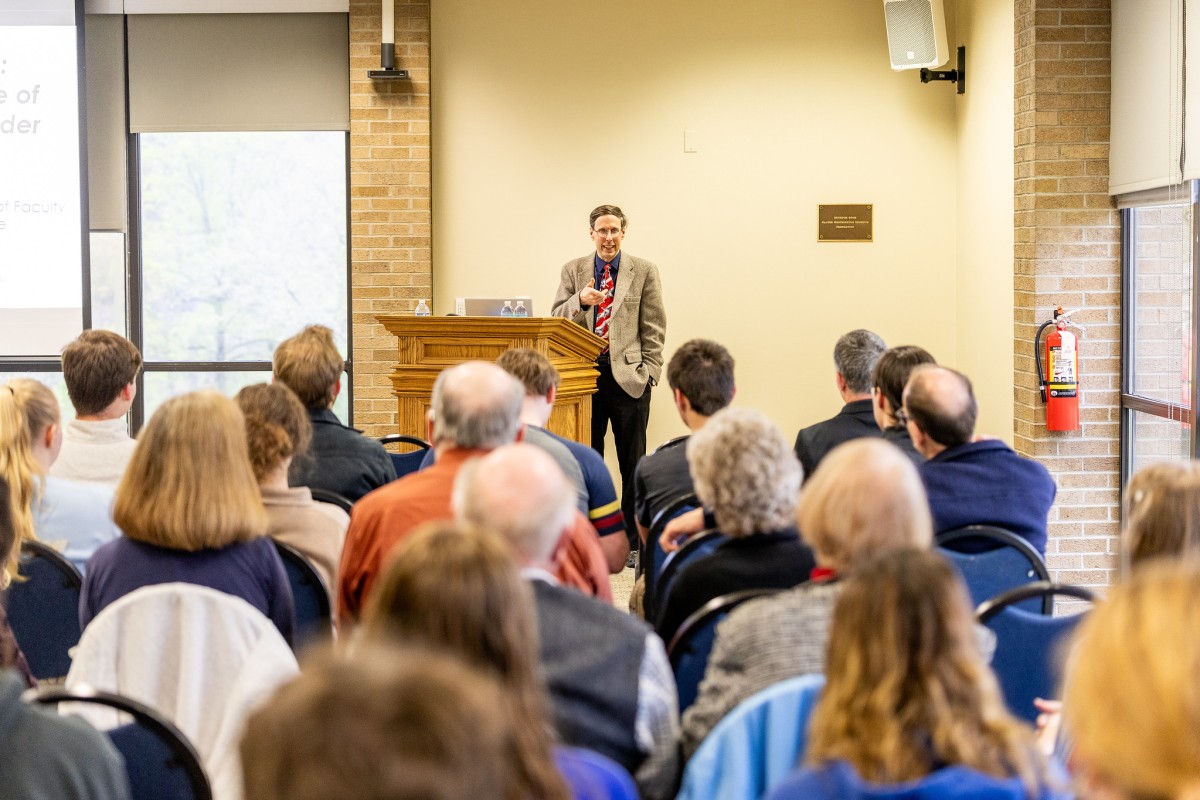
On Thursday and Friday, May 30 and 31, I attended the Midwestern History Conference (MHC) in the Eberhard Center at Grand Valley State University in Grand Rapids. It was the first time that I had been to the MHC since 2019. That was the year that Bill Anderson, John Miller, and I did a session on writing about Laura Ingalls Wilder. I also presented some of my early research on Wilder there in 2017. It was great to be back and to see some old friends. I chaired a session on Friday morning, and Friday afternoon I presented a paper about Wilder’s faith on a panel about Religion in the Midwest. Thanks to Patrick Allen Pospisek for organizing the conference and accepting my paper, to David Mislin for chairing my session, and to David Zwart for putting me up Thursday night and for being a good friend and colleague for so many years. It was also great to see Bill Anderson and Cindy Wilson.
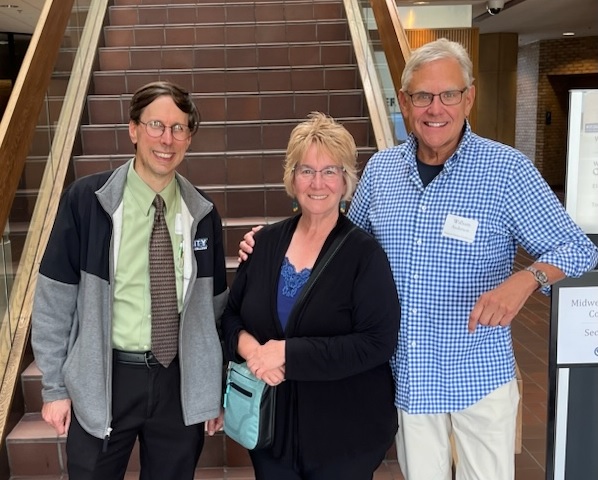
Me, Cindy Wilson, and Bill Anderson Photo by Bill Anderson

Finally, on Thursday night I was able to give a book talk at Schuler Books in Grand Rapids. Schuler books is an enormous independent bookstore that also has locations in three other Michigan cities. About forty people came, including some former colleagues from Trinity who now live in western Michigan. The question and answer period was especially lively, and I also had a great time talking to people after signing books. Many thanks to Elizabeth Bosscher for taking care of arrangements, to Indigo for hosting and keeping things moving, and to Yudha Thianto for making me Indonesian food for dinner.

Schuler Books in Grand Rapids

I believe that the rest of the summer will be pretty quiet. I will be doing a zoom for the Conference on Faith and History in early July, which will become a podcast that I can post afterwards. I also have some hopes of speaking at some public libraries or bookstores in Chicago. Then in September I’ll be heading to Missouri for Wilder Days in Mansfield and Lord-willing several other events. If you are interested in having me speak at your local bookstore, church, public library, or other community group, please contact me at john.fry@trnty.edu.

You can also keep checking my page dedicated to Book Talks, both upcoming ones and previous ones. Thanks again for your support and encouragement!

Links:

Trinity Christian College

Ann Arbor ad

Midwestern History Conference – Includes a program you can download

Post on the 2017 MHC

Post on the 2019 MHC

Cindy Wilson’s Author Site

Bill Anderson’s Author Site

Schuler Books Ad

Conference on Faith and History Podcast Series

Wilder Days at the Laura Ingalls Wilder Historic Home and Museum in Mansfield
Book Tour – Spring 24

a number of opportunities

Photo by Eric Schiemer, Geneva College

The spring semester at Trinity Christian College has sped by. Today is the last day of regular classes, and finals week is next week. During the last couple of months, I have also had a number of opportunities to talk about my research.

February was online appearance month. Right after the book appeared, I got an email from the publisher saying that Shaun Tabatt wanted to interview me for The Shaun Tabatt Show. We spoke via zoom on February 15 and the interview was published online two days later. Later that month, Fred Zaspel reached out about doing an interview for Books at a Glance. We spoke on February 28 and the interview was published on March 5. Many thanks to both Shaun and Fred for their time and interest.

March was email month. I traded many emails with staff and friends at (in alphabetical order): the Ann Arbor Public Library, the Blue Island Public Library, the College of the Ozarks, Geneva College, Grove City College, the Ingalls Homestead outside of De Smet, the Laura Ingalls Wilder Museums in Pepin and Walnut Grove, the Laura Ingalls Wilder Historic Home and Museum in Mansfield, the Laura Ingalls Wilder Historic Homes in De Smet, the Midwestern History Conference, and Schuler Books in Grand Rapids. Some of these contacts have become upcoming appearances, some are still in process.

April has been in-person appearance month. On April 4, I spoke at the Blue Island Public Library. About ten people attended and we had a great talk. Many thanks to Dennis Raleigh for making that event happen. I also taught a SALT course at Trinity Christian College from April 2 to 16. SALT (Seasoned Adults Learning at Trinity) courses are for residents aged 50 and older from communities surrounding the college. There were eight students, and over the three weeks we read and discussed the book. I also shared some photos from my research trips and visits to the Ingalls and Wilder historical sites. Many thanks to Dewoun Hayes for her enthusiasm and faithful support.

On Monday of this week, I flew to Pittsburgh and drove to Grove City, PA. There I got to have lunch with my longtime friend Michael Coulter, who teaches Political Science at Grove City College, and dinner with Jan and Katie Dudt, old friends from when we lived in western PA. I spoke to about forty people that evening, about half students (all women – not entirely surprising) and half people from the community. Several were high school classmates from Grove City Christian High School and Portersville Christian school. One I had not seen for probably 30 years. It was a great time. It was also a great blessing to stay with the Dudts on their beautiful farm outside Grove City, close to where I grew up. Many thanks to Mike for his work and to Grove City’s Institute for Faith and Freedom and Departments of English and History for sponsoring the talk.

Then on Tuesday, I drove from Grove City to Geneva College in Beaver Falls, PA. It was a nostalgic trip, especially the stretch down the hilly and twisty back roads between Portersville and Eastvale. It is still pretty early spring, so it wasn’t always beautiful, but it was home. At Geneva I got to spend some time with Jeff Cole and Eric Miller, members of the History Department, and Kae Kirkwood in the Archives. Geneva is my alma mater, so I knew Kae from when I attended in the late 80s and early 90s. And two of my sons, Ben and Daniel, currently go to Geneva, so we were able to get together for dinner (and ice cream after my talk). There were probably sixty people at the talk; most were students, but some were from the community, including several from Grace OPC in Sewickley, the church I attended when I was in college. The talk was part of Geneva’s Visiting Artist and Lecture Series (GVALS). Many thanks to Jeff and Eric, Provost Melinda Stephens, and Marlene Luciano-Kerr for the invitation and their hospitality.

I now have a page on the website dedicated to Book Talks, both upcoming ones and previous ones.

If you are interested in having me speak at your local bookstore, church, public library, or other community group, please contact me at john.fry@trnty.edu.

Thanks again for your support!

Links:

Trinity Christian College

Eerdmans Publishers

Midwestern History Conference

Blue Island Public Library

SALT at Trinity (click on Classes and then Session 3A to see the information about my course)

Geneva College

Grace OPC

2019 Midwestern History Conference

Last Thursday and Friday, I attended the Midwestern History Conference in Grand Rapids, Michigan. I had a great time.

The conference was sponsored by the Midwestern History Association and hosted by the Hauenstein Center for Presidential Studies at Grand Valley State University (GVSU). It was held at GVSU’s Pew Campus in downtown Grand Rapids.

I presented on a panel on Thursday morning titled “‘Everyone Has a Wilder Story:’ Laura Ingalls Wilder, the Midwest, and Historical Research.” It was a privilege to join Bill Anderson and John Miller. We each told the story of how we came to research and write about Laura Ingalls Wilder. Bill has been writing about Laura since the 1960s and has published over twenty-five books. I have previously mentioned four on this blog (links are at the end). John has written three books about Wilder and De Smet, South Dakota, including the most scholarly biography to date, Becoming Laura Ingalls Wilder. They included me, even though I did not read the Little House books when I was a child and I did not grow up in the Midwest. There were around fifteen attendees at our session, which was respectable, given the fact that there were nine other sessions going on at the same time. (I attended other sessions with only five people in the audience.) Discussion during the Q&A was also robust.

I used some of my presentation to reflect on “Everyone has a Wilder Story” in a second way. I think that many people today have a story that they tell about Wilder – about who she really was, and about how we should understand her life and respond to it today. This “Wilder story” guides how they read the Little House books and Wilder’s other writings, and it guides how they view her legacy. So I used my presentation to roll out some possible “Wilder stories,” some tentative ways of understanding Laura’s faith. I don’t think that any of these will come as a surprise to regular readers of this blog

– First, Laura was a committed Christian, attended Christian worship services, read the Bible, and prayed her entire life. She engaged in Christian practices that built her relationship with God and Jesus Christ.

– On the other hand, she never publicly identified with an individual body of believers – she never officially joined any church.

– On a third (?) hand, the original, handwritten manuscripts of the Little House books have more straightforward and positive descriptions of God, Christianity, and the church than appear in the published Little House books. These accounts were changed—most likely by her daughter Rose, who was agnostic when they were written—into the more negative depictions that appear in the published books.

– On a fourth (!) hand, Laura can probably not be understood as an Evangelical Christian. Her descriptions of God, Christianity, and church emphasize God’s power, His laws, and individual moral choices. Her writings almost never mention Christ, forgiveness of sins, or salvation.

It’s complicated. The more I engage the faith of Laura Ingalls Wilder, the more I despair of having just one ‘Wilder story,’ or a simple way of describing her faith. But if I was to have to give an overarching narrative for Laura’s life, I might say that she believed that people do not live by bread alone. Bread is necessary, but faith, community, and family relationships are more important. There are ironies here, too. Her relationship to the church she attended and the community she lived in was often ambivalent. Her own relationship with her own daughter was marked by misunderstandings and, at times, open conflict. Yet in the midst of these difficulties, Laura and Rose together created, in the Little House books, an immensely attractive vision of human flourishing that influenced millions of Americans during the middle to late twentieth century.

Other highlights of the conference included Anna Lisa Cox’s plenary talk on Thursday night and a session I chaired on Friday about music in the Midwest. Many thanks to Trinity Christian College for a travel grant to go to the conference. Thanks also to David Zwart, who teaches at GVSU, for letting me crash at his place on Wednesday and Thursday night.

As always, thanks for following along.

Links:

2019 Midwestern History Conference

Hauenstein Center

Post on Bill Anderson’s Laura Ingalls Wilder: A Biography

Post on Bill Anderson’s The Selected Letters of Laura Ingalls Wilder

Post on Bill Anderson’s Little House Sampler and Little House Reader

Post on John Miller’s Becoming Laura Ingalls Wilder

Anna Lisa Cox

Trinity Christian College

David Zwart


Francis Schaeffer and the Shaping of Evangelical America

(Photo credit: Pete Unseth, Wikimedia Commons)

I know that I have not posted much this fall. My time has been taken up with Academic Dean duties here at Trinity Christian College. I had hoped to get some writing done on chapter four of my book, but that hasn’t happened. In other research project news, however, I did propose a paper for LauraPalooza 2019. John Miller, Bill Anderson, and I are also looking at doing a session proposal for the Midwestern History Conference. And last week, a group of professors at Trinity read the first chapter of my book and give me comments on it. I got some great critiques and words of encouragement.

Over Thanksgiving break I read a biography in the series from Eerdmans publishers that I’m writing for: Francis Schaeffer and the Shaping of Evangelical America by Barry Hankins. It’s a very good book. I met Hankins at a meeting of the Conference on Faith and History (CFH) a while ago. He is the Chair of the History Department at Baylor University in Texas. The book came out in 2008. Since then, he has written books on the 1920s, American Baptists, and Woodrow Wilson.

Francis Schaeffer was a Presbyterian pastor during the twentieth century. He became a missionary to Europe and ran a Christian study center called L’Abri in Switzerland from the 1950s to the 1970s. It became a place where young Europeans who were questioning the meaning of life could come and hear Christian answers to their questions. Francis talked with them, Edith made them meals, and they could stay as long as they wanted. The theme of his teaching was that only Christianity provided philosophically supportable answers to the most important questions of life. He spoke cogently about art, culture, philosophy, politics, and many other topics. Eventually, L’Abri employed a large staff and thousands of young people from the United States and Europe visited. InterVarsity Press turned some of his talks into books, and during the 1960s he spoke at many Christian colleges in the United States. A number of the students who heard him became Christian scholars and college professors as a result of his inspiration. In the 1970s his son Frank Schaeffer and he made two movie series: How Should We Then Live and Whatever Happened to the Human Race? The first gave a history of western thought and culture, described where it had gone wrong, and gave instructions for how Christians should respond. The second was about the dangers of abortion, infanticide, and euthanasia.

Hankins’s biography was a trip down memory lane for me. I grew up in a home and a church where people read Schaeffer’s books and talked about them. My Mom read books by Edith. I remember reading Schaeffer’s books—I can only remember Escape from Reason and A Christian Manifesto specifically, but I know that I read more—when I was in high school and college. Both movie series were shown at my church. I think that I would give Schaeffer some of the credit for why my best friend in high school and I both became academics (he’s now a Professor of Political Science). For us, Schaeffer made the idea of studying culture and history from a Christian perspective cool.

Once I became a historian, I went back and re-read several of Schaeffer’s books. I found that they have a number of historical arguments and assertions that I just don’t think are correct. Schaeffer wasn’t a trained historian. He was a pastor, and he tended to use stories about the past to make the points he wanted to make about the world, God, and Christian answers to life’s questions. Other Christian historians have also found his historical narratives wanting, even those who were launched on their path to becoming academic historians by hearing Schaeffer speak or reading his works. Hankins notes this. It’s a fascinating story.

As I read Hankins’s biography, I also thought a bit about its structure in relation to what I am planning for my book on Laura Ingalls Wilder’s life. In many ways, Hankins’s biography is very different than what I think mine will be. Only one small section of one chapter is about Schaeffer’s childhood, mainly because there are few sources about it. I am projecting that three of the eleven chapters in my book will be on Laura’s childhood. Also, three of the main chapters of Hankins’s work are thematic: they’re about Schaeffer’s works on 1) philosophy, 2) culture, and 3) the Bible. The chapters are not chronological; the time periods covered overlap. I think that my book will mainly be chronological, and the chapters will be pretty self-contained.

This is likely the last post that I’m doing during 2018. I hope that everyone has a blessed Christmas and a good start to 2019.

Links:

Trinity Christian College

LauraPalooza 2019 Call for Papers

Midwest History Conference Call for papers

Francis Schaeffer and the Shaping of Evangelical America

State of the Project

It’s time to take stock of where my project on the faith of Laura Ingalls Wilder has led me so far and where it is heading.

In January of 2016, I began this blog. The plan was to investigate Wilder’s faith and write an article for a history journal about it. I also had the idea that the article could be the core of one chapter in a book on how Wilder’s work engages topics of interest to readers in the twenty-first century. Many readers of this blog walked with me as I read through the Little House books, the best biographies of Wilder, and other books in the spring and summer of 2016. Last fall, I presented a paper on Wilder’s faith to the Conference on Faith and History. It was there that several individuals suggested that consider writing a book-length biography of Wilder with particular attention to her faith.

The idea of writing a spiritual biography of Wilder was confirmed by students when I taught an Honors Seminar on the Little House books during the spring 2017 semester. There also seemed to be enthusiasm for the project when I gave an invited lecture at Calvin College in Grand Rapids, Michigan, in February. And it received general support from many old friends and Wilder scholars I saw at the Laura Ingalls Wilder: A 150-Year Legacy conference in Sioux Falls at the end of last month. So writing this book is currently my intention.

Last week, I sent a book proposal to Eerdmans Publishers in Grand Rapids, Michigan. The book would be part of their series titled The Library of Religious Biography. I projected that there will be ten chapters. If I can write two chapters each summer, the manuscript will be complete in five years. Both the series editor and an in-house editor at Eerdmans are receptive to the idea. So we will see what happens next.

This summer, I will be speaking on Wilder’s faith two times. At the beginning of June, I will be on a panel at the Third Annual Midwestern History Conference in Grand Rapids. The panel is titled “The Uses of Public Memory in the Rural American Midwest.” My paper title is “Little House and Little Church: Memory and the Church in the Published Works of Laura Ingalls Wilder.” My paper will suggest that the Midwestern upbringing of both Wilder and her daughter Rose Wilder Lane influenced the depiction of the church in Wilder’s works. However, because Wilder and Lane had strikingly different experiences in the church—and therefore strikingly different memories of the church—those differences also influenced how the church is described, especially in the Little House books.

In July I will be speaking at LauraPalooza. This year the conference is titled LauraPalooza 2017: Little Houses, Mighty Legacy: 150 Years of Laura Ingalls Wilder. I am on their agenda first thing on Friday morning. The conference is sponsored by the Laura Ingalls Wilder Legacy and Research Association and held in Springfield, Missouri. Many of the attendees at this conference will be people who just love Wilder and the Little House books, not academics. Probably a large percentage of them will be women. My talk is just titled “‘On the Pilgrim Way’: The Faith of Laura Ingalls Wilder.” The title is taken from Chapter 23 of By the Shores of Silver Lake, which describes the first prayer meeting and worship service in DeSmet, SD, in 1880. I am hoping to roll out some of my observations about Wilder’s faith for this broader audience. It is also my hope to stop at the Laura Ingalls Wilder Historic Home and Museum in Mansfield, Missouri, on my way to the conference.

Meanwhile, this summer I hope to continue to read and post about what I read. Thanks for being part of my work.

Updates / Prairie II

I’ve been working on several parts of the Faith of Laura Ingalls Wilder project for the last several weeks. My plan was to get as much as possible done before the due date of the first paper in my Western Civilization course here at Trinity Christian College. It was handed in today. So I will be grading for the next week, and then that class will be taking the first exam, so I’ll be grading for another week…

I did get confirmation this week that I will be speaking at the Midwestern History Conference, sponsored by the Midwestern History Association, in June. The panel is on “The Uses of Public Memory in the Rural American Midwest.” My paper title is “Little House and Little Church: Memory and the Church in the Published Works of Laura Ingalls Wilder.” Many thanks to panel organizer and presenter Nancy Berlage from Texas State University and presenter David Brodnax, Sr., my colleague here at Trinity. Thanks also to Commenter Jon Lauck, and Chair David Zwart.

I was able to finish my lecture for the Calvin College History Department Colloquium that I will be speaking at later this month. Many thanks to Will Katerberg and the Mellema Program in Western American Studies for inviting me. The lecture is titled “‘This is What Men Call God:’ The Faith of Laura Ingalls Wilder.” I also finished a presentation for a Faculty Coffee here at Trinity, which will be the week after I speak at Calvin.

This week I also traded emails with John Miller about Wilder manuscripts, and he told me about a conference in April in honor of the 150th anniversary of Wilder’s birth. It’s called “Laura Ingalls Wilder: a 150 Year Legacy,” it’s being put on by the South Dakota State Historical Society (SDHS) in Sioux Falls. The SDHS is releasing a new book of essays on Wilder, and the conference will have all of the big names in Wilder studies. I’m trying to figure out if I can go. It’s during my last week of classes.

Meanwhile, I’ve been enjoying my Honors Seminar on the Little House books immensely. So far we’ve read and discussed Little House in the Big Woods, Farmer Boy, and Little House on the Prairie. The students are pointing out things to me that I hadn’t noticed. For instance, they noted that during the account of the family’s getting malaria (“Fever and Ague”) in Prairie, baby Carrie isn’t mentioned at all. (Carrie is actually mentioned twice in the chapter, but it is before and after the family is sick.) Who took care of the baby while everyone was stricken? This sent me to Pioneer Girl. In that memoir, the story of malaria is given before the story of Ma giving birth to baby Carrie. But because of the order in which the children’s books were published, Carrie was already in Big Woods, so she had to be in Prairie. We also discussed other challenges involved in running two timelines in our heads – the timeline of the Little House books and the timeline of Wilder’s actual life…

I also found an additional mention of Christianity in Little House on the Prairie that I hadn’t written about last year. In chapter 17, when Pa is gone to town, Ma sits up late in the rocking chair by the fire with Pa’s pistol in her lap and sings “There is a happy land / Far, far away, / Where saints in glory stand, / Bright, bright as day. / Oh, to hear the angels sing, / Glory to the Lord, our king.” (359) I probably should have noticed this when I worked through The Ingalls Wilder Family Songbook, but I didn’t.

Thanks for listening.

(The page number reference is from Volume 1 of the two volume set of the Little House books published by the Library of America in 2012.)

The End of 2016

It’s almost Christmas, and my family and I will be traveling starting on Friday, Lord-willing. So this, my end-of-the-year post, is going up today.

This blog launched on Monday, January 4, 2016. In that post, I expressed my desire to write an article on Laura Ingalls Wilder’s faith and my plan to read the Little House books and post about them. Since then, I’ve written and posted twenty-nine additional entries.  I read the eight Little House books, twelve additional volumes of material by her, three biographies, and several other books. I got a grant to look at material by Wilder and Lane at the Herbert Hoover Presidential Library. I blogged about early manuscripts of the Little House books and correspondence I read there. I presented an article to a group of faculty here at Trinity Christian College and a paper to the Biennial Meeting of the Conference on Faith and History. I was encouraged to propose a book-length biography of Wilder giving particular attention to her faith by representatives from two different publishers. As a result of my reading and interactions with others, I believe that my understanding of Wilder’s faith is much deeper than it was a year ago.

What’s next? I will be teaching an Honors Seminar here at Trinity titled “The Little House Books in the Twenty-First Century” during the spring semester. We will be reading and discussing the Little House books together as well as some other materials (I haven’t finalized the syllabus yet). I hope to write the book proposal as I teach the class.  It will be good to talk about it with students; as they write their research papers, I’ll be writing my proposal. I’ve also been asked to give a lecture on Wilder’s faith at Calvin College next February. There is a good chance that I will be able to present a paper at the Midwestern History Conference, sponsored by the Midwestern History Association, next June. Finally, I will be writing a book review of the latest book on Laura and Rose, Libertarians on the Prairie by Christine Woodside, for the journal Fides et Historia. So I have been blessed with many opportunities to engage Wilder and her faith.

I hope that everyone who reads this has a truly blessed Christmas and that the new year opens for you with optimism, peace, and trust in the child born in Bethlehem, who is also the King of all creation.

Will be back in 2017.