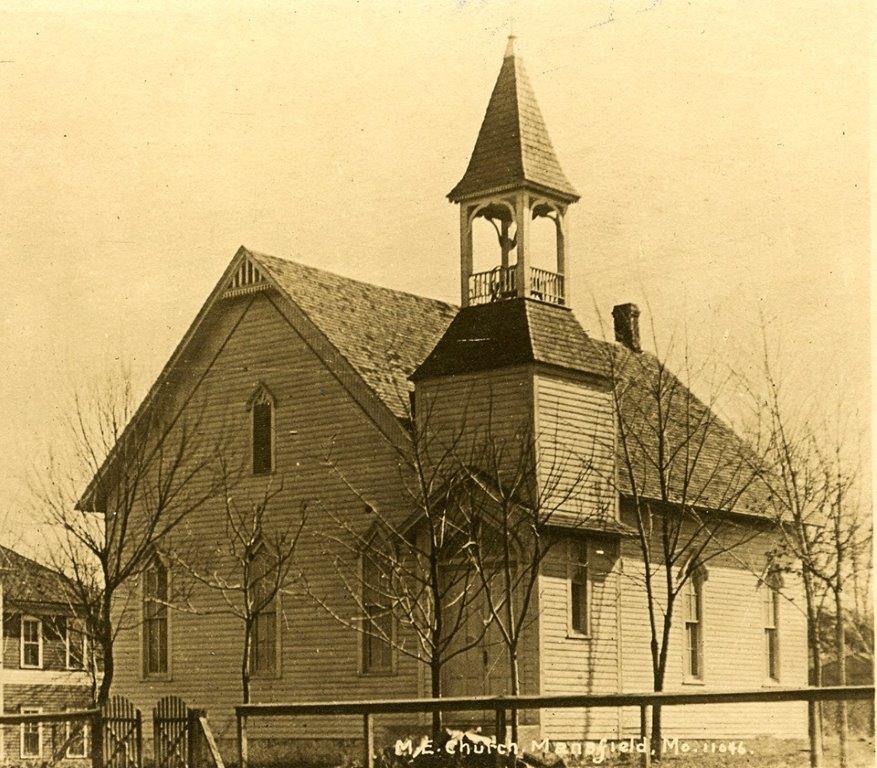
Mansfield Methodist Episcopal Church

Organized Sunday with a Good Membership

Last week, I did my research trip to Missouri and Kansas. This trip generated many insights for my book, and it will provide material for my next several blog posts.

Monday and Tuesday, May 24 and 25, I visited the State Historical Society of Missouri office in Rolla. It is housed in the Wilson Library at the Missouri University of Science and Technology, or Missouri S&T. This school was previously called the University of Missouri at Rolla, and before that it was the Missouri School of Mines and Metallurgy. The State Historical Society of Missouri has collections at universities around the state: Cape Girardeau, Columbia, Kansas City, Rolla, St. Louis, and Springfield. Materials at any location can be sent to any of the others. I requested some reels of microfilm be sent from the University of Missouri at Columbia to Rolla so that I could look at them. They were for the Mansfield Mail from 1895 to 1906 and the Mansfield Mirror from 1923 to 1936. Both were weekly newspapers published in Mansfield.

Katie Seale in the Rolla office kindly obtained the microfilm before I arrived. Once I was there, she taught me to use the microfilm reader, which was a scanner connected to a desktop computer. The technology was incredibly good, especially compared to the microfilm readers and printers used by historians for decades. It was able to make even very dark microfilm images readable. The system also allowed me to scan portions of a page of the newspaper and paste them directly into my notes. After several hours, I was in a groove, and in the two days I had looked at all the issues of the Mansfield Mail and had made some headway in the Mirror.

I was mainly looking for places where the local newspapers mentioned one of the churches in the town, other Christian activities, or the Wilders. I was not disappointed. In fact, it was the first issue I looked at that included a description of the founding of the Mansfield Methodist Episcopal Church, where the Wilders eventually settled. I reproduce that article in full:

The Methodists

Organized Sunday with a Good Membership

The Revival

               The revival held in the C. P. Church by Rev. Worthen resulted in much good in the interest aroused, the crowds that attended and in the enlivening of religious interest in the city, and, especially, in the organization of a Methodist Episcopal Church in our midst. The number of conversions were twenty-three and number of accessions to the M. E. church was twenty-six.

               Organization of the church was effected on Sunday, last, by Rev. E. G. Cattermole officiating, assisted by Revs. Rowden and Worthen. The organization starts out with twenty-six members, while twelve or fifteen more will come in soon. The new church will be in the Rev. Mr. Cattermole’s charge until Conference meets, which will be in March, when its future supervision will be determined.

               Rev. Worthen did a good work here and should have credit, we presume, for the most of the work, as he labored incessantly and without compensation. He is, in fact, an able minister and could do much good if he would learn not to antagonize every interest and every body not directly in conformity with his views, and berate them in language strangely in contrast with the doctrines of the Bible. Nothing can be gained by making enemies in church work; but everything may be gained by making friends and by persuasion. Nevertheless, the work accomplished here was a good work and just credit should be given for it, although enemies were made for the church by the bitterness of the language used by Rev. Worthen; but our people should remember that this was not the fault of our new church or of our home church people, but of an outside individual. (Mansfield Mail, 22 February 1895)

This is a striking article for a couple reasons. First, it sets the origin of the Methodist Episcopal Church in Mansfield in February 1895. The Mansfield United Methodist Church histories that I had read previously say that the church was founded in 1899. The first church building was completed in 1899, but according to this news story, it appears that the congregation was founded four years earlier. However, I’m still wondering about the entry Laura wrote about Mansfield in her diary of her family’s trip from DeSmet, South Dakota to Mansfield on August 30, 1894: “There is a Methodist Church and a Presbyterian.” (On the Way Home: The Diary of a Trip from South Dakota to Mansfield, Missouri, in 1894, with a setting by Rose Wilder Lane [New York: Harper and Row, 1962], p. 74). This suggests that there was already a Methodist church in existence the previous year. Perhaps I will be able to access Methodist Church district records that will shed light on when exactly the Mansfield Methodist Episcopal Church was founded.

In addition, it is fascinating that the author of this article combines straightforward reporting about the revival and its results with what might be seen as editorial comments about the pastors involved. This kind of editorializing was not uncommon during the late nineteenth century. It does indicate that some pastors emphasized their denomination’s doctrines instead of beliefs that all Christians share. It is unclear, obviously, whether the author’s assessment of the pastor’s actions was shared by others who committed to the new church. I think that Laura Ingalls Wilder would probably have resonated with the newspaper reporter’s attitude.

Another item provided regularly in these local newspapers is the schedule for full worship services led by the pastor at each church in Mansfield. There was some shifting over time, but it appears that there were “preaching” services either one or two times a month at the Methodist Church. In some years, it was the first and third Sunday mornings, during others it was the third and fourth, and sometimes it was just the third. This was because the pastor assigned by the Bishop served more than one church.

I believe that I now have an almost complete listing of pastors who served the Mansfield Methodist Church between 1895 and 1935. At least it is more complete than any list I have seen. They were:

E. G. Cattermole, 1895

J. S. Meracle, 1897

T. P. Leckliter, 1898

C. F. Tippen 1899

W. H. Yount or Yaunt, 1899-1900, 1903-1904

John J. Frazier, 1904

B. D. Jones, 1908-1909

B. E. Niblack, 1912-1913

J. J. Wolfe, 1913-1914

J. W. Needham, 1914-1915

Guy Willis Holmes, 1916-1919

Thomas E. Prall, 1919-1920

A. J. Graves, 1920-1921

Clyde E. Little, 1921-1922

W. A. Gray, 1922-1923

M. O. Morris, 1923-1924

George A. Wells, 1924-1926

C. C. Van Zant, 1927-1929

William A. Dahlem, 1929-1931

J. E. Owen, 1930-1931

Andrew C. Runge, 1931-1932

D. S. Frazier, 1932-1933

Holley Day, 1933-1936 (maybe longer)

Pastors normally only served for one year and then were assigned elsewhere. It appears that by the late 1920s and 1930s, however, it was more common for a pastor to serve multiple years.

As far as considering the faith of Laura Ingalls Wilder, I’m gathering answers to basic questions about the Methodist Church in Mansfield—when was it founded? When did they meet for worship? Who was the pastor?—in hopes that they will contribute to answering other questions: What was spiritual formation like for members of a church in a small town like Mansfield, where a pastor came to preach just once or twice a month, and where he served just one year and then moved on? Did the Wilders attend Sunday School, which was held weekly? The newspapers report on events sponsored by the Methodist Church Ladies Aid Society, and they regularly give the program for Epworth League and Christian Endeavor meetings for young people. It doesn’t seem that Laura was very active in the Ladies Aid. When Laura’s name appears in the newspaper, it is usually 1) as an official in the Mansfield chapter of the Order of the Eastern Star or in 2) relation to activities of two women’s clubs, the Justamere Club in Mansfield and the Athenian Club which had members in both Mansfield and Hartville. She also served as the Secretary-Treasurer of the Mansfield chapter of the National Farm Loan Association.

Many thanks to my institution, Trinity Christian College, for funding my travel. More about other things I learned on the research trip in future posts. Thanks for reading.

Links:

State Historical Society of Missouri

Missouri University of Science and Technology

Trinity Christian College

The Methodist Church in Missouri, 1798-1939

Three different Methodist denominations

The spring academic term at Trinity is over. We were able to hold two in-person commencement ceremonies in a local minor-league ballpark for our 2020 and 2021 graduates. Though it was cold, it didn’t rain. My daughter was a 2020 graduate and got to walk across the stage with her friends.

That was two weeks ago. Last week we had a variety of end-of-year meetings. This week my schedule opened up a bit, so I have been able to return to work on the book. Trinity has provided funding for me to travel next week to the State Historical Society of Missouri and look at newspapers from Mansfield, Missouri, where Laura and Almanzo Wilder lived from 1894 to the end of their lives. I will be looking for information about the churches in that town, particularly the Methodist Church, where the Wilders worshipped.

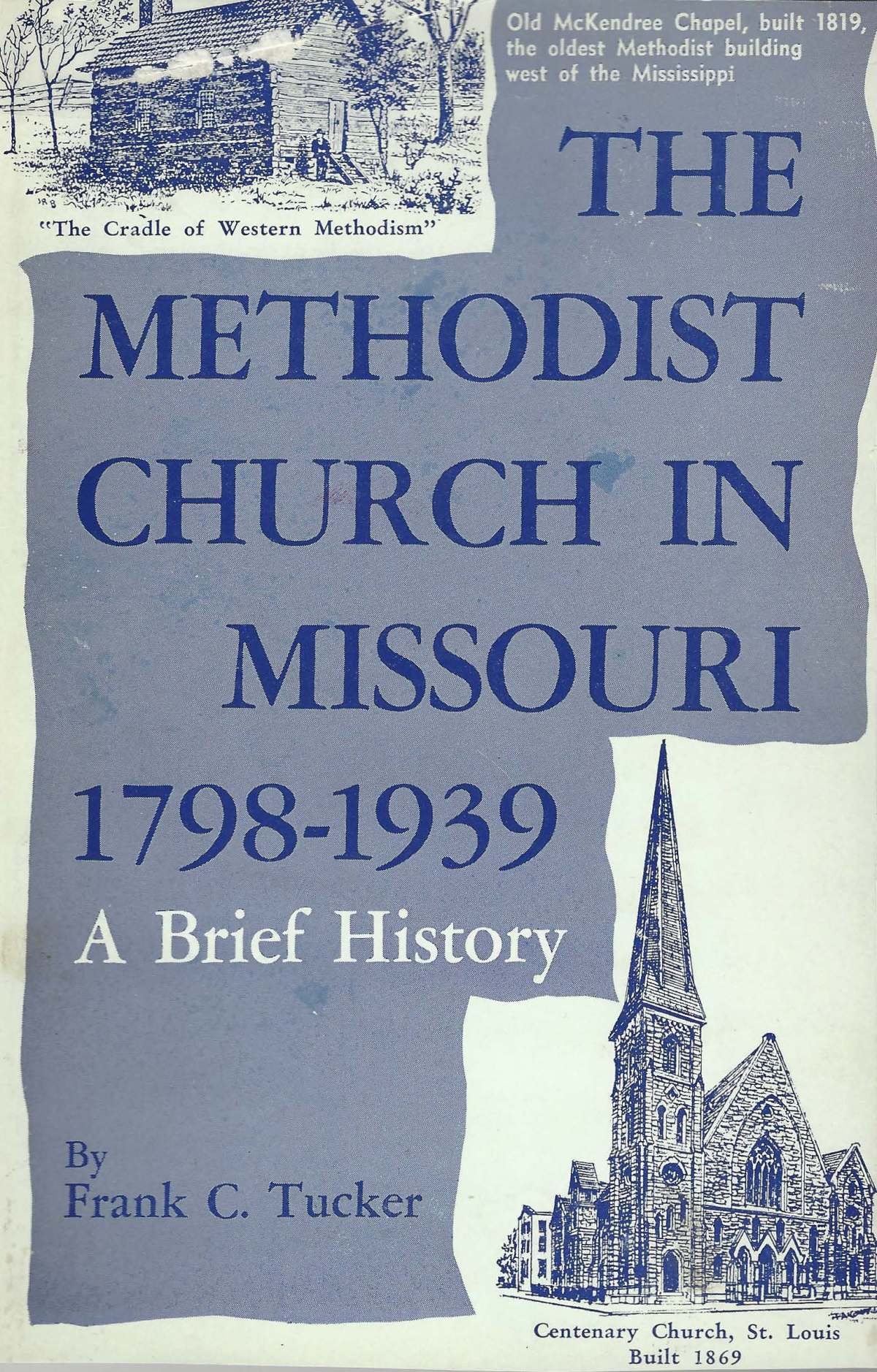
In preparation for the trip, this week I read Frank Tucker’s The Methodist Church in Missouri, 1798-1939: A Brief History. The book was published in 1966. It is an institutional church history, describing the origins and growth of what eventually became the three different Methodist denominations in Missouri during the early twentieth century: The Methodist Episcopal Church (MEC), the Methodist Episcopal Church, South (MECS), and the Methodist Protestant Church (MPC). Tucker places the growth and development of these churches in two contexts: 1) events in Missouri, including early growth of white population in the state, the Civil War, and reforms during the early 20th century, and 2) developments in the denominations nationally. The book ends with the merger of the three denominations to become The Methodist Church in 1939.

Tucker’s book does not mention Mansfield, and it only briefly refers to the spread of Methodism in the Ozarks more generally. But reading the book taught me a lot about Methodism and reminded me of a lot I had previously learned about Missouri’s history. Some particular things:

  • Terminology: Methodist denominations are governed by a General Conference which meets every four years. Smaller geographic areas are governed by an Annual Conference, and still smaller areas have a Quarterly Conference. Ministers are appointed annually to particular churches by the Bishop of the area.
  • Divisions: The MPC left he MEC in the 1830s because of disagreements about governance: how leaders of Quarterly Conferences were chosen and whether lay leaders could be members of Annual and General Conferences. The greater disruption to Missouri Methodism came when the MECS split from the MEC in the 1840s because of disagreements about slavery. Annual Conferences were allowed to choose whether to stay with the MEC or leave with the MECS; the Missouri Annual Conference voted to join the MECS. However, some churches in Missouri then voted to remain in the MEC. As a result, for almost 100 years, churches in Missouri belonged to one of three different Methodist denominations. Since Missouri was a border state, it had much more diversity among the three groups than, say, Minnesota, where most Methodists were MEC, or Alabama, where nearly all Methodists were MECS.
  • The Border War, Bleeding Kansas, and the Civil War: The 1850s and 1860s were terrible years for Missourians. The MEC and MECS both founded churches in Kansas, and there were Methodists among both the Bushwhackers and the Jayhawkers, both before and during the war. Some MECS churches were occupied by pastors from the MEC. The MPC also divided over slavery.
  • Ministries: After the Civil War, as Missouri’s population grew and experienced more prosperity, Methodist churches initiated additional ministries. Sunday Schools became more widespread and organized. Epworth Leagues were started to provide young people in their teens and twenties with leisure activities and opportunities for spiritual growth. Methodist denominations founded colleges, hospitals, and training schools for nurses. Methodists also participated in the late-nineteenth century explosion of world missions.
  • Race: Before the Civil war, there were African-American members in all three denominations. After the war, Black Methodists left the MECS after the Civil War to form the Colored Methodist Episcopal Church, which later was renamed the Christian Methodist Episcopal Church. In the MEC, blacks had their own churches, pastors, districts, and annual conferences.
  • Reunion: During the decades surrounding the Civil War, there was competition and even conflict among churches in the MEC, MECS, and MPC. By the late 1800s, however, animosity had cooled. The three denominations collaborated on a hymnal in 1904, and there were calls from the Annual Conferences in Missouri for the denominations to merge. The merger was finalized in a uniting General Conference in Kansas City, Missouri, in 1939.

The Missouri United Methodist Archives (MUMA) is located in the library at Central Methodist University in Fayette, in north central Missouri. Central Methodist is the sole remaining institution of higher education founded by Methodists in the 1800s. John Finley, the Archivist at MUMA, has been very helpful in sending me information from the Archives about the Methodist Church in Mansfield. Apparently it was part of the MEC. Finley suggests that this would have been more congenial to Laura and Almanzo since the MEC was dominant in the upper Midwest where they were from. So perhaps there were similarities as well as regional and cultural differences between the Methodist Church in Mansfield and the one in Walnut Grove, Minnesota that Laura attended for at least a year as a child.

Tucker’s book provided me with state-level and denominational context for Methodist churches in Missouri. As a work of church history that focuses on church leaders and institutional activities, however, it doesn’t ask or answer questions that a social historian might ask, like: What was it like to be a member or pastor in a church that was part of the MEC in a state that was dominated by the MECS? In a small town like Mansfield during the early 1900s, where a pastor came to preach just once a month, did members feel connected to the Methodist practice of circuit riding in the late 1700s and early 1800s? Or was it just a fact of life, since all churches in Mansfield at the time—Baptist, Christian, Methodist, and Presbyterian—only had preaching once a month? As is often the case, historical work is about struggling with the questions, not finding the answer.

I’m looking forward to being back in Missouri for research next week. Thanks for reading.

Picture credit: I scanned the front of the dust jacket of the book.

Links:

Trinity Christian College

Trinity Christian College Commencement

The State Historical Society of Missouri

The Methodist Church in Missouri, 1798-1939: A Brief History

The Missouri United Methodist Archives

Mansfield Press and Mansfield Mirror

Local newspapers, the Methodist Church, and Faith formation

Greetings. Once upon a time, I did weekly blog posts. Now I’m glad when they are monthly. But these are trying times…

The last several weeks, I’ve been avoiding thinking about preparing for fall by working on my book, “On the Pilgrim Way”: The Faith of Laura Ingalls Wilder. I’ve been writing chapter 7 (of 11). The draft is almost complete. As July begins, I’m going to have to make the pivot to class preparation for the highly uncertain fall and spring of 2020-2021.

Chapter 7 addresses the years 1911 to 1924 in Laura’s life. Laura and Almanzo were living on Rocky Ridge, their farm about a mile outside of Mansfield, Missouri. These were the years that Laura wrote articles and columns for the Missouri Ruralist, a regional farm newspaper. Laura was in her forties and fifties, and even as she first had cultivated an audience for her writing, she was also at the height of her participation in community affairs in Mansfield. She was regularly an officer in the Mansfield chapter of the Order of the Eastern Star, the auxiliary to the Masonic Lodge which allowed female members. She was also a founding member and regular attender of two women’s clubs. One was the Athenians, mostly women from Hartville, the county seat of Wright County and about ten miles north of Mansfield, but with five members from Mansfield. The Justamere club was founded in 1919 by and for women from Mansfield; Laura wrote the club song, “We are All Friends.” During World War I, she volunteered for the local chapter of the Red Cross and she and Almanzo contributed to the Liberty Bond drive. She was active in local Democratic Party politics and helped to found the Mansfield Farm Loan Association, which received funds from the Federal Government and made loans to farmers. She was elected Secretary Treasurer for the Association every year from 1917 to 1928.

How do I know about these activities? Well, most of them are reported in biographies of Laura. But I got to read about all of these things when I looked at the copies of two local newspapers that have been digitized and made available by the Chronicling America program of the Library of Congress. The Mansfield Press is available from 1908 to 1909. The Mansfield Mirror is available from 1912 to 1922.

Authors like John Miller and Caroline Fraser have gone through these papers before me and relate what they say about Laura and Almanzo. I worked through them in order to see what they say about Christian organizations in Mansfield, and especially about the Mansfield Methodist Church, where the Wilders attended most of their adult lives, though they never officially became members. Here are some things that I learned:

  • When Laura and Almanzo moved to Mansfield in 1894, she wrote in her diary that “There is everything here already that one could want though we must do our worshipping without a Congregational church. There is a Methodist church and a Presbyterian.” (On the Way Home, 74) The Methodist church was actually a Methodist Episcopal (or M. E.) Church, and the Presbyterian Church was a Cumberland Presbyterian (or C. P.) Church. In 1909 a Baptist congregation was formed, and a Church of Christ was founded in 1913.
  • The Methodist Church building had been built in 1899, and it was a center of activity in the Mansfield Community. It housed dinners sponsored by the Methodist Ladies Aid Society, graduation services for the local high school, and at times civic events like Memorial Day or July 4 observances, especially if it was rainy—otherwise they were held outside.
  • None of the churches in Mansfield had pastors who served the church there full time—all of them were shared with churches in other small nearby towns. As a result, none of the churches had worship services with a sermon every week. By the middle of the 1910s, the Church of Christ had preaching (this is how the newspaper describes it) the first Sunday of each month, the Baptist church had preaching the second Sunday, the Methodist Church had preaching the third Sunday, and the Presbyterian Church had preaching the fourth Sunday. Sunday school was held in all the churches every Sunday.
  • The Methodist Church in Mansfield was part of the St. Louis Conference of the Methodist Episcopal Church. The M. E. denomination was hierarchical, which meant that the leaders of the conference assigned ministers to the churches every fall for one year terms. At times a pastor might be returned to a church or set of churches for two or even three years, but most of the men that served Mansfield and other churches in small towns were only there for one year before being moved to another pastorate.
  • My far the most colorful pastor of the Mansfield Methodist Church was the Rev. Guy Willis Holmes, who served there from 1916 to 1919. He is described in the newspaper as “an earnest and forceful preacher” and “a live-wire.” He must have been an electrifying speaker and a persuasive organizer. After only six months in the area, he was giving the commencement speech at multiple high schools, had helped to start a boy scout troop, and had conducted revival services that resulted in 22 conversions. But he came into his own during World War I, when he recruited a company for the Missouri National Guard, Chaired the County Council of Defense, and was named the Federal Food Aid Administrator for Wright County. Holmes was an outlier in that he served for three years. Subsequent pastors never quite lived up to his legacy.

I’ve been thinking about how these realities might have formed the Wilders and their faith. What might it have meant that there was only a worship service with preaching at the Methodist Church once a month? I don’t know if Almanzo and Laura went to Sunday School on the other weeks or not. Furthermore, what might it have meant for their church that it often had a pastor who was only there for one year and then moved on? Could a pastor really get to know many people in the church if he was only in town one weekend a month for one year? Finally, what did Laura and Almanzo think of Rev. Holmes and his striking career as pastor and war worker? For most of 1918, in his role as Food Administrator, Holmes published rules for farmers, stores, and individuals in the newspaper. Staples like flour and sugar were rationed and their prices were fixed, farmers had to market their wheat immediately when it was harvested, and threshing machine owners had to provide weekly reports. It is clear that the Wilders opposed what they saw as Federal Government overreach during the New Deal. I don’t know if they resented the U. S. Food Administration’s rules and regulations during the Great War.

As always, I’m working through these things as I write the book. Thanks for reading.

Quote is from Laura Ingalls Wilder, On the Way Home: The Diary of a Trip from South Dakota to Mansfield, Missouri, in 1894, with a setting by Rose Wilder Lane (New York: Harper, 1962).

Links:

Chronicling America at the Library of Congress

For more on Laura and the Eastern Star and other community activities, you can check out Teresa Lynn’s Little Lodges on the Prairie: Freemasonry & Laura Ingalls Wilder (Austin: Tranquility Press, 2014).

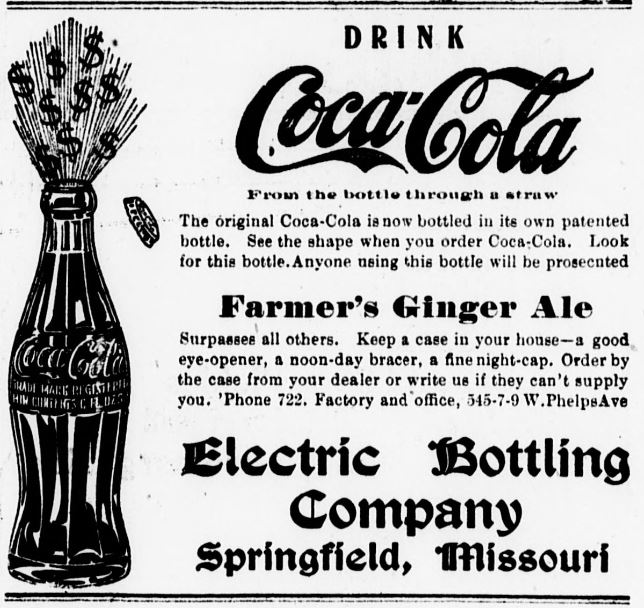
The Coca-Cola ad is from the January 8, 1920 edition of the Mansfield Mirror.

The Long Winter and the Coronavirus

This book probably read differently when it was released in 1940.

I wrote a first draft of this on Friday, May 1. The next day I learned that John Miller had died and I immediately began work on my tribute to him. My time since then has been dominated by videoconference meetings for my work at Trinity, and I wasn’t able to get back to this until yesterday. The piece seems dated now, since the weather is warmer, some states have reopen their economies, and there are more arguments in the states that haven’t. School is also now out for many American children. But I thought that I would edit and post it anyway.

I have remarked to members of my family and others that things read differently when one is living under a stay-at-home order. The book of Philippians in the New Testament reads differently when you think about the fact that the Apostle Paul wrote it while under house arrest in Rome. Other parts of the Bible also sound different given the reality in which we are living. Little House in the Big Woods sounded different when I read it several weeks ago. Yesterday I decided to read The Long Winter.

When I blogged about The Long Winter four years ago in February 2016 (it is hard to believe I’ve been doing this so long), I marveled at the tightness of the narrative in the book. Some glimpses at its artistry:

  • The first chapters describe Laura and Pa cutting and stacking the hay that saves their life later in the book by providing fuel for their fire.
  • Multiple events early in the book foreshadow the crisis that is to come, including the thickness of a muskrat’s house, a warning from an older Native American, an early blizzard, and Pa’s and Laura’s premonitions of disaster. A brooding malice is depicted as lurking behind even fine weather.
  • The description of peril when the schoolchildren have to walk home in a blizzard is gripping.
  • The depictions of privation are vivid. The Ingalls family goes to bed early to save coal and kerosene, eats the same food again and again, and eventually must spend all their time just grinding grain and twisting hay to get enough food and fuel to survive.
  • The structure of the book is relentless: first there is no meat, then no coal, then no kerosene. Hopes are pinned on the arrival of the next train again, and again, and again. Then on page 213, Pa says “I hate to tell you… The train isn’t coming.” That chapter ends “The wheat and the potatoes were not enough.” (224) Later, Laura asks, “Ma, will we starve?” (243)
  • The narrative reaches its nadir when Pa’s fingers are too cold to play the fiddle, the activity that has always rallied the family’s spirits in earlier books.

I find the book to be incredibly effective fiction, even for adults, especially those with families.

I can imagine that this book read differently when it was released in 1940. The generation that had lived through the Great Depression and read it for the first time during the Second World War understood peril and privation in ways that our generation does not. Or perhaps not until now. Peril has been brought home to us in media reports and stories from acquaintances about the coronavirus. Privation may be coming, for the millions of Americans who have lost their jobs or even for society more broadly.

Interesting comparisons in the book to our current situation:

  • In the first half of the book, Ma serves as the voice of naïve optimism in the face of realities that she would rather not face. She repeatedly says that surely, now there will be good weather for a while. Pa and Laura are more realistic interpreters of reality; they understand that it will remain bad for quite some time.
  • Before the situation becomes dire, the school-age children continue their studies from home. Their motivation is primarily internal, although Ma is a driving force as well. Their concern is to not fall behind their classmates.
  • The book also speaks for the enduring value of the arts. One chapter gives examples of how literature can inspire courage, especially poetry. Throughout the book, music is a source of inspiration, comfort, and hope.

Christianity and faith are depicted in many ways. In the first chapter, Pa explains to Laura that God tells muskrats when to build houses with thicker walls. Scripture is quoted three different times: Psalm 55:6, Psalm 23, and Proverbs 16:18. Laura’s schoolteacher opens the day by reading Psalm 23. Bedtime prayers are mentioned four different times. To pass the time during a blizzard, Mary, Laura, and Carrie have a contest to see how many Bible verses they have memorized. When the mail is anticipated, we are told that Ma looks forward to receiving church papers (probably the Christian Advance). The Ingalls family receives a letter and later a Christmas barrel from Reverend Alden’s church in Minnesota. Carrie gazes at a Sunday school card with a picture of the Good Shepherd. Laura and Mary pray for the safety of Almanzo Wilder and Cap Garland during their trip to locate food for the starving town. The family sings portions of at least ten different hymns. Finally, at the end of the book, as the family sits down to a loaded table for a belated Christmas dinner in April, Pa thanks God for his bounty. All in all, the book is by far the Little House book that mentions faith and Christianity the most.

This is where the original post came to an end. It does feel like the world has moved on from where it was when I wrote this. The weather is warmer, the daily number of new cases of COVID-19 and deaths have dropped significantly. Many in Illinois are talking about reopening soon—some to celebrate the idea, some to condemn it. It’s too bad that the COVID crisis can’t end the way that it did in The Long Winter: quickly and neatly. Less than twenty-five pages after Laura hears the chinook blowing, the train has arrived, the cupboards are filled, God has been thanked, and the book has concluded.

Thanks much for reading.

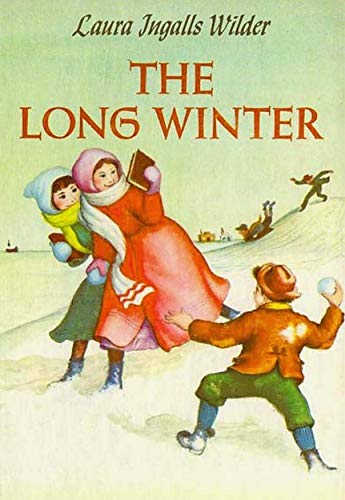
[Page numbers are from the 1953 edition of the book: Laura Ingalls Wilder, The Long Winter, illustrated by Garth Williams, revised edition (New York: Harper and Row, 1953)—the edition with the snowball fight on the front that gives an entirely incorrect feel for the contents of the book…]

Links:

Trinity Christian College

Tribute to John Miller

Original post on The Long Winter from 2016


Midwestern Dreams or Nightmares?

Greetings and Happy New Year! The new semester is underway at Trinity Christian College. I hope that everyone reading this had a blessed Christmas and a good start to 2020.

It was just over four years ago, on January 4, 2016, that I posted my first entry on this blog. Since then, I have posted over sixty more. Thanks to everyone who has commented or sent me observations about my research.

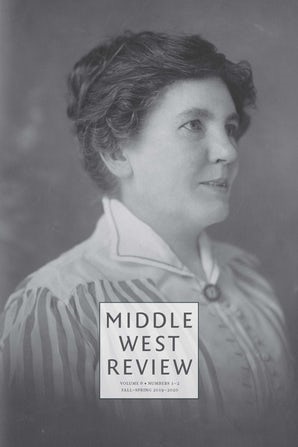
You may have heard that John Miller has published an extended review of Caroline Fraser’s Prairie Fires: The American Dreams of Laura Ingalls Wilder (2017). The title is “Midwestern Dreams or Nightmares?: An Appreciation and Critique of Caroline Fraser’s Prairie Fires: The American Dreams of Laura Ingalls Wilder.” It’s the first article in the Fall 2019-Spring 2020 issue of Middle West Review, an academic journal published by the University of Nebraska Press. Miller has written three books about Wilder: Laura Ingalls Wilder’s Little Town (1994), about De Smet during the late 1800s, Becoming Laura Ingalls Wilder: The Woman Behind the Legend (1998), a full biography that concentrates on Wilder’s adult life, and Laura Ingalls Wilder and Rose Wilder Lane: Authorship, Place, Time, and Culture (2008), a collection of essays. He is eminently qualified to provide what he calls “a more balanced account of Prairie Fires than has generally been accorded it.” (2) (Full disclosure: Miller discussed this article with me while he was writing it, and he shared an early draft with me for my comments.)

Miller praises many aspects of Fraser’s book. He notes that it is well-written and that it provides an incredible number of details about Wilder’s life and her historical context. Its over 500 pages of text and 85 pages of notes make it by far the largest biography of Wilder yet published. He is in agreement with the amount of space Fraser devotes to understanding the life and work of Laura’s daughter Rose Wilder Lane, and he is in general agreement with Fraser’s interpretation of Lane’s life and character. He argues that the historical contexts Fraser provides in the book are often insightful, and the speculations that Fraser makes when facts are not available are often good, helpful, or plausible.

However, Miller disagrees with what he sees as two of the most important assertions made in the book:

  1. Fraser describes Wilder’s early life as unremittingly difficult and argues that Wilder deliberately shaped the Little House books to recast her childhood in a positive light.
  2. Fraser argues that agriculture in eastern South Dakota was “economically unsound” and “ecologically disastrous.” (24)

In his description of these lines of argument, Miller uses examples from several speeches that Fraser delivered in Sioux Falls and Brookings, South Dakota, as well as a number of quotes and accounts from the book. In both cases, he finds these assertions unsupported, concluding that “Fraser has, in her major lines of argument, stepped beyond the bounds of reliable history.” (29)

In the first case, Miller argues that it is impossible to determine exactly how the Ingalls family experienced their years moving from Wisconsin, to Kansas, to Wisconsin, to Minnesota, to Iowa, to Minnesota, and to South Dakota. When he died, Laura’s father Charles Ingalls did not have much real estate or money in the bank. However, Miller notes that he had occupied many positions of public trust in De Smet, and that his wife Caroline and his daughter Mary enjoyed a comfortable home, the friendship of neighbors, and the respect of fellow church members, lodge members, and other townspeople. Furthermore, Laura’s recollections of her childhood in the Missouri Ruralist were not negative but happy. He argues that two key documents used by Fraser to substantiate the idea that Wilder remembered her childhood negatively are selectively quoted and misunderstood. He ends by asserting that the best way to understand rural women´s lives during the late 1800s is to recognize that they experienced both hardships and joys, and that while some resented their isolation, others embraced its beauty and relative opportunity. Miller clearly sees Wilder as belonging to the second group.

Miller also takes issue with Fraser´s characterization of agriculture in southeastern Dakota Territory. The article first disputes the reasons Prairie Fires gives for why the Great Dakota Boom began in 1878. However, Miller is more concerned about Fraser’s assertion that the region around De Smet was part of the Great Plains that should never have been settled the way it was during the late nineteenth century. He notes that Prairie Fires uses the terms “prairie” and “plains” interchangeably, and while it leans on John Wesley Powell’s 1877 warning about agriculture west of 100 degrees of longitude, De Smet is actually 120 miles east of that line. He asserts that the region was farmed successfully by some during the late 1800s, that it recovered after the dry years of the early 1900s, and that it remains productive for some farmers today.

Miller’s experience with Wilder’s Missouri Ruralist columns and his knowledge of South Dakota agriculture stands him in good stead in both of these critiques. Both appear persuasive to me today.

I’ve gone back to my blog entry on Fraser’s book, and it is much more positive than Miller’s review. I also wrote a review of the book for the Annals of Iowa in 2018, and it is similarly positive. In both pieces, I praised the painstaking research that went into writing the book and the details about Wilder and Lane’s lives that it provides. My main critique in the Annals piece is of Fraser’s tone when describing people who lived in small towns and rural areas in the past, especially those who opposed government support for those in financial need. At the time, I didn’t identify Fraser’s characterization of Wilder’s childhood as completely negative. I may have been focusing on the many details that I was eagerly noting for my own research on Wilder. I also didn’t have the background in South Dakota agriculture to argue against her characterization of the South Dakota boom as an agricultural disaster.

I also wonder if part of the reason that I didn’t see all that Miller saw in the book is that he had the benefit of Fraser’s speeches in shaping how he engaged the book. About five pages of the review are devoted to descriptions and quotations from those talks. Book talks are often more forceful in making an argument than a book itself. A book is much longer, can be more nuanced, and an argument can be obscured by the details. I’m thinking that hearing Fraser speak multiple times may have crystalized things for him.

One thing that Miller and I agree on is that Prairie Fires could have engaged Wilder’s Christianity more. My blog entry included the following: “there is not a lot of attention to Laura and Rose’s faith in the body of the book… Laura and Rose’s religious outlook is not really primary to Fraser’s understanding of the two women.” Miller’s article puts it this way: “a greater emphasis upon the central importance of her religious beliefs and attitudes would help better to explain the woman’s generally sunny disposition and proclivity for interpreting setbacks and negative happenings in a positive light.” (10)

Miller does value much of what Fraser has done in Prairie Fires. I appreciate the good things about the book as well. But Miller worries that Fraser’s incorrect assertions will be what readers remember, especially those who don’t know much about Wilder. I’d recommend his article as a counterpoint to Fraser’s interpretation of Wilder’s life and times.

Thanks much for reading.

Page number citations are from: John E. Miller, “Midwestern Dreams or Nightmares: An Appreciation and Critique of Caroline Fraser’s Prairie Fires: The American Dreams of Laura Ingalls WilderMiddle West Review 6(1-2)(Fall 2019-Spring 2020), 1-36.

How might you be able to read Miller’s article? Several possibilities:

  • If you are a college student or live near a college or university, see if the library has access to it, either in hardcopy or online – you can check the catalog or go to/call the reference desk.
  • A public library may be able to get a copy of the article through interlibrary loan channels.
  • Buy a copy of the issue of the issue of the journal for $46 at this site.

Links:

Publisher’s site and picture credit: Middle West Review.

Trinity Christian College

Publisher’s Site for Prairie Fires

Publisher’s page for Laura Ingalls Wilder’s Little Town

My blog entry on Becoming Laura Ingalls Wilder

Publisher’s page for Laura Ingalls Wilder and Rose Wilder Lane: Authorship, Place, Time, and Culture

My blog entry on Prairie Fires

My review of Prairie Fires in The Annals of Iowa


Reconsidering Laura Ingalls Wilder

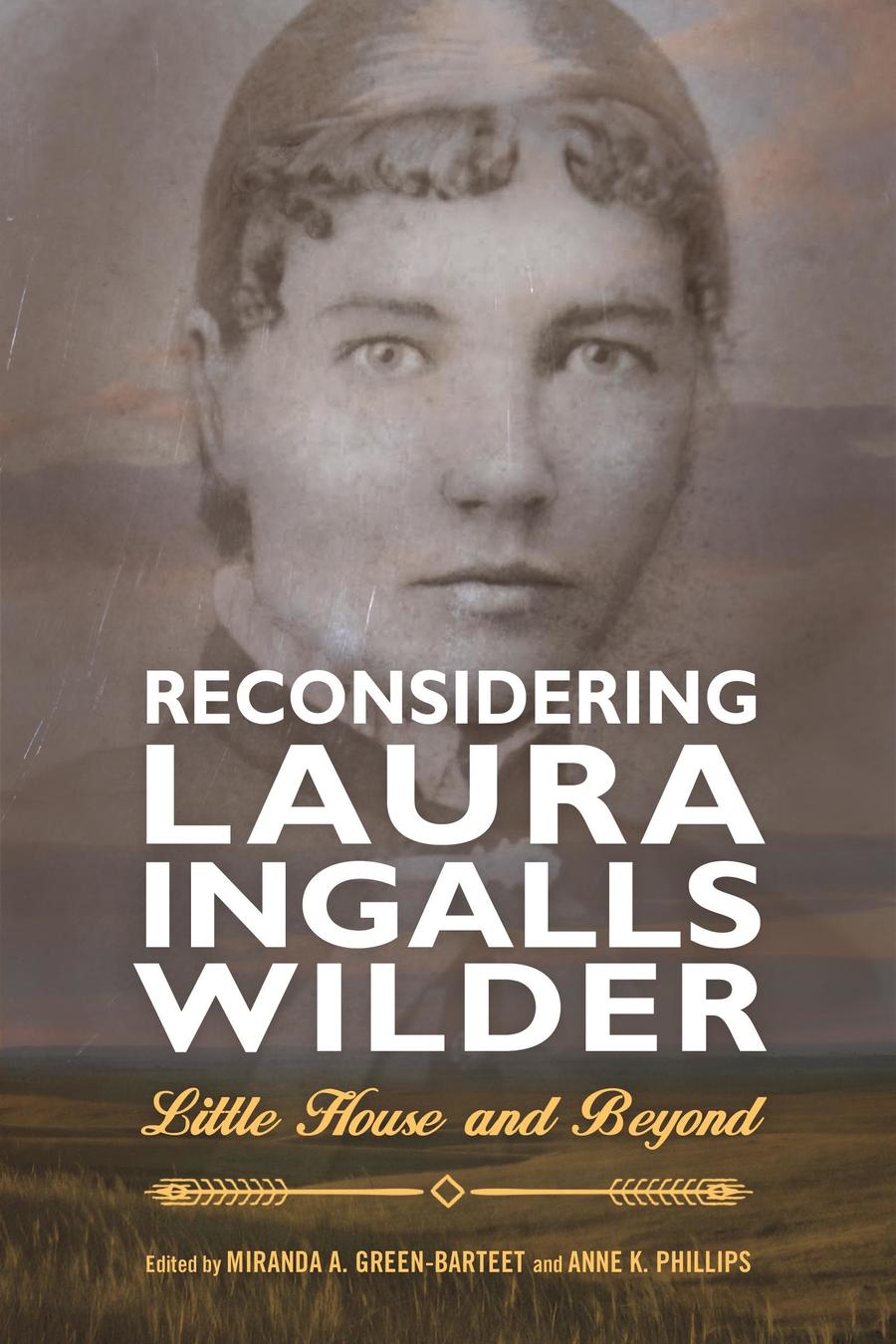
When I sat down to write this entry, I was shocked to realize that it has been five months since I have contributed anything to The Faith of Laura Ingalls Wilder. Actually, I wasn’t shocked. I knew that it has been a long time. But I have tried to keep doing some reading about Laura Ingalls Wilder. During this semester, that has meant reading a couple of essays in Reconsidering Laura Ingalls Wilder: Little House and Beyond each week. I finished the book yesterday.

Published by the University of Mississippi Press earlier this year, Reconsidering Laura Ingalls Wilder contains fifteen essays by scholars, and it presents some of the most recent academic scholarship on Wilder and the Little House books. Most of the authors are literature scholars; several have degrees in creative writing, American studies, women’s studies, and gender studies. There are no historians. Like most books of essays, I found some of the pieces to be stronger than others. Five stood out to me as providing particularly helpful examinations of Wilder’s writing:

  • Keri Holt and Christine Cooper-Rompato, “The Complicated Politics of Disability: Reading the Little House Books and Helen Keller.” The authors examine the Little House books’ depiction of Mary’s blindness, which is central to the later novels. They point out that the ways that the books depict Mary’s contributions to family life show her “individualism, self-sufficiency, and independence,” (35) which was a contrast to most other children’s books’ depictions of people with disabilities. These traits were also stressed by Helen Keller in her writing during the early twentieth century. Ironically, however, both Wilder and Keller stressed independence and distanced themselves from outside support; the Little House books do not mention that Dakota Territory paid for Mary’s tuition at the Iowa School for the Blind, and Keller often publicly refused monetary gifts and quietly accepted them later. I greatly appreciated Holt and Cooper-Rompato’s nuanced description of the complicated nature of these individuals’ lives and works.
  • Vera R. Foley, “Naked Horses on the Prairie: Laura Ingalls Wilder’s Imagined Anglo-Indian Womanhood.” This essay provided a close reading of Laura’s interactions with horses in the Little House books and The First Four Years. Foley describes Laura as “a young girl caught between the influence of a genteel mother and an unstable frontier.” (51) The result, Foley argues, was that Laura embraced an outdoor, active femininity, not Ma’s domesticity. (49-50) A key part of how the books describe this process involves horses: from the Indians riding away on ponies at the end of Little House on the Prairie, to her racing with Lena across the plains in By The Shores of Silver Lake, to her courtship which is conducted almost exclusively on buggy and sleigh rides, to her riding of Trixy in the First Four Years. Fascinating.
  • Jenna Brack, “Her Own Baby: Dolls and Family in ‘Indians Ride Away.’” This essay presents the most multidimensional explanation of Laura’s shocking demand for a Native American baby at the end of Little House on the Prairie that I have read. You may not agree with her interpretation; I don’t agree with it completely. Unfortunately, it is impossible to describe in a short space.
  • Jericho Williams, “Breathing Literary Lives from the Prairie: Laura Ingalls Wilder and the Promises of Rural Women’s Education in the Little House Series.” This essay compares the description of Laura’s career as a teacher to depictions of teachers in Hamlin Garland’s Rose of Dutcher’s Coolly and Willa Cather’s The Song of the Lark. While the female protagonists in Garland and Cather’s books leave their small towns for success in urban areas, Wilder’s works reject the idea that “rural women lead inferior lives.” (134) Williams continues: “In Wilder’s view, rather than just a means for talented women to leave their hometowns, education is a multifaceted process that consists of learning rural arts and skills, living within one’s means, adapting to one’s environment, and assisting one’s family members and community.” (134) I think that this is an insightful statement about key aspects of Laura’s overall worldview, not just her view of education.
  • Christiane E. Farnan, “The Undergraduate American Studies Classroom: Teaching American Myths and Memories with Laura Ingalls Wilder.” Farnan has her college students read Little House in the Big Woods, Farmer Boy, and Little House on the Prairie in conversation with other classic books about farming and the frontier by Mary Rowlandson, Thomas Jefferson, Hector St. John Crevecoeur, Horace Greeley, Frederick Jackson Turner, James Agee and Walker Evans, and Henry Nash Smith. The essay asserts that her current students easily understand Big Woods and Farmer Boy as depictions of the agrarian ideal, but they often interpret Little House on the Prairie as a critique of Native American removal and agrarian occupation. Pa uproots his family, takes them into danger in many forms (the frozen lake, the high river, fire, wolves, hostile Native Americans), then abandons all of their work because of a rumor. Nobody is better off at the end of the book. It was a reading that I hadn’t thought about before, and not one that I especially share, but I can see how her students come to it.

Unfortunately for my particular project, most of the authors ignore religion and faith. The one significant consideration is in Anna Thompson Hajdik’s “The Wilder Mystique: Antimodernism, Tourism, and Authenticity in Laura Ingalls Wilder Country,” a review of the development of some of the Wilder historic homesites and an examination of some of the sources of their appeal during the late twentieth and early twenty-first centuries. Hajdik notes the importance of the books to Christian homeschooling families and the Amish. The homeschooling connection has been mentioned by other authors (and I have numerous personal examples), but this is the first time I’ve read about the Amish. The citation for this observation was a personal conversation from 2006.

Reconsidering Laura Ingalls Wilder provides a number of fresh looks at the Little House books. I was pleasantly surprised that the authors are willing to consider the works on their own terms, not just condemn them for not living up to how people today would deal with the subject matter. It does not provide any new biographical or historical information about Wilder, but it does provide some new and interesting ways to approach Wilder’s work.

As always, thanks much for reading.

(All citations are from: Reconsidering Laura Ingalls Wilder: Little House and Beyond. Edited by Miranda A. Green-Barteet and Anne K. Phillips. Jackson: University of Mississippi Press, 2019.)

Publisher’s site and picture credit: https://www.upress.state.ms.us/Books/R/Reconsidering-Laura-Ingalls-Wilder

2019 Midwestern History Conference

Last Thursday and Friday, I attended the Midwestern History Conference in Grand Rapids, Michigan. I had a great time.

The conference was sponsored by the Midwestern History Association and hosted by the Hauenstein Center for Presidential Studies at Grand Valley State University (GVSU). It was held at GVSU’s Pew Campus in downtown Grand Rapids.

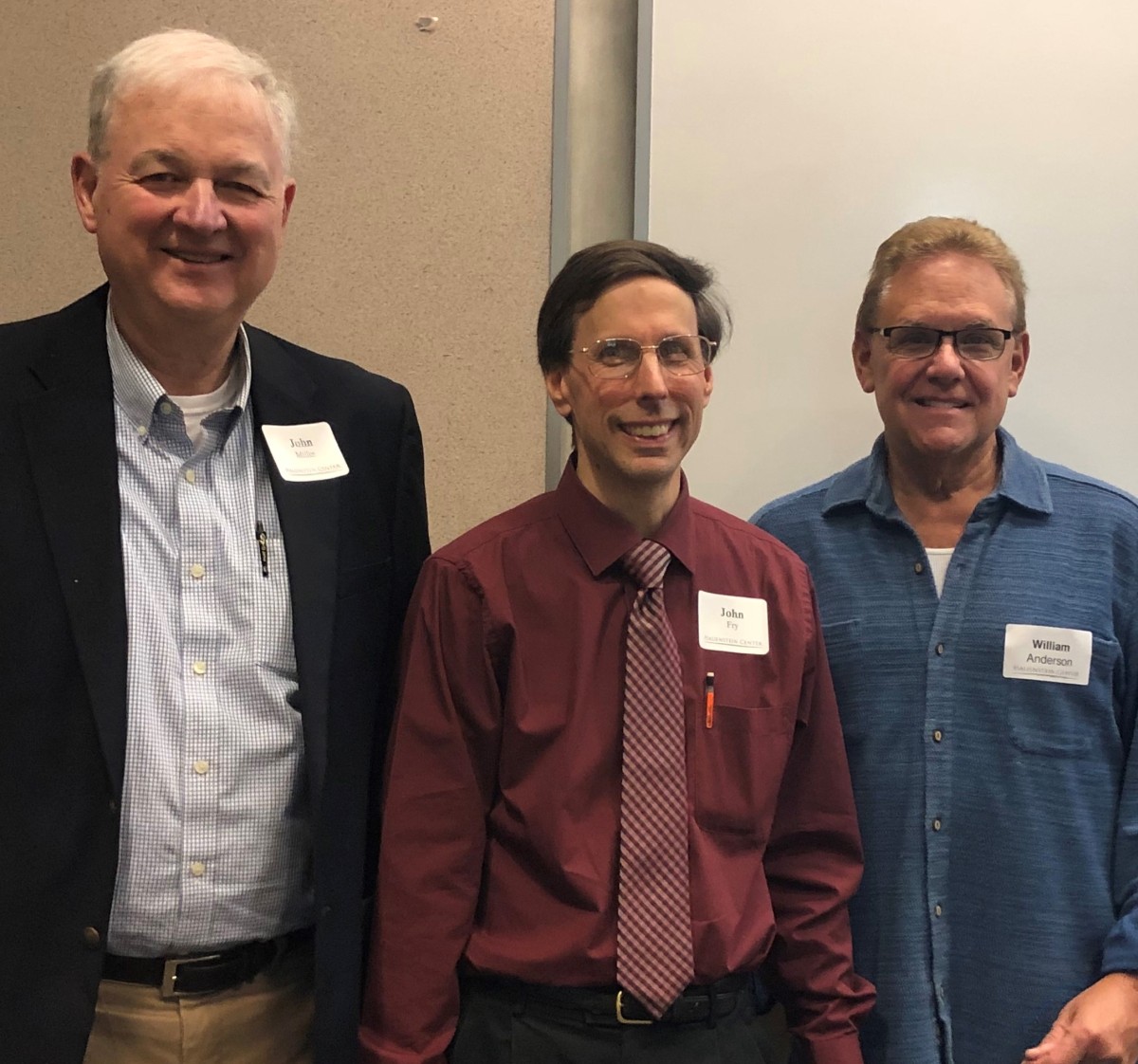
I presented on a panel on Thursday morning titled “‘Everyone Has a Wilder Story:’ Laura Ingalls Wilder, the Midwest, and Historical Research.” It was a privilege to join Bill Anderson and John Miller. We each told the story of how we came to research and write about Laura Ingalls Wilder. Bill has been writing about Laura since the 1960s and has published over twenty-five books. I have previously mentioned four on this blog (links are at the end). John has written three books about Wilder and De Smet, South Dakota, including the most scholarly biography to date, Becoming Laura Ingalls Wilder. They included me, even though I did not read the Little House books when I was a child and I did not grow up in the Midwest. There were around fifteen attendees at our session, which was respectable, given the fact that there were nine other sessions going on at the same time. (I attended other sessions with only five people in the audience.) Discussion during the Q&A was also robust.

I used some of my presentation to reflect on “Everyone has a Wilder Story” in a second way. I think that many people today have a story that they tell about Wilder – about who she really was, and about how we should understand her life and respond to it today. This “Wilder story” guides how they read the Little House books and Wilder’s other writings, and it guides how they view her legacy. So I used my presentation to roll out some possible “Wilder stories,” some tentative ways of understanding Laura’s faith. I don’t think that any of these will come as a surprise to regular readers of this blog

– First, Laura was a committed Christian, attended Christian worship services, read the Bible, and prayed her entire life. She engaged in Christian practices that built her relationship with God and Jesus Christ.

– On the other hand, she never publicly identified with an individual body of believers – she never officially joined any church.

– On a third (?) hand, the original, handwritten manuscripts of the Little House books have more straightforward and positive descriptions of God, Christianity, and the church than appear in the published Little House books. These accounts were changed—most likely by her daughter Rose, who was agnostic when they were written—into the more negative depictions that appear in the published books.

– On a fourth (!) hand, Laura can probably not be understood as an Evangelical Christian. Her descriptions of God, Christianity, and church emphasize God’s power, His laws, and individual moral choices. Her writings almost never mention Christ, forgiveness of sins, or salvation.

It’s complicated. The more I engage the faith of Laura Ingalls Wilder, the more I despair of having just one ‘Wilder story,’ or a simple way of describing her faith. But if I was to have to give an overarching narrative for Laura’s life, I might say that she believed that people do not live by bread alone. Bread is necessary, but faith, community, and family relationships are more important. There are ironies here, too. Her relationship to the church she attended and the community she lived in was often ambivalent. Her own relationship with her own daughter was marked by misunderstandings and, at times, open conflict. Yet in the midst of these difficulties, Laura and Rose together created, in the Little House books, an immensely attractive vision of human flourishing that influenced millions of Americans during the middle to late twentieth century.

Other highlights of the conference included Anna Lisa Cox’s plenary talk on Thursday night and a session I chaired on Friday about music in the Midwest. Many thanks to Trinity Christian College for a travel grant to go to the conference. Thanks also to David Zwart, who teaches at GVSU, for letting me crash at his place on Wednesday and Thursday night.

As always, thanks for following along.

Links:

2019 Midwestern History Conference

Hauenstein Center

Post on Bill Anderson’s Laura Ingalls Wilder: A Biography

Post on Bill Anderson’s The Selected Letters of Laura Ingalls Wilder

Post on Bill Anderson’s Little House Sampler and Little House Reader

Post on John Miller’s Becoming Laura Ingalls Wilder

Anna Lisa Cox

Trinity Christian College

David Zwart


Little Lodges on the Prairie

Those interested in the faith of Laura Ingalls Wilder would be forgiven if they assumed that this blog had gone dormant. Indeed, it did go dormant during the spring semester here at Trinity Christian College. My work as an Academic Dean at Trinity meant that I was involved intimately with the work of developing a new structure for the Foundations (core) curriculum at the College and getting it approved by the faculty. The Foundations committee met nine times during the fall semester. It met eighteen times during the spring semester. I was involved in dozens of other meetings with key faculty members across campus. The proposed new Foundations curriculum was approved by the faculty this month. Between Foundations work, teaching, and my other duties as an Academic Dean, I spent no time at all with Laura Ingalls Wilder materials between December and May 15.

As a result, it has been a blessing to jump back into work on the project during the last several weeks. After a little bit of a slow start, I was able to pick up where I had left off early last fall on Chapter 4 of the book. I finished a draft of Chapter four last week. I’m hoping to write drafts of at least two more chapters this summer. I’m also presenting a paper, along with Bill Anderson and John Miller, at the Midwestern Historical Conference at the end of this week. I pulled my paper proposal from consideration for LauraPalooza to make the summer less hectic; I may be helping my parents move.

Last week I was also able to read Little Lodges on the Prairie: Freemasonry and Laura Ingalls Wilder by Teresa Lynn. I met Teresa at LauraPalooza in 2017. Her research on Laura’s family, the Freemasons, and the Order of the Eastern Star touches many of the same sources and themes that mine does. Full disclosure: Teresa then sent me a free copy of her book last year. I had been looking forward to having the time to read it. It’s a delightful book.

About the first third of the book describes the history of the Freemasons and the Eastern Star and explains how the Lodge and the Order are organized. This was incredibly helpful. I grew up in a conservative Presbyterian church in Western Pennsylvania, and in my church when “secret societies” like the Freemasons were talked about, the normal assumption was that membership in one of those organizations was incompatible with Christianity. I wasn’t taught that Freemasonry involved the worship of Satan, although I have subsequently known Christians who did believe that. I think it was that the leaders of our church suspected an organization where people never revealed to others what went on in meetings. The idea was also that our first allegiance should be to God and to the church, and Freemasonry interfered with that. At any rate, it was intriguing to learn about how local chapters and Grand Chapters (state organizations) work, about the various offices in both the Masonic Lodge and the Order of the Eastern Star, and about the values that undergird the work of both organizations. This section of the book filled in many blanks in my understanding, first and foremost that only men can become Freemasons, while both women and men can be members of the Eastern Star, although some offices in the Eastern Star are reserved for women.

After giving an introduction to Freemasonry and the Eastern Star, the book narrates Laura Ingalls Wilder’s life, paying particular attention to the Lodges and chapters of the Eastern Star that touched it: in De Smet, South Dakota, in Keystone, South Dakota (where her sister Carrie lived much of her adult life), and in Mansfield, Missouri. Laura’s father, Charles Ingalls, petitioned to become a Mason in De Smet in 1885, several months after Laura’s marriage to Almanzo Wilder. In 1891, Laura’s mother and younger sister Carrie were charter members of the Eastern Star chapter in De Smet. Charles and Laura became members of the Eastern Star in 1893.

Laura and Almanzo moved to Mansfield in 1894, so it is there that most of their participation in the Lodge and Order occurred. Laura became a member of the Eastern Star chapter in Mansfield in 1897; Almanzo joined the Lodge in 1898 and the Eastern Star chapter in 1902. Between 1897 and 1931, when they demitted their membership (possibly to save money as the Depression deepened), Laura served as an officer over twenty-five times. She was Worthy Matron—essentially the President of the Chapter—three different times, attended Grand Chapter of Missouri meetings in Sedalia, Kansas City, and St. Louis, and even served as a district officer that visited other chapters and reported on their health to the Grand Chapter.

It is clear that Lynn has done her homework. She has read all of the chapter minutes for the De Smet, Keystone, and Mansfield Lodges and Eastern Star chapters for the years under study. She has also read the local newspapers—the De Smet News and the Mansfield Mirror—to supplement her chronology. The book reproduces sections of Lodge or Eastern Star Chapter minutes, newspaper articles, and pictures of the people being described. The narrative of Laura’s life follows that established by other biographers like Bill Anderson and John Miller. The book argues that the values of the Freemasons and Eastern Star—“family, faith, education, charity, courage, independence, patriotism, fortitude, and self-improvement” (272)—basically were Laura Ingalls Wilder’s values. It’s hard to disagree with this.

Teresa told me when we spoke in 2017 about a Watch Meeting that Laura had called on December 31, 1909. Here is how it is described in the book:

Watch meetings, also called watch night services, were first held by John Wesley, founder of the Methodist church. (The Wilders were attending the Methodist Church in Mansfield. Many other Chapter members were also Methodists.) The meetings generally included singing hymns, prayer, scripture reading, uplifting conversation, and reflection on the old year and resolutions for the new. The purpose of these meetings was to provide an alternative to the drunken parties often held on New Year’s Eve. (236)

This is fascinating, and I wouldn’t have known about it apart from Lynn’s research. It appears that there are a number of things about Laura’s life in Mansfield that we wouldn’t know apart from this book.

As I think about my project, I’m trying to understand Wilder’s formal membership in the Freemasons, the Eastern Star, and at least four other women’s clubs in Mansfield and Hartville, when she never officially became a member of any church. Previous biographers have noted that Laura and Almanzo never became a member of the Methodist Church in Mansfield. The more I study, the more indications I find that Laura never became a member of any church. For someone who went to church regularly her entire life, knew the Bible well, and prayed every night, I’m not exactly sure how to explain her refusal to formally join the body of Christ. I continue to think about what that might mean.

Thanks for reading.

(Quotes are from Teresa Lynn, Little Lodges on the Prairie: Freemasonry and Laura Ingalls Wilder (Austin, TX: Tranquility Press, 2014).

Links:

Trinity Christian College

Midwestern History Conference

LauraPalooza 2019

Little Lodges on the Prairie


Conference on Faith and History 2018

It is Reading Day break here at Trinity Christian College. That means that yesterday and today, most faculty and many students are off campus. It’s very quiet in my building this morning. I’m getting caught up on projects and grading.

Last weekend I attended the Conference on Faith and History (CFH) Biennial Meeting. It was held at Calvin College in Grand Rapids, Michigan. One of my students presented at the undergraduate conference. I participated in a roundtable discussion of “Biography and the Search for Meaning.” It was a fascinating session; I learned how Christian historians are approaching the writing of biographies of Americans as diverse as John Jay, Elizabeth Ann Seaton, and Sojourner Truth. The conference also made it possible for me to have a brief conversation with Margaret Bendroth, who wrote a book on Congregationalism that I read for this project and who directs the Congregational Library and Archives in Boston. You’ll remember that Laura Ingalls Wilder grew up in Congregational churches during the 1870s and 1880s. The Congregational Library has some materials that I hope to look at, either by traveling there next summer or by getting them to scan them for me. It was also very good to see a number of old friends, including Jared Burkholder, Jay Case, John Fea, Jay Green, Brad Gundlach, Jim Hommes, Eric Miller, Steven Keillor, David Zwart.

This fall I have been very busy with my work as an Academic Dean. I’ve been struggling to keep working at least some each week on Wilder’s faith. I’ve started writing chapter 4. I’ve also spoken to several members of our Psychology department about resources on childhood spiritual formation, since I’m writing the sections of the book on Laura’s childhood. Finally, I’m considering whether to propose a presentation for LauraPalooza 2019, which will be held in Wisconsin.

Thanks, as always, for reading.

Links:

Trinity Christian College

2018 Conference on Faith and History and the Program

My blog post on The Last Puritans by Margaret Bendroth

The Congregational Library and Archives

LauraPalooza 2019 Call for Papers


End of Summer 2018

This week, students began to return to the campus of Trinity Christian College, where I work as a History professor and Academic Dean. Athletes, student leaders, and others came last Sunday, new first time freshmen report on Friday, and returning students begin to arrive next Sunday. So summer is pretty much officially over.

I’ve had a great summer. I did not teach a summer course for the first time in twelve years because I have a new colleague in the History Department, and he taught summer Western Civ instead of me. That meant that I had a lot of time to write. During May and June, I wrote the first chapter of the book. Then in June I did my research trip. In July, I was able to write two more chapters. So I met my goal of having three draft chapters by the end of this summer. God is good.

In the middle of the summer, of course, Laura Ingalls Wilder hit the national media because a committee of the American Library Association decided to rename the Laura Ingalls Wilder Award the Children’s Literature Legacy Award. The decision did not surprise me. Wilder grew up in the 1870s and 1880s, and she wrote in the 1930s and 1940s, so she didn’t think the way we do today about a lot of things. But this the case with everyone we encounter in history. Showing love to our neighbor who lived one hundred years ago means putting their words in context and attempting to understand why they said what they did. It doesn’t mean excusing them for not loving others. Coming to understand people in the past who don’t think like us gives us practice in coming to understand people today who don’t think like us. This is a critical skill, and it’s sorely needed in American society and culture today. I also think that Laura’s attitude towards Native Americans was more complex than it was depicted in some of the pieces written about the renaming of the award. I’ve put links to the ALA statement and two good online articles about the issue below.

This fall I hope to put in at least one morning a week on the book project. I will also be returning to the Conference on Faith and History Biennial Meeting, which will be held at Calvin College at the beginning of October, to be part of a roundtable discussion of “Biography and the Search for Meaning.” Others on the panel will be talking about their work on biographies of John Jay, Alexis de Toqueville, Sojourner Truth, and Elizabeth Ann Seaton. It should be a fascinating session.

Many thanks to the Provost’s office and the Faculty Development Committee at Trinity Christian College for their generous support of my summer writing project and research trip to Iowa, Wisconsin, Minnesota, and South Dakota.

Thanks for reading.

Links:

Trinity Christian College

Announcement from the American Library Association about the Laura Ingalls Wilder Award

Two good articles about the Renaming of the Laura Ingalls Wilder Award:

Sarah Uthoff at Trundle Bed Tales – Includes some good background on the award

Pamela Smith Hill

Conference on Faith and History

31st Biennial Meeting of the Conference on Faith & History