Back After a Long Time

There are always multiple stories

My last blog post was last June. I guess that some description of what I’ve been doing during the last nine months would be in order. Several observations:

Like many Americans, my life was dramatically changed and my view of the world was unbelievably altered by the events of 2020 and early 2021, including covid-19 lockdowns, ongoing virus restrictions, protests following the death of George Floyd, rioting and violence that followed some of those protests, the United States presidential election, doubts and accusations of election fraud, and the attack on the U. S. Capitol. Also like many Americans, these public events’ influence on me was complicated by personal, family, and work-related developments.

I can’t remember if I mentioned last spring that my mother died on February 3. My father, brother, and I buried her five days later and we planned a memorial service in Western Pennsylvania in the middle of March, which of course was postponed because of covid. It was ultimately held in mid-June. My father moved in with my family in August, then moved to a nearby apartment in early October. Last December, my family did not travel to eastern Pennsylvania to celebrate Christmas with my wife’s extended family. We have lived in Chicagoland eighteen years, and this was just the second time that we had not returned to PA for the holiday.

Last fall, my institution, Trinity Christian College, was completely online. A couple hundred students lived on campus, but all courses were online courses. I taught a new course in our just-approved Foundations curriculum. In October, Trinity also had its ten-year visit by a team representing the Higher Learning Commission (HLC), our regional accreditor. As an Academic Dean, I was lined up for multiple meetings on zoom with different members of the team. The week before the visit was set to begin, I came down with symptoms and tested positive for covid. It was a mild case and I attended all of the meetings from home. This semester, Trinity is holding classes in-person with a remote option. I teach in a classroom and also run a zoom session with students who must quarantine or who have chosen to not come to campus. I am again teaching a completely new course, and it’s a writing course, not solely a history course. My work as an Academic Dean is complicated by the realities that many of my colleagues are not on campus, that spring break was cancelled, and everyone has email fatigue.

In the midst of these developments, my research has taken a back seat. It is my hope to return soon to concentrated work on my book, “On the Pilgrim Way”: The Faith of Laura Ingalls Wilder. The manuscript is due to Eerdmans Publishers in August 2022. I have received a summer research grant from Trinity to work on it this summer. The college has also graciously approved a sabbatical for me in the spring of 2022. The time for the final push to complete the work is nearly here.

I do think that the events of the last twelve months—the response to covid-19, protests about racial injustice, the death of my mother—have made me think differently about my writing and my teaching. The cumulative effect of these events has impressed on me the incredible difficulty of understanding another person’s life. The virus affected people’s lives and livelihoods very differently, and therefore different people in my family, church, and workplace developed very different ideas about governmental action. The killing of George Floyd and the protests (and, at times, violence) that followed opened my eyes to new understandings of the experiences of my African American neighbors and colleagues. My ideas about how to understand my mother’s life have changed and shifted.

There are always multiple stories that can be told to make sense of the incomplete and fragmentary information we have about the world. In many ways, we ultimately are guessing from the evidence that we have. This is especially the case when one is trying to tell the story of someone else’s life. I have realized that my view of my mother’s life had been colored by the last few years when she was in very bad physical health. It is only as the months since her death have passed that I have been able to get a longer perspective on who she was and what she was like. The picture at the top of the page is of my mother and me on my wedding day, November 28, 1992. I have inherited more than just her nose and her smile.

This has humbled me as I have thought about the attempt to understand the life of Laura Ingalls Wilder. Biographers have interpreted her life in strikingly different ways. Caroline Fraser’s Prairie Fires asserts that Wilder was haunted by the privations and difficulties she experienced as a child and created a myth to deal with them. John Miller and others argue that Laura was shaped by difficulties but persevered due to inner strength, a balanced worldview, and trust in God. What she did not enjoy in life she accepted and made the best of, and she sought to teach others how to love life as a farmer’s wife.

As I think about my biography of Laura, I most would like to avoid taking a side in the cultural and partisan shouting matches of our time. I do not want to make Laura a champion of one side or the other. This is perhaps made easier because it is not always easy to define her by twenty-first century political categories. For instance, her love of nature, animals, and wild landscape is attractive to those on the political left, while her acceptance of traditional family roles and the attractiveness of her vision of the nuclear family is attractive to those on the political right. I hope to be able to describe her as accurately as possible from her point of view, that of a rural woman raised in the upper Midwest during the late nineteenth century who lived most of her adult life in the border south in the early twentieth century.

The last twelve months have also made me think hard about my teaching. I’ve been teaching history full-time for almost twenty years, and I’m much less optimistic about anyone’s ability to tell simple stories about what we can learn from the past. Historians with different backgrounds and worldviews write completely different stories about the past based on the same events and evidence. This includes Ph.D.-educated historians, though we are all historians, using stories to make sense of our own lives, the shape of our communities, and the history of our country. In both public forums and private conversations, we tell selective stories to support our ideas, our political positions, and the way that we live our lives. At one extreme, stories suggest that the way people lived in the past was all wrong, and that our job is to correct those wrongs or to forget about them. At the other extreme, stories are told to call us to ways of life in the past that were superior to today. Neither extreme is completely correct, but both often convey some aspects of the truth.

As a result, I am more and more drawn to ways that history might help people to understand others. I hope that studying history will enable students to understand people in the past who don’t think the way they do, and that therefore they will become better able to understand people in the present who don’t think the way they do. Finally, I hope that students will embrace an understanding of the past that is complicated and not easily fit into the extreme political categories of the early twenty-first century.

I guess I hope that people who read my book (and this blog) will come to better understand these things as well.

I understand that there’s a lot of aspiration (“I hope…”) here. Perhaps I can post some more content soon. Thanks for reading.

Links:

Trinity Christian College

My blog post on Caroline Fraser’s Prairie Fires

Blog posts on John Miller – Becoming Laura Ingalls Wilder, “Midwestern Dreams or Nightmares,” A Personal Appreciation
Midwestern Dreams or Nightmares?

Greetings and Happy New Year! The new semester is underway at Trinity Christian College. I hope that everyone reading this had a blessed Christmas and a good start to 2020.

It was just over four years ago, on January 4, 2016, that I posted my first entry on this blog. Since then, I have posted over sixty more. Thanks to everyone who has commented or sent me observations about my research.

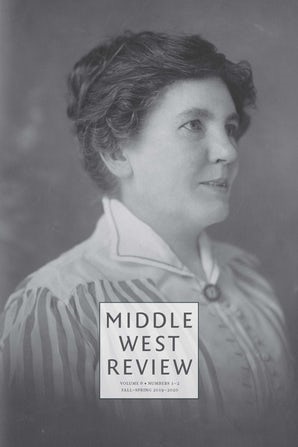
You may have heard that John Miller has published an extended review of Caroline Fraser’s Prairie Fires: The American Dreams of Laura Ingalls Wilder (2017). The title is “Midwestern Dreams or Nightmares?: An Appreciation and Critique of Caroline Fraser’s Prairie Fires: The American Dreams of Laura Ingalls Wilder.” It’s the first article in the Fall 2019-Spring 2020 issue of Middle West Review, an academic journal published by the University of Nebraska Press. Miller has written three books about Wilder: Laura Ingalls Wilder’s Little Town (1994), about De Smet during the late 1800s, Becoming Laura Ingalls Wilder: The Woman Behind the Legend (1998), a full biography that concentrates on Wilder’s adult life, and Laura Ingalls Wilder and Rose Wilder Lane: Authorship, Place, Time, and Culture (2008), a collection of essays. He is eminently qualified to provide what he calls “a more balanced account of Prairie Fires than has generally been accorded it.” (2) (Full disclosure: Miller discussed this article with me while he was writing it, and he shared an early draft with me for my comments.)

Miller praises many aspects of Fraser’s book. He notes that it is well-written and that it provides an incredible number of details about Wilder’s life and her historical context. Its over 500 pages of text and 85 pages of notes make it by far the largest biography of Wilder yet published. He is in agreement with the amount of space Fraser devotes to understanding the life and work of Laura’s daughter Rose Wilder Lane, and he is in general agreement with Fraser’s interpretation of Lane’s life and character. He argues that the historical contexts Fraser provides in the book are often insightful, and the speculations that Fraser makes when facts are not available are often good, helpful, or plausible.

However, Miller disagrees with what he sees as two of the most important assertions made in the book:

  1. Fraser describes Wilder’s early life as unremittingly difficult and argues that Wilder deliberately shaped the Little House books to recast her childhood in a positive light.
  2. Fraser argues that agriculture in eastern South Dakota was “economically unsound” and “ecologically disastrous.” (24)

In his description of these lines of argument, Miller uses examples from several speeches that Fraser delivered in Sioux Falls and Brookings, South Dakota, as well as a number of quotes and accounts from the book. In both cases, he finds these assertions unsupported, concluding that “Fraser has, in her major lines of argument, stepped beyond the bounds of reliable history.” (29)

In the first case, Miller argues that it is impossible to determine exactly how the Ingalls family experienced their years moving from Wisconsin, to Kansas, to Wisconsin, to Minnesota, to Iowa, to Minnesota, and to South Dakota. When he died, Laura’s father Charles Ingalls did not have much real estate or money in the bank. However, Miller notes that he had occupied many positions of public trust in De Smet, and that his wife Caroline and his daughter Mary enjoyed a comfortable home, the friendship of neighbors, and the respect of fellow church members, lodge members, and other townspeople. Furthermore, Laura’s recollections of her childhood in the Missouri Ruralist were not negative but happy. He argues that two key documents used by Fraser to substantiate the idea that Wilder remembered her childhood negatively are selectively quoted and misunderstood. He ends by asserting that the best way to understand rural women´s lives during the late 1800s is to recognize that they experienced both hardships and joys, and that while some resented their isolation, others embraced its beauty and relative opportunity. Miller clearly sees Wilder as belonging to the second group.

Miller also takes issue with Fraser´s characterization of agriculture in southeastern Dakota Territory. The article first disputes the reasons Prairie Fires gives for why the Great Dakota Boom began in 1878. However, Miller is more concerned about Fraser’s assertion that the region around De Smet was part of the Great Plains that should never have been settled the way it was during the late nineteenth century. He notes that Prairie Fires uses the terms “prairie” and “plains” interchangeably, and while it leans on John Wesley Powell’s 1877 warning about agriculture west of 100 degrees of longitude, De Smet is actually 120 miles east of that line. He asserts that the region was farmed successfully by some during the late 1800s, that it recovered after the dry years of the early 1900s, and that it remains productive for some farmers today.

Miller’s experience with Wilder’s Missouri Ruralist columns and his knowledge of South Dakota agriculture stands him in good stead in both of these critiques. Both appear persuasive to me today.

I’ve gone back to my blog entry on Fraser’s book, and it is much more positive than Miller’s review. I also wrote a review of the book for the Annals of Iowa in 2018, and it is similarly positive. In both pieces, I praised the painstaking research that went into writing the book and the details about Wilder and Lane’s lives that it provides. My main critique in the Annals piece is of Fraser’s tone when describing people who lived in small towns and rural areas in the past, especially those who opposed government support for those in financial need. At the time, I didn’t identify Fraser’s characterization of Wilder’s childhood as completely negative. I may have been focusing on the many details that I was eagerly noting for my own research on Wilder. I also didn’t have the background in South Dakota agriculture to argue against her characterization of the South Dakota boom as an agricultural disaster.

I also wonder if part of the reason that I didn’t see all that Miller saw in the book is that he had the benefit of Fraser’s speeches in shaping how he engaged the book. About five pages of the review are devoted to descriptions and quotations from those talks. Book talks are often more forceful in making an argument than a book itself. A book is much longer, can be more nuanced, and an argument can be obscured by the details. I’m thinking that hearing Fraser speak multiple times may have crystalized things for him.

One thing that Miller and I agree on is that Prairie Fires could have engaged Wilder’s Christianity more. My blog entry included the following: “there is not a lot of attention to Laura and Rose’s faith in the body of the book… Laura and Rose’s religious outlook is not really primary to Fraser’s understanding of the two women.” Miller’s article puts it this way: “a greater emphasis upon the central importance of her religious beliefs and attitudes would help better to explain the woman’s generally sunny disposition and proclivity for interpreting setbacks and negative happenings in a positive light.” (10)

Miller does value much of what Fraser has done in Prairie Fires. I appreciate the good things about the book as well. But Miller worries that Fraser’s incorrect assertions will be what readers remember, especially those who don’t know much about Wilder. I’d recommend his article as a counterpoint to Fraser’s interpretation of Wilder’s life and times.

Thanks much for reading.

Page number citations are from: John E. Miller, “Midwestern Dreams or Nightmares: An Appreciation and Critique of Caroline Fraser’s Prairie Fires: The American Dreams of Laura Ingalls WilderMiddle West Review 6(1-2)(Fall 2019-Spring 2020), 1-36.

How might you be able to read Miller’s article? Several possibilities:

  • If you are a college student or live near a college or university, see if the library has access to it, either in hardcopy or online – you can check the catalog or go to/call the reference desk.
  • A public library may be able to get a copy of the article through interlibrary loan channels.
  • Buy a copy of the issue of the issue of the journal for $46 at this site.

Links:

Publisher’s site and picture credit: Middle West Review.

Trinity Christian College

Publisher’s Site for Prairie Fires

Publisher’s page for Laura Ingalls Wilder’s Little Town

My blog entry on Becoming Laura Ingalls Wilder

Publisher’s page for Laura Ingalls Wilder and Rose Wilder Lane: Authorship, Place, Time, and Culture

My blog entry on Prairie Fires

My review of Prairie Fires in The Annals of Iowa


Pulitzer Prize

Faculty members are on summer break here at Trinity, so my job has slowed down a bit. I’m not actually on break yet, because I’m a Dean and have an extended contract. But I have been able to carve out some time to write. I’m also planning for a trip to, Lord-willing, four Laura Ingalls Wilder sites this summer (Burr Oak, Pepin, Walnut Grove, and De Smet).

Yesterday, I told a colleague who stopped by my office that Caroline Fraser’s Prairie Fires: The American Dreams of Laura Ingalls Wilder had been awarded the Pulitzer prize for Biography. He asked me when and I said about a month ago. He then asked whether I had put this information on my blog. I said no, and that the information was available from dozens of sites. He told me that I still should put it on my blog, because perhaps someone would learn about it from me the way he did. So here I am, putting it on my blog.

Congratulations are due to Caroline. She put years of work into the book, and she has rightly been basking in the attention of the media for the last several weeks.

More later this summer. Thanks for reading.

Links:

My post on Prairie Fires

The announcement at pulizer.org


Prairie Fires

Happy 2018. I hope that everyone’s year has begun well.

This week I finished Caroline Fraser’s Prairie Fires: The American Dreams of Laura Ingalls Wilder. I had started in the middle of December, but Christmas intervened. It is an excellent book. Fraser has read just about everything there is to read by and about Wilder, and she provides an interpretation of all of it. She has read Wilder’s published works, all the extant manuscripts of the Little House books, and pretty much all of the books that have been written about Wilder. She also appears to have read all of Rose Wilder Lane’s materials as well, which is quite a feat—Lane often kept a detailed diary, and she typed reams of letters to friends, published dozens of articles in newspapers and magazines, and wrote a number of books. Eighty of the Prairie Fires’s six hundred pages are footnotes. It is clearly the most up to date and exhaustively researched biography of Wilder published.

But the book strives to do more than just chronicle the lives and works of Laura and Rose. It sets those lives in the contexts of American national history. Fraser provides detailed descriptions of the Dakota War of 1862, the Homestead Act, and the settlement of the upper Midwest by white Americans. She argues that these events both shaped and were reflected in Wilder’s life and works. The book also considers how World War I, the Great Depression, the Dust Bowl, and World War II impacted Wilder’s writing of the Little House books (they were published between 1932 and 1943). John Miller’s book Becoming Laura Ingalls Wilder does some of this contextualization, but Fraser’s work is more comprehensive.

In a nutshell, Fraser’s interpretation of the settlement of the upper Midwest and Great Plains is that thousands of families created an environmental catastrophe. The land and climate in many places could not sustain small farmers, but they attempted to make a go of it anyway, spurred on by advertising and scientific ideas (like “rain follows the plow”) that led to marginal existence and misery for many. Many were forced to take jobs in town or rely on the support of others, including church, the local community, and the state and federal government. But government leaders often withheld support, and those who took it were often ashamed. The Ingalls and Wilder families were two of those families.

Fraser also attempts to understand how both Laura and Rose thought. She both allows their own words to speak for themselves and provides her own views of their actions. Laura is depicted as a woman hardened by misfortune but determined to provide for her family. She loved nature and everything in it, and she who ultimately created a literary masterpiece for children. Her detailed descriptions, her understanding of her own life and the characters she interacted with, and her love for her father all make the Little House books juvenile classics. By hard work she secured her family’s economic security.

The book’s depiction of Rose is much less positive. Throughout she is described as mixing the truth and fiction: in her articles for “yellow” newspapers during the 1910s and 1920s, in her fictional “biographies” of great men, in her work with her mother’s life story, and in her personal correspondence. She was never able to manage money, and she suffered from depression and perhaps deeper mental illness. By the end of her life she had let her libertarian ideology take over her understanding of reality. Fraser gives Lane credit for editing and improving the Little House books, making them possible to publish and memorable, but Wilder’s writing is seen as driving the books’ popularity and staying power.

Overall, Prairie Fires is a super book. Fraser’s writing is simple but powerful. She evokes the past well and sets Wilder and Lane in that past for us to consider. Its scope is encyclopedic. I am happy that it appeared while I am beginning to write my book so that I can use it in that effort.

As far as Wilder’s faith is concerned, the book focuses most on religion in the early chapters where Charles Ingalls’s ancestors are described. They were Puritans; one had come to Massachusetts Bay with John Endecott in 1629, one was executed during the witch craze in Salem in 1692 (Martha Ingalls Allen Carrier), and one wrote poetry that was published locally in the late 1700s and early 1800s. Of the latter, Samuel Ingalls, the self-described “unlearned poet,” the book says that he “was a Puritan and may have been a Congregationalist.” (32) I am not sure that Fraser understands the relationship between Puritans and Congregationalists. In terms of church governance, all Puritans were Congregationalists. By the late 1700s, I believe that the term Congregationalist was used for most of the the churches in New England founded by the Puritans of the 1600s. I have a book on Congregationalism by Margaret Bendroth (The Last Puritans: Mainline Protestants and the Power of the Past, [University of North Carolina, 2015]) that I hope will help me get everything straight.

Beyond that, there is not a lot of attention to Laura and Rose’s faith in the body of the book. This is probably partially because Wilder says little about her Christian beliefs in her writings. In addition, Laura and Rose’s religious outlook is not really primary to Fraser’s understanding of the two women. She considers their economic situation, their physical health, and their relationships with each other in much more detail (and again, they have the benefit of greater documentation, especially in Rose’s writings). Interestingly, Fraser returns to Puritanism at the end of the book to help explain why Laura firmly believed that individuals and families could make it without government assistance, even though her parents’ family and her own family were not able to:

Wilder wrote that her mother was fond of a saying: “What’s bred in the bone will come out in the flesh.” If anything was bred in her family’s Congregationalist bones, it was their exemplary devotion to self-sufficiency… Puritan identity was based on redemption through mastery of self, and the rigid application of principles including frugality, diligence, and, above all, independence. (455)

I’m pretty sure that Seventeenth Century Puritans and Eighteenth Century Congregationalists would not have agreed with this description. They believed in redemption on the basis of the work of Jesus Christ alone. They taught that those who repent and trust in Christ for salvation must also work to discipline their bodies by cultivating these virtues. But those virtues were not the basis of their salvation.

I relate these disagreements with Fraser’s interpretations not because I think that they mar the book as a whole. Indeed, I think that Fraser understands Laura better than many other writers. Prairie Fires is a monument to years of work in the archives, thousands of hours of thinking about how best to understand the sources, and writing ability that I know that I can’t match. I am glad that I am not setting out to write a book of this scope. In the book that I am setting out to write, however, I hope to provide a better understanding of this one aspect of Laura’s life—her faith—and to explain what it might tell us about the history of American Christianity. In some ways, I think that all scholars are comforted when they find that they disagree in some way with other authors, because disagreements show that there is still something that can be added to the conversation.

I may not be writing very much for the blog this spring. It is my hope to write a chapter of the book, and I think that staying off of the blog may assist me in doing this. (See Cal Newport’s book Deep Work for an explanation of why I believe that this may be the case.) I am also teaching two sections of Western Civilization, which means I have 75 students’ papers to grade when they start coming in at the end of next week. I will see if I am able to give reports perhaps once a month.

Thanks again for reading.

(Quotations are from Caroline Fraser, Prairie Fires: The American Dreams of Laura Ingalls Wilder [New York: Metropolitan Books, 2017].)

Link: Prairie Fires


Laura Ingalls is Ruining My Life

Time is running out on 2018. I only have time for one more blog post this year.

I read a fun book in the last several weeks: Laura Ingalls is Ruining My Life, a young adult novel by Shelley Tougas. It’s about a twelve-year-old whose family moves to Walnut Grove, Minnesota, because her mother wants to write a book and thinks that getting close to Laura Ingalls’s spirit will help. It has some good lessons about friends, about family, and about growing up. Tougas certainly understands the feel of the Little House books. She is also able to describe clearly the complexity of both American history and family dynamics. If you have time over Christmas break, I found it a quick and enjoyable read.

I have also received my copy of Prairie Fires, Caroline Fraser’s biography of Wilder, and I’m about two hundred pages in. It is certainly encyclopedic. More later when I finish.

I hope that everyone has a blessed Christmas and a good start to 2018.  Thanks for reading.

Links:

Laura Ingalls is Ruining My Life

Prairie Fires

Articles and Anticipation

It has now been almost a month since I last posted here. My attention and time have been taken in several directions, including teaching, grading papers and exams, committee meetings, and my work as an Academic Dean. In addition, I have been asked to speak about my last book, Almost Pioneers, at a 25th Anniversary celebration for the Iowa Women’s Archives in Iowa City next weekend. Almost Pioneers is the memoir of Laura Gibson Smith, a woman from Iowa who homesteaded in Wyoming during the 1910s; I edited it and got it published in 2013. I’m glad to be part of the celebration, but it has taken me out of my pattern of reading for the Faith of Laura Ingalls Wilder project.

However, I have spent some time each week with Laura Ingalls Wilder materials. I’ve been able to read four articles that concern Wilder, the Little House books, and history. I also stand in anticipation of the next book-length biography of Wilder which is due to be released this month.

Articles: “Little House, Big Lessons” is actually a conference paper presented by historian Pamela Riney-Kehrberg at an agricultural history conference this fall in Belgium. Pam and I have known each other since I was a graduate student at the University of Iowa in the late 1990s and she was teaching at Illinois State University. She now teaches at Iowa State, one of the flagship schools for the study of rural and agricultural history. We see each other every couple of years at a conference. She reached out to me last summer for help with how Europeans responded to the Little House books; I was able to connect her with several Wilder scholars who provided a lot of leads. The paper is both about European reception of the Little House books and what they teach about everyday life in late-nineteenth century American rural areas. She concludes that the books are useful in enabling students to better understand “the environment of the American Great Plains, and the complexities of gender ideals versus gender realities.” Fascinating stuff.

The second article was “Re-examining the American Pioneer Spirit: The Extended Family of Laura Ingalls Wilder.” It was published in the Wisconsin Magazine of History last March and uses materials at the Wisconsin Historical Society to fill in some information about the families of Charles Ingalls and Caroline Quiner, Laura’s parents. It’s pretty interesting. I fed some biographical information from this article into the timeline of Laura Ingalls Wilder’s life that I am constructing for the book project.

I also read “American Indians in the Fiction of Laura Ingalls Wilder” by John Miller. I had previously read the three books that Miller has written about Wilder (Laura Ingalls Wilder’s Little Town, Becoming Laura Ingalls Wilder, and Laura Ingalls Wilder and Rose Wilder Lane), but I had never read this article, published in South Dakota History in 2000. Miller provides a nuanced consideration of the depiction of Native Peoples in the Little House books and Wilder’s other published work. Clearly there are multiple voices in the books: Ma and others are very anti-Indian, but Pa and Laura are not unremittingly so. Pa respects the Native Americans that he encounters, but assumes that they will be moving on so that whites can have their land. Laura is more like Pa than Ma, and Laura identifies with Indians at times. Miller argues that Americans in 2000 might see the depictions of Native Peoples in the books as problematic, but that Wilder’s views were probably more open than those of most others who lived in the Ozarks during the 1920s and 1930s. I know that I will have to engage this issue in some way in my biography of Wilder.

Finally, I was able to read “Homesteading Remembered: A Sesquicentennial Perspective” by Brian Cannon, published in Agricultural History in 2013. 2012 marked the 150th anniversary of the passage of the Homestead Act in 1862, and Cannon investigates how homesteading was depicted in popular culture—both books and movies—during the twentieth century. Major literary works examined include the last three Little House books, Rose Wilder Lane’s Free Land, Elinore Stewart’s Letters of a Woman Homesteader, and O. E. Rolvaag’s Giants in the Earth. The article engages movies from The Homesteader in 1919 to Shane in 1953, Heartland in 1979, and Far and Away in 1992. Cannon points out that “The most pointed criticism of the government’s administration of homesteading in these works is actually the writing of Laura Ingalls Wilder. Without exception these works valorize the homesteaders’ tenacity, work ethic, and family values. Only one, Giants in the Earth, seriously questions the prudence of homestaders’ decisions although many show the travails of homesteading.” He concludes that scholars’ assessment of homesteading have rarely been taken up in popular culture, and that some works reveal more about the time that they were produced than the time that they depict.

Anticipation: Caroline Fraser’s Prairie Fires: The American Dreams of Laura Ingalls Wilder is set to be released on November 21. Advance copies have been reviewed by major library outlets, and there are already 10 customer reviews on Amazon.com. At 640 pages, it promises to be a nearly comprehensive biography setting Wilder’s life and writings in historical context. I hope to get a copy as soon as it’s released.

Thanks for reading.

Links:

My Almost Pioneers blog

Almost Pioneers at Globe-Pequot Press

Iowa Women’s Archives 25th Anniversary Celebration

Pamela Riney Kehrberg at Iowa State University

John Miller’s books at Amazon

Caroline Fraser’s website

Laura Ingalls Wilder: A 150-Year Legacy

Well, it’s May. It’s somewhat embarrassing that I haven’t posted anything since the middle of March. I could give some excuses. I could describe how in the last two months I’ve traveled to Pennsylvania (twice), Wisconsin, and South Dakota. But instead, I will try to make up for my lack of action by posting to the blog several times this week and next. (It’s finals week here at Trinity Christian College, so I have high hopes.) This post will report on the conference I attended in South Dakota at the end of last week. Lord-willing I will next put up a final report on the Honors Seminar I taught this term, and then an update on where the project is.

Last Friday and Saturday, the South Dakota State Historical Society (SDSHS) hosted the Laura Ingalls Wilder: A 150-Year Legacy conference in Sioux Falls. It was an incredibly good event. I think that there were over 200 people in attendance. The SDSHS Press published Wilder’s previously unpublished memoir Pioneer Girl: The Annotated Autobiography several years ago. It was a beautiful book, and as I mentioned in my blog entry on the book, it became a surprise best-seller.  The Press has followed up that volume with a book of essays released this year titled Pioneer Girl Perspectives: Exploring Laura Ingalls Wilder. The conference speakers had all written an essay in that book. Nancy Tystad Koupal, the director of the Press and editor of the book presided over the conference. Pioneer Girl Perspectives will not be available to the public until the end of May, but it was for sale at the conference. I sold two copies of my last book, Almost Pioneers, so I was able to buy a copy.

As far as the presentations went, there were several that were especially insightful. One was by Caroline Fraser, who edited the two-volume Library of America edition of the Little House books and who has a new biography of Wilder coming out in November: Prairie Fires: The Life and Times of Laura Ingalls Wilder. Fraser placed Wilder’s daughter Rose Wilder Lane’s career in context of Yellow Journalism during the early 20th century, where “fake news” was used to attract readers. Fraser uses that context to explain why Lane included the story of the “bloody Benders” in some of the manuscripts of Pioneer Girl, and why Wilder mentioned them in her Detroit Book Fair Speech. Bill Anderson’s talk about what happened to the Pioneer Girl manuscripts between 1957 and the 1970s had some great stories and filled in many gaps in my knowledge of the manuscripts. And Sallie Ketcham described some ways that the Little House books, and especially Little House in the Big Woods, have characteristics of fairy tales.

Several historians presented, and they were excellent. Paula Nelson mined Wilder’s Missouri Ruralist articles to describe Wilder’s relationship to her time, especially Wilder’s ideas about women’s suffrage. Wilder’s pioneering was physical and geographical; she was not a pathbreaking feminist. Her ideas were shaped by the nineteenth century, and she believed in family, church, authority, self-control, and tradition. John Miller uncovered ways that Wilder was a Midwestern girl. Finally, Elizabeth Jameson outlined some of the reasons why the Little House books may be excellent literature, but they’re not representative of childhood on the late nineteenth century frontier. Wilder’s actual experiences, as outlined in Pioneer Girl, were in many ways not happy. She worked for wages to support the family, often had to live away from home, and was nearly sexually assaulted. But Wilder transformed her experiences into the happy childhood presented in the Little House books, and that may mislead people as they think about families in the past. I believe that it is important to have novels like the Little House books that put forth ideals of love and support for families to emulate. But I do understand Jameson’s critique. I would also feel better if Wilder and Lane had not told many people that the books described exactly what happened.

In addition to presentations, there were also panels of authors who discussed major controversies concerning Pioneer Girl and the Little House books. These included the roles of Wilder and Lane in their composition, and the political ideas presented in them. The panelists agreed that Lane acted as an editor and an agent for the books, but not as a ghostwriter. There was disagreement over whether Lane should be called a collaborator. Fraser and Miller argued that she was a collaborator, Koupal and Michael Patrick Hearn (a children’s literature scholar) asserted that she was not. The consensus about political ideas is that while there are some libertarian ideas in the Little House books (watch for a blog post about Christine Woodside’s Libertarians on the Prairie in a week or two), some arguments about the books’ political nature are overblown.

The conference was also great for networking. I was fortunate to meet Jameson (I had read two books she edited on women in the west when I was in graduate school at the University of Iowa), Fraser, and Koupal for the first time. I also really enjoyed catching up with friends who attended, including Anderson, Miller, Nelson (she and I both had Malcolm Rohrbough as our dissertation advisor at Iowa), and Michelle McClellan, who teaches at the University of Michigan and is working on a book about the Little House historical sites. I also saw Sarah Uthoff from Trundlebed Tales, who live tweeted the conference (see her day 1 and day 2 compilations), and Sandra Hume from Little House Travel and the Laura Ingalls Wilder Legacy and Research Association (organizers of LauraPalooza – more on this in later blog entries). I also spoke briefly with Jon Lauck, who started the Midwestern History Association several years ago. It was also neat to talk to some women who just love the Little House books, especially Kasey and Alice, who bought the copies of Almost Pioneers.

All in all, this conference has given me new energy for getting back to work on the Faith of Laura Ingalls Wilder. So Lord-willing there will be more material on the blog in the near future. Thanks for reading.