Book Tour – Fall 2024

Missouri!

In the gift shop at the Laura Ingalls Wilder Home and Museum, Mansfield

Last week I was able to travel to Missouri for several engagements. On Wednesday, September 25, I from Chicagoland to Branson and stayed overnight there. The next day I drove to the College of the Ozarks (they call it the C of O), which is just south of Branson. There, Dr. Aleshia O’Neal gave me a wonderful tour of the campus before I spoke in her class. Dr. O’Neal is an English Professor at the C of O who grew up on a farm in Missouri. So we enjoyed looking at all the tractors and barbed wire in the college’s tractor museum.  We also went to Patriot’s Park, Williams Memorial Chapel, and the scripture garden that overlooks the White River. The C of O is a work college, meaning there is no tuition, but all students work fifteen hours a week on campus or in the local community. I did not realize how many different on-campus business operations this would require. We visited the stained glass studio and grist mill, and I saw the greenhouses and barns for the cows. We finished at the Ralph Foster Museum, which has artifacts from all periods of Ozarks history. I then spoke about my research on Mrs. Wilder in English 3023, the American Novel, to eight students and several faculty members. The English Department treated me to lunch at the C of O’s Keeter Center, which features an excellent restaurant, as well as a hotel and conference center. Many thanks to Dr. O’Neal and to Dr. Ethan Smilie, Humanities Division Chair, for their invitation and hospitality. I met Dr. Smilie at LauraPalooza in 2017, and we’ve corresponded ever since.
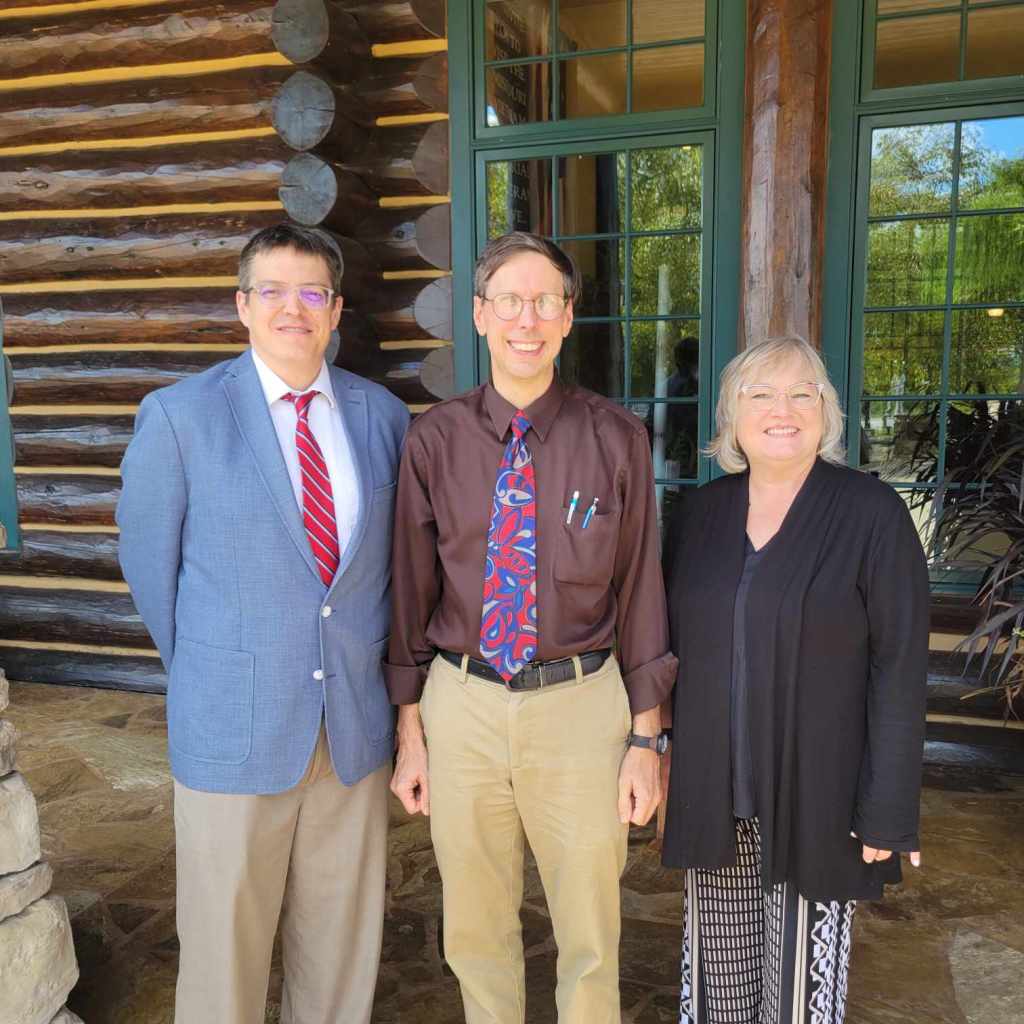
Me with Dr. Ethan Smilie and Dr. Aleshia O’Neal

That afternoon I drove from the Keeter Center to West Plains, a town of about 12,000 people in south-central Missouri.  I spoke at the West Plains Public Library at 5:00. There were about thirty people there, including a woman who was originally born in the south suburbs of Chicago. There were also several families from Covenant Reformed Church, which is a congregation in my Presbytery. That night I stayed with a family from that church and really enjoyed my time with them and their daughter and three sons. They reminded me of my family about 20 years ago. Many thanks to Greg Carter and Dianna Locke for hosting me at the Library, and to the Nortons for their hospitality.
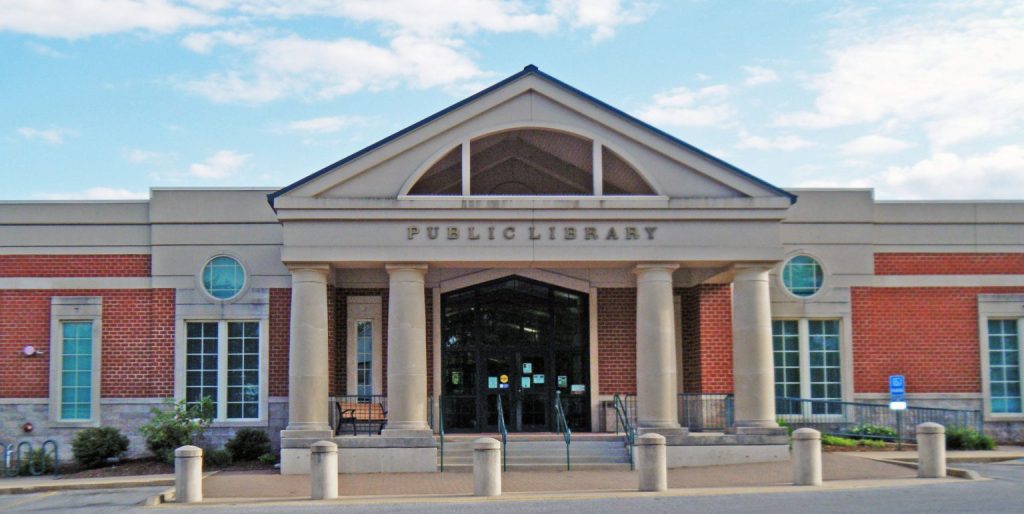
West Plains Public Library

On Friday, September 27, I drove from West Plains to Mansfield for the 49th Annual Wilder Days celebration.  I went by way of Ava, which is a town that Laura and Almanzo Wilder often visited on Sunday afternoons, but which I had never been to. This got me off the four-lane highway, which meant I saw some really beautiful views of the Ozarks. Certain areas really reminded me of Western Pennsylvania, where I grew up. Once I got to Mansfield, I went to the Laura Ingalls Wilder Home and Museum outside of town and reacquainted myself with the site.  I walked through the farmhouse, over the path to the rock house, and through the rock house—tours were self-guided because of Wilder Days. I also went through the museum and saw that my book was for sale in the middle of a bookcase of works about Mrs. Wilder.  There now is also a recreation of Almanzo’s garage, just opened this year. I also visited the Mansfield Area Historical Museum in downtown Mansfield.  It is housed in a replica train station and has a variety of artifacts from local history, including materials about Carl Mays, who played major league baseball fifteen years for the Red Sox, Yankees, and Reds. I also got to see the Mansfield public school fourth graders sing in the square. They did great.

Friday evening, I went to the Fifth Annual Wilder Dinner, a fundraising event for the Laura Ingalls Wilder Home and Museum. It was held at the Mansfield High School. Before the prayer, a local musician played two songs on Pa’s Fiddle, the violin that belonged to Charles Ingalls. It gave me chills to hear the instrument that Laura wrote so much about. After dinner, there was a live auction of a variety of pieces of Wilder memorabilia. Dean Butler also spoke; he played Almanzo in the TV series “Little House on the Prairie” from 1979 to 1983. I had previously heard him speak at LauraPalooza in 2022. Friday night, I was able to stay at a house owned by the Wilder Home.

David Wilson playing Pa’s Fiddle

Saturday morning, I was able to hear Pa’s Fiddle again, this time for forty-five minutes, in front of the Wilder Home. I then signed books in the entryway to the museum from 10 am to noon. Dean Butler was signing copies of his new book, Prairie Man in the back of the museum. The line for him wound through the museum, out the front door, down the steps, and along the parking lot. At lunch, I went downtown and bought a pie from the Historical Museum’s fundraiser and a bag of kettle corn. I also got to see the Mansfield Wilder Days Parade. I then went back to the museum and signed books from 2 to 4 pm. I then drove back to Chicagoland. Many thanks to Rev. Nicholas Inman, Director of the Wilder Home and Museum, and to staff members Susie, Vicki, Marie, Tana, Clinton, and everyone else who made my visit there excellent.

Up next for me is a book celebration at Trinity next Wednesday afternoon. There are four faculty members who have published books in the last twelve months. I will also be signing books at the Barnes & Noble in Orland Park, Illinois on Saturday, October 19 from 1 to 3 pm.  Anyone in Chicagoland is invited to attend!  (Put in link)

Thanks again for your support!

Links:

College of the Ozarks

What is a work College?

Gaetz Tractor Museum

Ralph Foster Museum

West Plains Public Library

Covenant Reformed Church

Laura Ingalls Wilder Historic Home and Museum

Mansfield Area Historical Society and Museum

Trinity Christian College

Book Signing at Barnes & Noble Orland Park, Illinois

LauraPalooza 2022

a group that loves to learn new things

Last week I attended LauraPalooza 2022: The Wilder Side. The conference was sponsored by the Laura Ingalls Wilder Legacy and Research Association (LIWLRA). It is (obviously) the only conference of its kind, half academic conference and half fan gathering. I had attended the first LauraPalooza in 2010 in Mankato, Minnesota, and the fourth in Springfield, Missouri, in 2017. This year’s was the seventh, and it was held in Burlington, Vermont.

It was great to be back with a group of people who are interested in pretty much everything about Laura Ingalls Wilder. There are multiple worlds associated with Wilder:

1) The world of the historical Laura, who lived from 1867 to 1957, her husband Almanzo, who lived from 1857 (maybe 1859) to 1949, and their daughter Rose Wilder Lane, who lived from 1886 to 1968.

2) The fictional world of the Little House books, published between 1932 and 1943. The books were the product of a collaboration between Laura and Rose.

3) The world of the television series, “Little House on the Prairie.” Nine seasons aired between 1974 and 1983, and it has never been off the air (it immediately went into syndication and is still on cable stations and streaming services).

4) The world of the historical sites that one can visit to see the landscapes where she lived and walk in her footsteps, in Wisconsin, Kansas, Minnesota, Iowa, South Dakota, Missouri, and New York.

This year, there were presentations about all these worlds, and the last day of the conference was a bus trip to the Wilder Homestead in Burke, New York. The Wilder Homestead is where Almanzo Wilder, Laura’s husband, grew up in the late 1850s, 1860s, and 1870s.

There were almost one hundred in attendance. The community that gathers at LauraPalooza is striking for several reasons:

  • It is a group that loves to learn new things. This year, they invited Robert Goodby, an anthropologist who studies Native Americans in New England, to talk about the world of Indigenous peoples in upstate New York and how they are addressed in Farmer Boy, the Little House book about a year in Almanzo Wilder’s childhood.
  • It is also a group that loves to read. One of the keynote speakers was Mitali Perkins, whose book Steeped in Stories argues for the benefits of children reading a lot of different stories. In addition, since I was presenting a paper, I was included in the Authors’ and Artists’ reception. I took copies of my second book, Almost Pioneers, which is not about Laura Ingalls Wilder. I still sold all the copies that I took. Dr. Goodby also sold some copies of his book.
  • Finally, it is a group that understands the nuance involved in understanding people who lived in the past, and therefore didn’t think the way we do today. Wilder’s attitude toward—and her writing about—people of other cultures was at times negative, dismissive, and lacking in understanding. But it is possible to condemn that and still appreciate the positive aspects of her life and written work. IT’s like applying the Biblical instruction to love your neighbor as yourself to our neighbors who lived in the past.

At one point, attendees were asked to put up our hands to indicate how many conferences we had attended. It appeared that the two biggest groups were those who were first time attendees (one of the advantages of having the conference in different locations) and those who had attended all six conferences. Fascinating.

Seven highlights:

  • Robert Goodby, “The Wilder Homestead in An Indigenous Landscape: Native American History and Farmer Boy.”
  • Barb Bousted’s update of her research on the Hard Winter of 1880-1881.
  • Mitali Perkins, “Steeped in Stories: The Power of a Multi-Storied Child.”
  • Melissa Stoller’s reflection on the Laura and Almanzo’s age difference when they got married, in the context of late nineteenth century marriage statistics.
  • Michelle McClellan’s overview of the development of the Wilder Homestead as a historic site.
  • Patty Dowd Schmitz’s presentation about the location of the hill in the “Grandpa’s Sled and the Pig” story from Little House in the Big Woods.
  • Chris Czajka and Caroline Curvan’s backstage tour of the making of the PBS American Master’s Documentary, “Laura Ingalls Wilder: From Prairie to Page.”

I was somewhat reluctant to make such a list because such lists inevitably leave some people out. I think that I probably learned something from every presentation.

I presented some of the conclusions from my book about Wilder’s faith and got some excellent feedback, both during the question and answer period, and later on that day. It was also a blessing to talk at length with Bill Anderson, who has been an incredible help throughout my project. I will refrain from listing the many old friends I saw and new friends I made because I would certainly forget someone. I had some new Facebook friend requests when I got home.

I was not able to go to the Wilder Homestead on Friday because I had to get back to the Midwest. My first grandchild was born early Saturday morning.

Many thanks to those in the LIWLRA who made everything possible. Particular thanks are due to Lauri Goforth and Sue Poremba, the conference Co-Chairs, to Carole Nebhut and her son Adam for taking care of everyone’s audio-visual needs, and to Sarah Manley for her calm and steady leadership of the organization. I hope that everyone has been able to rest this week after all of their work. Many thanks also to my institution, Trinity Christian College, for paying for my trip to Burlington.

Stay tuned for more updates.

Links:

LauraPalooza 2022

The Laura Ingalls Wilder Legacy and Research Association (LIWLRA)

The Wilder Homestead

Robert Goodby

Mitali Perkins

Almost Pioneers

PBS American Masters documentary on Laura Ingalls Wilder

Bill Anderson

Trinity Christian College

Back After a Long Time

There are always multiple stories

My last blog post was last June. I guess that some description of what I’ve been doing during the last nine months would be in order. Several observations:

Like many Americans, my life was dramatically changed and my view of the world was unbelievably altered by the events of 2020 and early 2021, including covid-19 lockdowns, ongoing virus restrictions, protests following the death of George Floyd, rioting and violence that followed some of those protests, the United States presidential election, doubts and accusations of election fraud, and the attack on the U. S. Capitol. Also like many Americans, these public events’ influence on me was complicated by personal, family, and work-related developments.

I can’t remember if I mentioned last spring that my mother died on February 3. My father, brother, and I buried her five days later and we planned a memorial service in Western Pennsylvania in the middle of March, which of course was postponed because of covid. It was ultimately held in mid-June. My father moved in with my family in August, then moved to a nearby apartment in early October. Last December, my family did not travel to eastern Pennsylvania to celebrate Christmas with my wife’s extended family. We have lived in Chicagoland eighteen years, and this was just the second time that we had not returned to PA for the holiday.

Last fall, my institution, Trinity Christian College, was completely online. A couple hundred students lived on campus, but all courses were online courses. I taught a new course in our just-approved Foundations curriculum. In October, Trinity also had its ten-year visit by a team representing the Higher Learning Commission (HLC), our regional accreditor. As an Academic Dean, I was lined up for multiple meetings on zoom with different members of the team. The week before the visit was set to begin, I came down with symptoms and tested positive for covid. It was a mild case and I attended all of the meetings from home. This semester, Trinity is holding classes in-person with a remote option. I teach in a classroom and also run a zoom session with students who must quarantine or who have chosen to not come to campus. I am again teaching a completely new course, and it’s a writing course, not solely a history course. My work as an Academic Dean is complicated by the realities that many of my colleagues are not on campus, that spring break was cancelled, and everyone has email fatigue.

In the midst of these developments, my research has taken a back seat. It is my hope to return soon to concentrated work on my book, “On the Pilgrim Way”: The Faith of Laura Ingalls Wilder. The manuscript is due to Eerdmans Publishers in August 2022. I have received a summer research grant from Trinity to work on it this summer. The college has also graciously approved a sabbatical for me in the spring of 2022. The time for the final push to complete the work is nearly here.

I do think that the events of the last twelve months—the response to covid-19, protests about racial injustice, the death of my mother—have made me think differently about my writing and my teaching. The cumulative effect of these events has impressed on me the incredible difficulty of understanding another person’s life. The virus affected people’s lives and livelihoods very differently, and therefore different people in my family, church, and workplace developed very different ideas about governmental action. The killing of George Floyd and the protests (and, at times, violence) that followed opened my eyes to new understandings of the experiences of my African American neighbors and colleagues. My ideas about how to understand my mother’s life have changed and shifted.

There are always multiple stories that can be told to make sense of the incomplete and fragmentary information we have about the world. In many ways, we ultimately are guessing from the evidence that we have. This is especially the case when one is trying to tell the story of someone else’s life. I have realized that my view of my mother’s life had been colored by the last few years when she was in very bad physical health. It is only as the months since her death have passed that I have been able to get a longer perspective on who she was and what she was like. The picture at the top of the page is of my mother and me on my wedding day, November 28, 1992. I have inherited more than just her nose and her smile.

This has humbled me as I have thought about the attempt to understand the life of Laura Ingalls Wilder. Biographers have interpreted her life in strikingly different ways. Caroline Fraser’s Prairie Fires asserts that Wilder was haunted by the privations and difficulties she experienced as a child and created a myth to deal with them. John Miller and others argue that Laura was shaped by difficulties but persevered due to inner strength, a balanced worldview, and trust in God. What she did not enjoy in life she accepted and made the best of, and she sought to teach others how to love life as a farmer’s wife.

As I think about my biography of Laura, I most would like to avoid taking a side in the cultural and partisan shouting matches of our time. I do not want to make Laura a champion of one side or the other. This is perhaps made easier because it is not always easy to define her by twenty-first century political categories. For instance, her love of nature, animals, and wild landscape is attractive to those on the political left, while her acceptance of traditional family roles and the attractiveness of her vision of the nuclear family is attractive to those on the political right. I hope to be able to describe her as accurately as possible from her point of view, that of a rural woman raised in the upper Midwest during the late nineteenth century who lived most of her adult life in the border south in the early twentieth century.

The last twelve months have also made me think hard about my teaching. I’ve been teaching history full-time for almost twenty years, and I’m much less optimistic about anyone’s ability to tell simple stories about what we can learn from the past. Historians with different backgrounds and worldviews write completely different stories about the past based on the same events and evidence. This includes Ph.D.-educated historians, though we are all historians, using stories to make sense of our own lives, the shape of our communities, and the history of our country. In both public forums and private conversations, we tell selective stories to support our ideas, our political positions, and the way that we live our lives. At one extreme, stories suggest that the way people lived in the past was all wrong, and that our job is to correct those wrongs or to forget about them. At the other extreme, stories are told to call us to ways of life in the past that were superior to today. Neither extreme is completely correct, but both often convey some aspects of the truth.

As a result, I am more and more drawn to ways that history might help people to understand others. I hope that studying history will enable students to understand people in the past who don’t think the way they do, and that therefore they will become better able to understand people in the present who don’t think the way they do. Finally, I hope that students will embrace an understanding of the past that is complicated and not easily fit into the extreme political categories of the early twenty-first century.

I guess I hope that people who read my book (and this blog) will come to better understand these things as well.

I understand that there’s a lot of aspiration (“I hope…”) here. Perhaps I can post some more content soon. Thanks for reading.

Links:

Trinity Christian College

My blog post on Caroline Fraser’s Prairie Fires

Blog posts on John Miller – Becoming Laura Ingalls Wilder, “Midwestern Dreams or Nightmares,” A Personal Appreciation

Mansfield Press and Mansfield Mirror

Local newspapers, the Methodist Church, and Faith formation

Greetings. Once upon a time, I did weekly blog posts. Now I’m glad when they are monthly. But these are trying times…

The last several weeks, I’ve been avoiding thinking about preparing for fall by working on my book, “On the Pilgrim Way”: The Faith of Laura Ingalls Wilder. I’ve been writing chapter 7 (of 11). The draft is almost complete. As July begins, I’m going to have to make the pivot to class preparation for the highly uncertain fall and spring of 2020-2021.

Chapter 7 addresses the years 1911 to 1924 in Laura’s life. Laura and Almanzo were living on Rocky Ridge, their farm about a mile outside of Mansfield, Missouri. These were the years that Laura wrote articles and columns for the Missouri Ruralist, a regional farm newspaper. Laura was in her forties and fifties, and even as she first had cultivated an audience for her writing, she was also at the height of her participation in community affairs in Mansfield. She was regularly an officer in the Mansfield chapter of the Order of the Eastern Star, the auxiliary to the Masonic Lodge which allowed female members. She was also a founding member and regular attender of two women’s clubs. One was the Athenians, mostly women from Hartville, the county seat of Wright County and about ten miles north of Mansfield, but with five members from Mansfield. The Justamere club was founded in 1919 by and for women from Mansfield; Laura wrote the club song, “We are All Friends.” During World War I, she volunteered for the local chapter of the Red Cross and she and Almanzo contributed to the Liberty Bond drive. She was active in local Democratic Party politics and helped to found the Mansfield Farm Loan Association, which received funds from the Federal Government and made loans to farmers. She was elected Secretary Treasurer for the Association every year from 1917 to 1928.

How do I know about these activities? Well, most of them are reported in biographies of Laura. But I got to read about all of these things when I looked at the copies of two local newspapers that have been digitized and made available by the Chronicling America program of the Library of Congress. The Mansfield Press is available from 1908 to 1909. The Mansfield Mirror is available from 1912 to 1922.

Authors like John Miller and Caroline Fraser have gone through these papers before me and relate what they say about Laura and Almanzo. I worked through them in order to see what they say about Christian organizations in Mansfield, and especially about the Mansfield Methodist Church, where the Wilders attended most of their adult lives, though they never officially became members. Here are some things that I learned:

  • When Laura and Almanzo moved to Mansfield in 1894, she wrote in her diary that “There is everything here already that one could want though we must do our worshipping without a Congregational church. There is a Methodist church and a Presbyterian.” (On the Way Home, 74) The Methodist church was actually a Methodist Episcopal (or M. E.) Church, and the Presbyterian Church was a Cumberland Presbyterian (or C. P.) Church. In 1909 a Baptist congregation was formed, and a Church of Christ was founded in 1913.
  • The Methodist Church building had been built in 1899, and it was a center of activity in the Mansfield Community. It housed dinners sponsored by the Methodist Ladies Aid Society, graduation services for the local high school, and at times civic events like Memorial Day or July 4 observances, especially if it was rainy—otherwise they were held outside.
  • None of the churches in Mansfield had pastors who served the church there full time—all of them were shared with churches in other small nearby towns. As a result, none of the churches had worship services with a sermon every week. By the middle of the 1910s, the Church of Christ had preaching (this is how the newspaper describes it) the first Sunday of each month, the Baptist church had preaching the second Sunday, the Methodist Church had preaching the third Sunday, and the Presbyterian Church had preaching the fourth Sunday. Sunday school was held in all the churches every Sunday.
  • The Methodist Church in Mansfield was part of the St. Louis Conference of the Methodist Episcopal Church. The M. E. denomination was hierarchical, which meant that the leaders of the conference assigned ministers to the churches every fall for one year terms. At times a pastor might be returned to a church or set of churches for two or even three years, but most of the men that served Mansfield and other churches in small towns were only there for one year before being moved to another pastorate.
  • My far the most colorful pastor of the Mansfield Methodist Church was the Rev. Guy Willis Holmes, who served there from 1916 to 1919. He is described in the newspaper as “an earnest and forceful preacher” and “a live-wire.” He must have been an electrifying speaker and a persuasive organizer. After only six months in the area, he was giving the commencement speech at multiple high schools, had helped to start a boy scout troop, and had conducted revival services that resulted in 22 conversions. But he came into his own during World War I, when he recruited a company for the Missouri National Guard, Chaired the County Council of Defense, and was named the Federal Food Aid Administrator for Wright County. Holmes was an outlier in that he served for three years. Subsequent pastors never quite lived up to his legacy.

I’ve been thinking about how these realities might have formed the Wilders and their faith. What might it have meant that there was only a worship service with preaching at the Methodist Church once a month? I don’t know if Almanzo and Laura went to Sunday School on the other weeks or not. Furthermore, what might it have meant for their church that it often had a pastor who was only there for one year and then moved on? Could a pastor really get to know many people in the church if he was only in town one weekend a month for one year? Finally, what did Laura and Almanzo think of Rev. Holmes and his striking career as pastor and war worker? For most of 1918, in his role as Food Administrator, Holmes published rules for farmers, stores, and individuals in the newspaper. Staples like flour and sugar were rationed and their prices were fixed, farmers had to market their wheat immediately when it was harvested, and threshing machine owners had to provide weekly reports. It is clear that the Wilders opposed what they saw as Federal Government overreach during the New Deal. I don’t know if they resented the U. S. Food Administration’s rules and regulations during the Great War.

As always, I’m working through these things as I write the book. Thanks for reading.

Quote is from Laura Ingalls Wilder, On the Way Home: The Diary of a Trip from South Dakota to Mansfield, Missouri, in 1894, with a setting by Rose Wilder Lane (New York: Harper, 1962).

Links:

Chronicling America at the Library of Congress

For more on Laura and the Eastern Star and other community activities, you can check out Teresa Lynn’s Little Lodges on the Prairie: Freemasonry & Laura Ingalls Wilder (Austin: Tranquility Press, 2014).

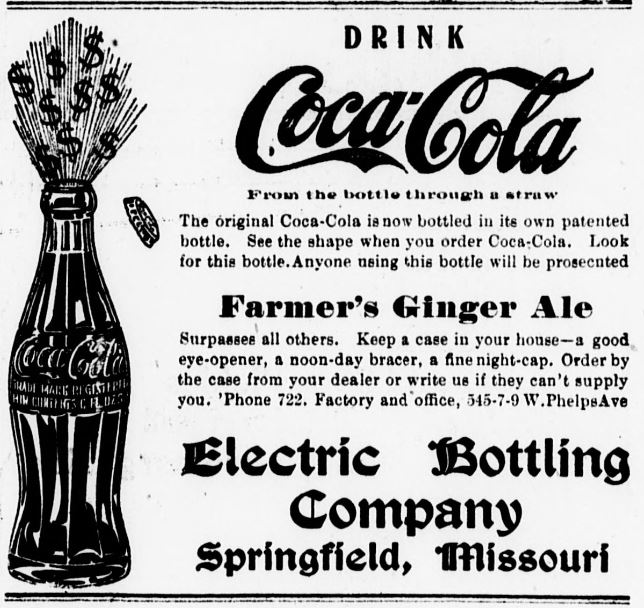
The Coca-Cola ad is from the January 8, 1920 edition of the Mansfield Mirror.

The Big Woods and COVID-19

“She was glad that the cozy house, and Pa and Ma and the firelight and the music, were now. They could not be forgotten, she thought, because now is now. It can never be a long time ago.” (95)

It was just over a month ago when the administration of Trinity Christian College, where I work, announced that due to COVID-19, courses for the rest of the spring semester would be conducted online, all of the resident students had to move home, and all spring events on campus (athletic, theater, music, art, etc.) were canceled. It was Thursday, March 12. The announcement came at noon, and the Chaplain’s office quickly organized a final worship service that afternoon as a way for students, faculty members, and staff members to communally grieve the losses that confronted us and express our trust in God and our Lord Jesus Christ. I found my daughter, who is a senior at Trinity, and she put her head on my shoulder and we cried together. That event now seems like a long time ago.

The next week, the Governor of Illinois issued a stay-at-home order. I moved enough out of my office to teach and do my work as an Academic Dean from home. My oldest son was sent home from his college in Pennsylvania to finish the semester online, and plans were underway for my two sons who are in high school to begin online classes. So my four children and I are now all doing online education. So far the bandwidth has held out. My wife is also at home because her work as a nanny and a volunteer at a thrift store both were suspended. Everyday life at my home during the last month has been transformed completely. Now is now.

I would not want to put my losses up against others who have lost a lot more. I am able to work from home and receive a paycheck. Although they have lost paying jobs at their schools, several of my children work at a local greenhouse which is still open, so they can still make some money for college. And there have been compensations. There are six people at the table every day for dinner. My wife has been baking large loaves of delicious homemade bread that we’ve been toasting and covering with the apple butter she made and canned last fall. There is more time for board games in the evening. We have popped corn and watched movies together. There are livestream services on Sunday morning and evening, and Sunday School, Youth Group, and mid-week Bible studies online.

Several weeks into the online, stay-at-home version of life and work, Bill Anderson (William Anderson, author and probably the greatest living authority on Laura Ingalls Wilder) emailed me a link for a New Yorker article that mentions Little House in the Big Woods in relation to the author and her family’s entry into quarantine in London. Margaret Mead, a long-time author for the New Yorker, she speaks of how her husband, her son, and her three stepsons, had all loved the book when they were children. Mead read the book out loud to her son again, and they decided to grow some vegetables in their window boxes. She ends by describing her stepson who lives in rural upstate New York with his partner and their son.

Last week, I got an email from a librarian at the Christian college I attended in Pennsylvania (and where two of our sons will be attending this fall). It included a link to a blog entry from a young Christian woman reflecting on the importance of stories when confronting new realities, like COVID-19. She specifically mentions the Little House books and the Lord of the Rings trilogy by J. R. R. Tolkien.

In between these emails, I was contacted by Jared Burkholder, a historian at a Christian college in Indiana. He is teaching an online course on the History of the American West and wondered if we could record an interview about Laura Ingalls Wilder and the Little House books that he could have his students watch. I said I’d be glad to do so. We recorded the interview this past Monday, using Zoom. It was a lot of fun.

One of the questions he asked me about concerned reasons for the persistent popularity of the Little House books. I thought about the New Yorker author and the Christian blogger and said that I thought that the books combine two features that are often seen as appealing to either the cultural right or the cultural left: an incredibly attractive vision of family life and loving depictions of wilderness and the natural world. Cultural conservatives are often drawn to the Little House books’ depictions of the nuclear family. Pa represents the male head of household and the provider; Ma is the civilizer of the home. Together they support their children, and the books describe how real girls and young women feel when confronted with real challenges in growing up. Cultural liberals and environmentalists are drawn to the books’ detailed and evocative descriptions of wilderness, wild animals, and the landscape of the American west. And in fact, both of these things transcend cultural (and political) categories. Mead, who I would think leans to the left, appreciates Big Woods’s description of a happy home. I lean to the right and love the Little House books’ description of the physical environment, animals, and nature. The result is that the books continue to speak to tens of thousands of people.

So I decided to read Little House in the Big Woods yesterday and think about what it might say to the world in which I live today, the world shaped by COVID-19. It was especially appropriate for me to do it yesterday morning, because an April storm had caused several inches of snow to fall in Chicagoland. I immediately identified with the events in Chapter 7, “The Sugar Snow,” except we don’t have any real maple syrup in the house. I was again amazed at the book’s detailed descriptions of how food was prepared and preserved, its depictions of how young children feel and act, and its vision of how a family could feel they had everything they need, even as they have so much less than we do today. This is the accomplishment of the collaboration between Laura Ingalls Wilder and her daughter Rose Wilder Lane: many people today, 150 years after the events depicted and almost 100 years after the words were written, can identify with the stories. When I’ve been surprised by the usefulness of an online tool during the last several weeks, I’ve found myself thinking—like Pa did of the mechanical thresher in Chapter 12, “That machine’s a great invention!” (91) The very next chapter (the last of the book) depicts Pa’s love for natural beauty and wildlife as being so great that he is unable to shoot the deer or bear that walked into the clearing where he was hunting to bring home meat for his family. When he tells Ma and the girls, Laura says “I’m glad you didn’t shoot them!” and Mary adds “We can eat bread and butter.” (94) I agreed.

As a historian, I know that the world that is created in Little House in the Big Woods was not exactly how it was for Laura Ingalls Wilder during the years that she and her family lived in the log cabin outside of Pepin, Wisconsin. They had relatives and neighbors much nearer than the book suggests.  But ultimately, Little House in the Big Woods is a book of stories, and stories can teach even when they are not historically accurate.

I may try to read The Long Winter next week as a different way into the COVID-19 quarantine experience.

I realize that this entry has been mostly about me. Thanks for reading anyway.

(Quotes and page numbers are from Laura Ingalls Wilder, The Little House Books, edited by Caroline Fraser, Volume I (New York: Library of America, 2012).

Links:

Trinity Christian College, where I work.

Geneva College, where two of my sons will attend next fall, Lord-willing

Margaret Mead, “Returning Once More to a Little House in the Big Woods,” New Yorker, March 4, 2020.

Venia “On Stories and Facing a Quarantine,” Sola Gratia, April 3,

End of Summer 2018

This week, students began to return to the campus of Trinity Christian College, where I work as a History professor and Academic Dean. Athletes, student leaders, and others came last Sunday, new first time freshmen report on Friday, and returning students begin to arrive next Sunday. So summer is pretty much officially over.

I’ve had a great summer. I did not teach a summer course for the first time in twelve years because I have a new colleague in the History Department, and he taught summer Western Civ instead of me. That meant that I had a lot of time to write. During May and June, I wrote the first chapter of the book. Then in June I did my research trip. In July, I was able to write two more chapters. So I met my goal of having three draft chapters by the end of this summer. God is good.

In the middle of the summer, of course, Laura Ingalls Wilder hit the national media because a committee of the American Library Association decided to rename the Laura Ingalls Wilder Award the Children’s Literature Legacy Award. The decision did not surprise me. Wilder grew up in the 1870s and 1880s, and she wrote in the 1930s and 1940s, so she didn’t think the way we do today about a lot of things. But this the case with everyone we encounter in history. Showing love to our neighbor who lived one hundred years ago means putting their words in context and attempting to understand why they said what they did. It doesn’t mean excusing them for not loving others. Coming to understand people in the past who don’t think like us gives us practice in coming to understand people today who don’t think like us. This is a critical skill, and it’s sorely needed in American society and culture today. I also think that Laura’s attitude towards Native Americans was more complex than it was depicted in some of the pieces written about the renaming of the award. I’ve put links to the ALA statement and two good online articles about the issue below.

This fall I hope to put in at least one morning a week on the book project. I will also be returning to the Conference on Faith and History Biennial Meeting, which will be held at Calvin College at the beginning of October, to be part of a roundtable discussion of “Biography and the Search for Meaning.” Others on the panel will be talking about their work on biographies of John Jay, Alexis de Toqueville, Sojourner Truth, and Elizabeth Ann Seaton. It should be a fascinating session.

Many thanks to the Provost’s office and the Faculty Development Committee at Trinity Christian College for their generous support of my summer writing project and research trip to Iowa, Wisconsin, Minnesota, and South Dakota.

Thanks for reading.

Links:

Trinity Christian College

Announcement from the American Library Association about the Laura Ingalls Wilder Award

Two good articles about the Renaming of the Laura Ingalls Wilder Award:

Sarah Uthoff at Trundle Bed Tales – Includes some good background on the award

Pamela Smith Hill

Conference on Faith and History

31st Biennial Meeting of the Conference on Faith & History

Laura Ingalls is Ruining My Life

Time is running out on 2018. I only have time for one more blog post this year.

I read a fun book in the last several weeks: Laura Ingalls is Ruining My Life, a young adult novel by Shelley Tougas. It’s about a twelve-year-old whose family moves to Walnut Grove, Minnesota, because her mother wants to write a book and thinks that getting close to Laura Ingalls’s spirit will help. It has some good lessons about friends, about family, and about growing up. Tougas certainly understands the feel of the Little House books. She is also able to describe clearly the complexity of both American history and family dynamics. If you have time over Christmas break, I found it a quick and enjoyable read.

I have also received my copy of Prairie Fires, Caroline Fraser’s biography of Wilder, and I’m about two hundred pages in. It is certainly encyclopedic. More later when I finish.

I hope that everyone has a blessed Christmas and a good start to 2018.  Thanks for reading.

Links:

Laura Ingalls is Ruining My Life

Prairie Fires

Laura Ingalls’ Friends Remember Her

I’m back from Iowa. I had a great time at the 25th Anniversary Celebration for the Iowa Women’s Archives last weekend. While I am not a feminist nor a women’s historian, my talk about Laura Gibson Smith and her memoir Almost Pioneers was well received by the feminist women’s historians who made up most of those assembled for the celebration.

This week I was able to read Laura Ingalls’ Friends Remember Her by Dan L. White. White lives with his family on a farm in the Ozarks near where Laura and Almanzo lived from 1894 to their deaths in 1949 and 1957. White has written a series of books on the Wilders and the Little House books, including:

  • Big Bible Lessons From Laura Ingalls’ Little Books
  • Devotionals With Laura: Laura Ingalls’ Favorite Bible Selections, What they Meant in Her Life, What they Might Mean in Yours
  • Laura Ingalls Wilder’s Most Inspiring Writings
  • Laura’s Love Story: The Lifetime Love of Laura and Almanzo Wilder
  • The Long, Hard Winter of 1880-1881: What was it Really Like?
  • The Real Laura Ingalls: Who was Real, What was Real on her Prairie TV Show

White has also put out four volumes of Wilder’s Missouri Ruralist articles with his own introductions and comments (much like Stephen Hines’s many books). All of White’s books were originally published by a small press in Hartville, Missouri, named Ashley Preston Publishing. I believe this must be White’s own operation. They are now all available–with several other books he wrote about Christian living and family finances–as Kindle books on Amazon.com. Since they engage Christianity, I may have to check out the first three books on this list for my project.

Laura Ingalls’ Friends Remember Her is an fascinating collection of materials. Six of the chapters are transcripts from interviews White conducted with Ozark residents who knew Laura and Almanzo when they were living: Nava Austin, Erman and Peggy Dennis, Emogene Fuge, Neta Seal, Anna Gutschke, and Carl Hartley. Other chapters give White’s opinions on some of the premier topics in Wilder scholarship, including Wilder’s political views, the relationship between Wilder and her daughter Rose Wilder Lane and the contributions of each to the Little House books, and why the books have become so beloved. Most chapters include extensive quotes from Wilder’s Missouri Ruralist articles; some include lengthy quotes from White’s other books.

White argues that since he lives in the Ozarks and is not a scholar or historian, he can give a perspective on the Wilders that is missing from other books about their lives:

Generally the people who write about Laura and the Little House books are not Ozarkers. They have chosen to be someplace else where life is fast and crowded and bustling. They usually don’t want the simple Ozark life of a homestead and chickens and horses and cows and goats.

Therefore, when these writers pontificate about Laura, they write from quite a different view than she had. When you read writings about Laura, you are reading just as much about the writer as you are about Laura. (22-23)

This hit home somewhat. I live one half block from the city of Chicago. I work at a college that has around 1200 students, which is about the current population of Mansfield, Missouri. But I did notice that this description might also be applied to White’s writing. When one reads the portions he has written, one does learn quite a bit about White’s life. One learns that he raised his family on a nearly self-sufficient farm in the Ozarks, that he and his wife homeschooled their children, that and all of them enjoyed the Little House books immensely. Strikingly, the end of the book includes a comparison between the Rocky Ridge farmhouse, which sits empty every night and has occupants only when a tour guide leads a group of tourists through it, to his own farmhouse, where a happy couple continues to live snugly.

White’s chapter on Laura and Almanzo’s political views does include an extended consideration of Laura’s faith. First, White argues that perhaps it was their shared commitment to limited government that kept them from joining the Methodist Church in Mansfield. “Congregationalists believed in small church government, not big. Surely Laura would have formally joined the Mansfield Methodist or Presbyterian Church had there not been something holding her back. That something may well have been that they were overgoverned for her tastes.” (76) I think that this is unlikely, but it is an interesting perspective. He also asserts that Laura and Almanzo can be seen as “typical conservative Christians,” which seems anachronistic to me. A different chapter does note Laura’s knowledge of the Bible and suggests that is why the books are happy despite the hardships the family faced.

It is the interviews with neighbors who knew Laura and Almanzo which are especially helpful. The portrait that emerges of Almanzo is a witty, funny, fun person to be around, even though his one foot was crippled and he walked with a cane. Laura comes across as a prim, proper, and refined old lady in velvet, always wearing a hat, even when it was no longer in style. They clearly loved one another very much. There are touching stories of Almanzo’s death from Neta Seal and Laura’s death from Carl Hartley. Seal’s interview also notes Laura’s deep knowledge of the Bible.

In some ways, this book is not the right time period for me to be reading right now. I am making plans to begin writing my biography’s first chapter, which is about Laura’s ancestors and early childhood. This book is about Laura and Almanzo’s life when they were in their sixties through eighties. But I needed to read the book so it could be returned to the library, so this week I got it done.

Thanks for reading.

Quotes are from Dan L. White, Laura Ingalls’ Friends Remember Her: Memories from Laura’s Ozark Home (Hartville, Mo.: Ashley Preston Publishing, 2013).

Links:

Iowa Women’s Archives 25th Anniversary Celebration

Dan White’s books at Amazon

End of Summer

Thanks very much to everyone who reached out to me (via email, in person, via Facebook) after I announced two weeks ago that I had received a book contract. You all are the best.

Today all first year students will be moving into the dorms here at Trinity Christian College. There have been some students on campus for the last week or two, including fall athletes, student leaders, and some others. It’s been great to see more students around; they bring life back to a college campus. All the new freshman will be here by this evening. Returning resident students and new transfers arrive by the middle of next week to complete the student body. My daughter moves back to Trinity (she’s a sophomore) this Sunday. Regular courses begin next Wednesday. My three sons start school (two in high school and one in homeschool eighth grade) next Thursday morning. All of this means that the summer is just about over.

It’s been a productive summer:

– I finished my book review of Christine Woodside’s Libertarians on the Prairie for Fides et Historia (the journal of the Conference on Faith and History) in April. (I guess this wasn’t really summer, but I hadn’t mentioned it’s completion on the blog before.)

– I finalized my book proposal and sent it off to Eerdmans in May.

– I presented a paper at the Midwest History Conference in Grand Rapids in June.

– I spoke at LauraPalooza in July.

– I received a book contract from Eerdmans and signed it in July.

– Last week I completed a book review of Pioneer Girl Perspectives for The Annals of Iowa.

– This morning I wrote three and a half pages of a possible introduction to the book.

I hope to keep reading for the book project once school starts at least once a week. I got a list of books to read from Mark Noll, one of the editors of the Eerdmans series I’m writing for, about American religious history. I also hope to do more thinking and writing. I will try to keep up the blog as much as I can.

Thanks for following. Best wishes to all who has someone in their home who returns to school during the next several weeks.

Links:

Trinity Christian College

Fides et Historia and the Conference on Faith and History

My Libertarians on the Prairie blog post

My LauraPalooza post

My book contract post

My Pioneer Girl Perspectives post

The Annals of Iowa

Book Contract

It’s August.  The summer has gone by quickly.  Last week I was completely off the grid camping with my family in Western New York.  It was a great time.  Now I’m back and the countdown to the start of classes here at Trinity Christian College—three weeks from yesterday—has started.

I am happy to announce that last month I signed a book contract with Eerdmans Publishers.  The book is tentatively titled “On the Pilgrim Way:” The Faith of Laura Ingalls Wilder.  The book will be a biography of Wilder that pays particular attention to her faith.  It will appear in Eerdmans’s series The Library of Religious Biography.  I am very thankful to David Bratt and Heath Carter for their efforts and encouragement.

I’ve projected ten chapters, and my current plan is to write two of them each summer between now and 2022.  I can get some work done during the school year, but I imagine that most of my writing will be done during the summer.  Eerdmans has graciously given me that much time to complete the manuscript.

Thanks to everyone who has given me encouragement throughout the project so far.  Now the real work begins…

Links from this post:

Trinity Christian College

Eerdmans Publishers

The Library of Religious Biography

Heath Carter’s Twitter Page: #ReligiousBio